
In the face of weak diagnostic capacity and eroding clinical acumen, the pharmaceutical response has not been to strengthen diagnosis but to bypass it.
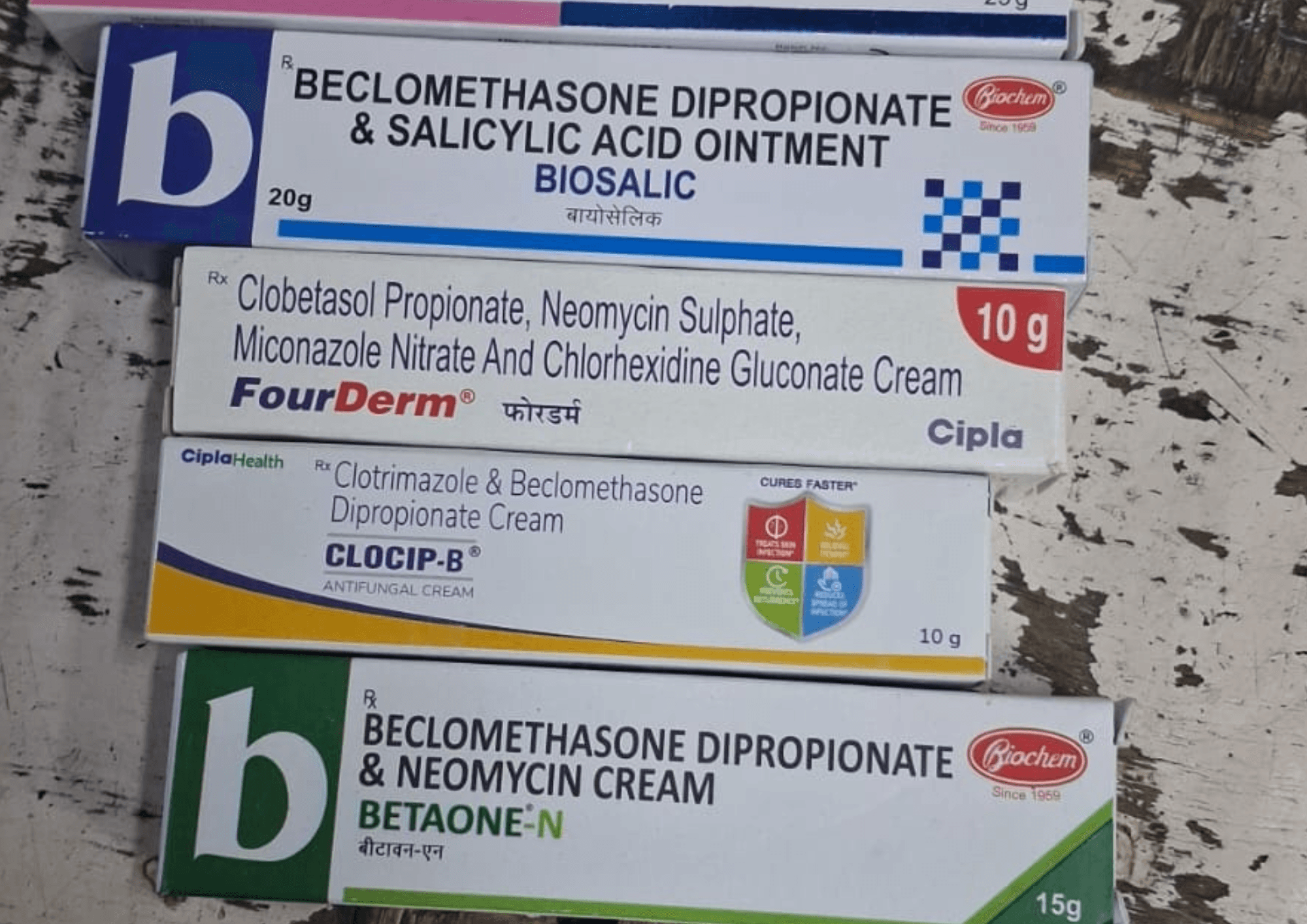
The market is now flooded with irrational combination creams that bundle an antifungal with a potent steroid and an antibiotic—designed to “cover all bases” when clinicians or practitioners cannot, or do not, make a precise diagnosis.
These combinations offer quick symptomatic relief, especially from itching, masking disease rather than curing it. In reality, steroids and antibiotics are rarely indicated in fungal infections, and when they are, they should be prescribed separately and with clear justification.
This strategy of overtreatment has fuelled the rise of chronic, widespread, and difficult-to-treat infections, turning a once simple condition into a growing public health problem.
This image shows a few combinations available at a Delhi pharmacy. (Photo credits for this image: Sayan)
When the author Vasundharaa asked the pharmacist in Delhi, she was told they have around 80 different formulations available as different doctors have different brand preferences.
Dr Yogesh Marfatia, a former professor of dermatology at Vadodara Medical College and the past national president of the Indian Association of Dermatologists and editor of IJDVL journal, says that over the years, many people had written letters to drug regulators about these combinations, but not much was done about it.
He says that even when some antifungal combinations get banned, pharmaceutical companies push new ones into the market.