The Multidimensional Poverty Index (MPI), developed by the United Nations Development Programme and the Oxford Poverty and Human Development Initiative, provides a more comprehensive approach to understanding poverty. Instead of looking only at income, MPI considers several basic needs, such as nutrition, education, and living conditions, to recognise that poverty affects many areas of a person’s life simultaneously.
MPI is widely used today because it shows not only how many people are poor but also how deeply they experience poverty. It helps identify the specific challenges households face, such as a lack of clean water or poor housing, which makes it easier for governments and organisations to design targeted solutions. Most importantly, MPI reflects real-life problems that income alone cannot explain, giving a more accurate and humane picture of what it means to live in poverty.
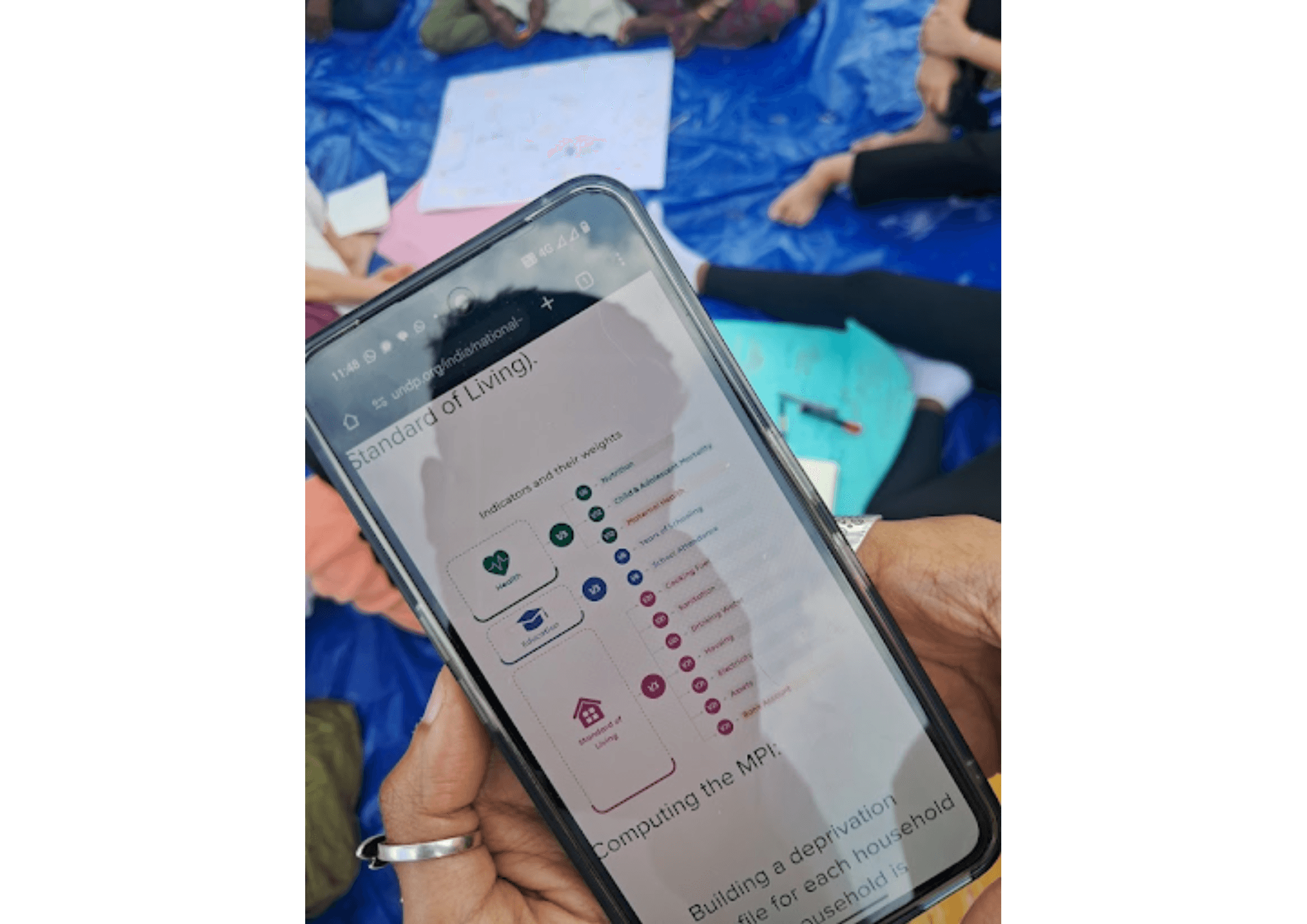
The original global Multidimensional Poverty Index includes 10 indicators across health, education, and living standards. However, India’s national MPI expands this framework to 12 indicators to better reflect the country’s specific development priorities and lived realities. In addition to the global indicators, India includes measures such as maternal health and bank account access, recognising the importance of financial inclusion and safe motherhood in understanding poverty within the Indian context.
The Indian government reports a sharp decline in the Multidimensional Poverty Index (MPI), from 53.8 percent in 2005–06 to 16.4 percent in 2019–21. To assess whether this reduction genuinely reflects conditions on the ground, it is essential to examine how the MPI is constructed and measured.
Using the example of families living in a tribal hamlet in Tamil Nadu, a state where only 2.2 percent of the population is classified as multidimensionally poor, we illustrate how the MPI operates in practice and what it may obscure.