
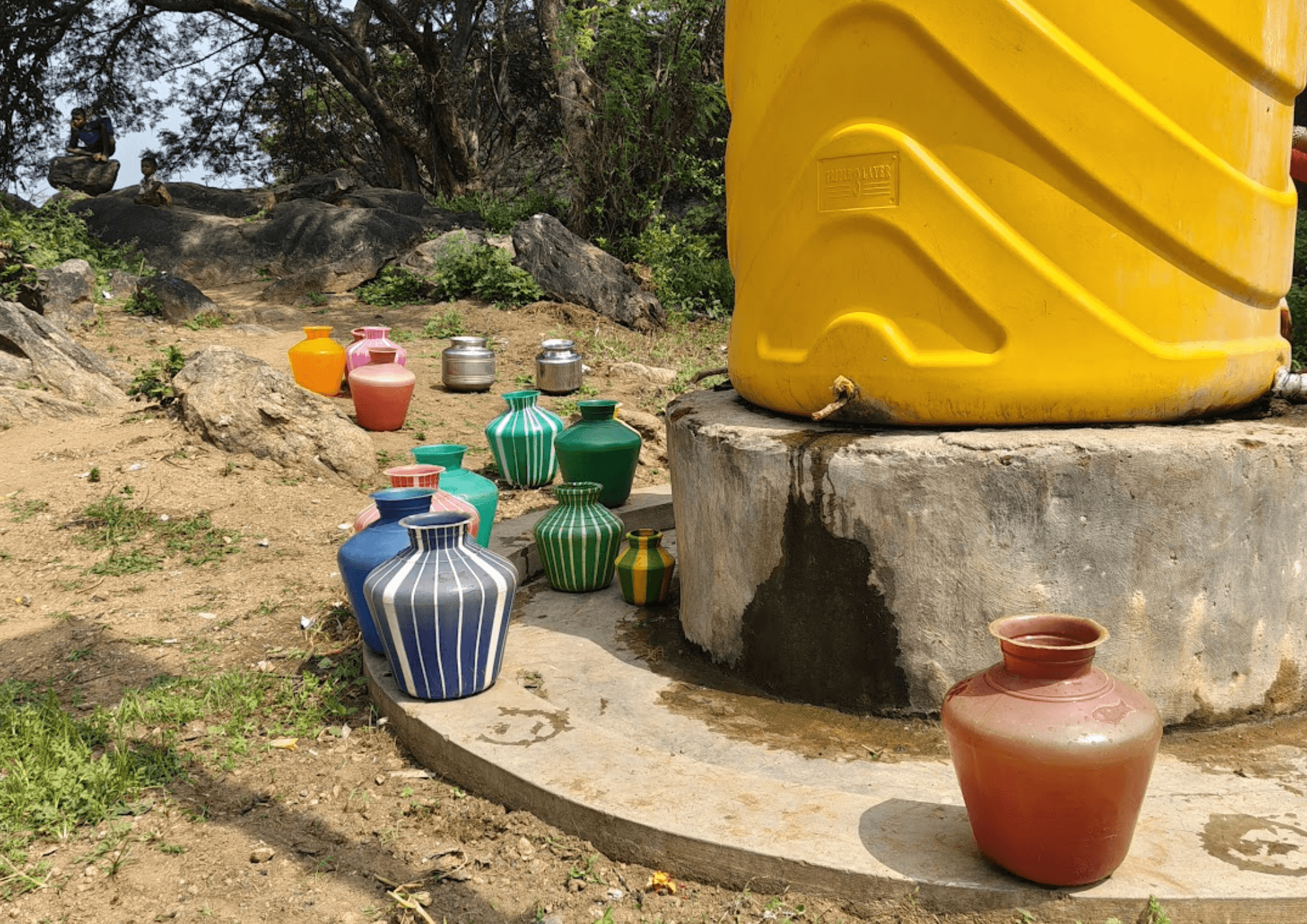
In the Multidimensional Poverty Index, access to drinking water is measured by whether a safe source is located close to the household. If water is unsafe or takes more than 30 minutes to collect, the household is considered deprived, highlighting health risks and the daily burden, often borne by women and girls, of fetching water.
In the village the authors visited, a water tank was present and a motor pumped water into it, meeting the indicator on paper. Yet on many days the motor stopped working, leaving the tank dry. When this happened, families were forced to walk nearly five kilometres to a nearby lake to collect water.
The indicator counts the tank’s presence as access, but it fails to capture these disruptions and the social hierarchies that shape who actually gets water, when and at what cost. Water exists in infrastructure, but not in people’s daily lives.