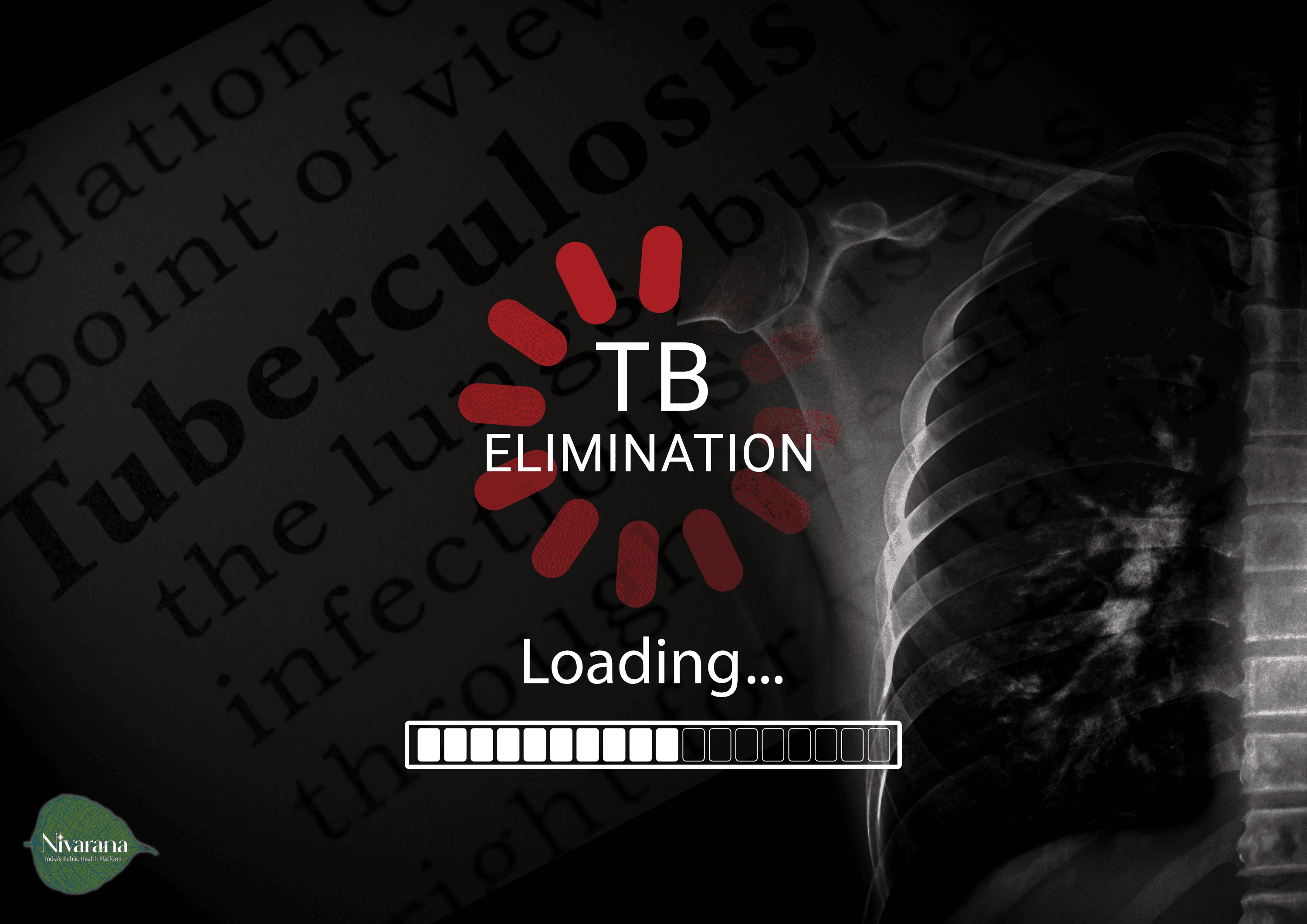
End Tuberculosis or Revive the Pthisis?
Stop TB, or continue to be?
National elimination, or nationwide extension?
Nikshay ID, or deidentified souls?
Nikshay Poshan, or breadcrumb doles?
Mitra support, or untraceable ghosts?
False security of uncertain vaccines’ surety.
Cy-TB, sigh! TB!
Yearly mission-mode statements,
Reality denouncements,
Naming games,
Tall claims,
Blinding inaugurations,
Advance celebrations,
Union conferences,
All wowing senses.
A coffee-table topic.
Do people with TB know their own biopic?
So much money flows in their name,
So many more earn fame.
Someone’s redemption dream,
Flinging dollars downstream—
It dries up way above.
Except the TB-ed, all hand in glove.
Rehab flats—cramped, stuffed;
Migrant quarters—hidden and hushed.
No more eggs or oil in school meals,
Not your choice, or how you feel.
Poor’s muscles don’t need protein.
Defying science is the new doctrine.
Inflation, sugar, and rice—
The resistant bacteria rejoice.
Subdued coughs,
Autophagic corpses,
Lean bodies stop earning,
Pale eyes yearning.
Young,
Yet stung,
The oldest disease reigns,
Where equity is feigned.
Maybe, after months or years, a bloody scream is noticed,
When, for the records, a wasted person gets wasted.
But TB also reaches beyond lungs;
Their detection, still far-flung.
Oh! Don’t mix TB with diabetes or HIV,
A child, or pregnancy.
Silicosis, sickle, or low BMI—what is that?
Keep these for another millennium’s chat.
Government, private, legal, illegal,
Traditional, herbal—
Everyone knows, yet no one knows,
What recipe goes.
Cups, tubes, drugs, techs, machines,
Irregularly regular like droughts and famines.
Can drones bring back stories from the start?
Can apps and AI X-rays also read hearts?
As of December 2025, tuberculosis is framed in policy language as a problem under control and on a defined elimination pathway.
The grassroots, however, tell a different story that examines the distance between that framing and the lives where TB continues to endure.
She sat in the crowd, breathing fast, her face thin and exhausted. Earlier that day, during two village visits, we had already heard of two young adults who had died of tuberculosis — a disease that is preventable and curable.
On examination, there was barely any air entry in either lung. Large portions had already been destroyed. For months, she had been taking intermittent medicines and injections from a private clinic and a local practitioner. No one had advised her to get tested for TB. The ASHA worker who visited the village once a month had never suggested a sputum test.
With difficulty — and with help from friends — we managed to send her to the nearest primary health centre, nearly four hours away, where sputum testing was available. She returned with a slip that read “Detected”.
There was no counselling, no nutrition support, no clear plan of care. To get an X-ray and begin treatment, she had to travel again — this time to a district hospital even farther away.
This was in Andhra Pradesh.
In Odisha, a young boy with sickle cell disease arrived at a rural facility with an unresolved pleural effusion due to TB.
In Chhattisgarh, patients who were sputum-positive were repeatedly testing negative on NAAT machines at government centres — raising uncomfortable questions about whether falling TB numbers reflect reality on the ground or the reality of the system. At another facility, the TB ward is perpetually full, with patients who have multiple co-morbidities and dangerously low body mass indices.
A government circular has called for shutting down microscopy — still the fastest and most affordable method to detect live TB bacteria. Some centres continue to use it quietly, because it remains essential for diagnosis and follow-up. NAAT machines, meanwhile, remain physically and financially out of reach for many patients.
In Jharkhand, parents carried an adolescent girl — reduced to skin and bone — into a rural hospital that largely serves TB patients. They have seen the numbers only rise over the years.
In a rural clinic in Rajasthan, every fourth young adult patient has TB or silico-TB.
None of these patients had access to Mitra support for nutrition or livelihood.
In Mumbai and Howrah, MDR-TB patients live in dark, congested, poorly ventilated homes, sharing cramped rooms with entire families.
And yet, announcements continue — drones to deliver medicines, timelines to “end TB,” extensions declared with little explanation. On the ground, little changes.
Do we truly understand what TB represents today? Each person with TB is not just a clinical case, but evidence of systemic failure — of delayed diagnosis, fractured care pathways, and eroded public trust. TB, in this era, marks the point where public health has failed and compassion has thinned.
The question is not whether we can end TB on paper — but whether we are willing to invest in health systems with the same urgency and seriousness that we reserve for flyovers, missiles, statues, or temples.
Lives depend on the answer.
Edited by Christianez Ratna Kiruba
Image by Janvi Bokoliya