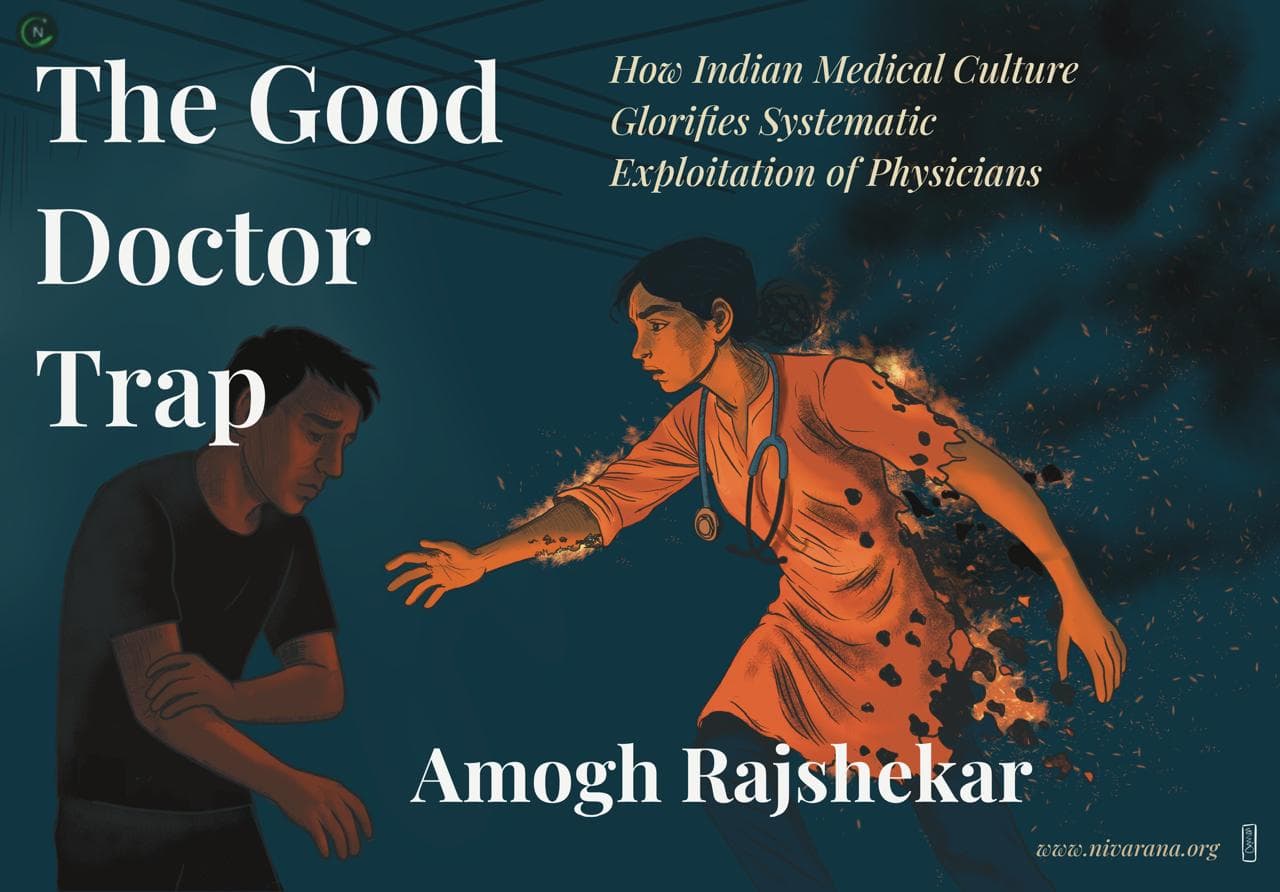
The Good Doctor Trap: How Indian Medical Culture Glorifies Systematic Exploitation of Physicians
Indian medical education grooms doctors into thinking that they, as individuals, need to overwork to make up for systemic failings at the expense of their own well-being.
“First, do no harm,” says the Hippocratic Oath. But in Indian medicine, doctors are taught that harming themselves in the process is part of the job. From day one, the system conditions future doctors to glorify suffering—and call it service.
Students hear that medicine is not a profession but a 'calling'- a divine duty that transcends normal work expectations in their classes. Something which is echoed by teachers, colleagues, and other family members and friends in their lives. However, this narrative hides a dangerous reality: the glorification of selflessness in Indian healthcare has become a justification for systematic exploitation.
The glorification and reinforcement of this mindset begin with the competitive nature of medical entrance exams. Coaching centers proudly advertise 14-hour study schedules. Success stories highlight students who "sacrificed everything." This glorification of overwork establishes a foundation where exploitation feels like dedication.
Once inside medical colleges, students find that the expectations only intensify. Sacrifice is normalized. "You must put the patient first" transforms into "You must put yourself last."
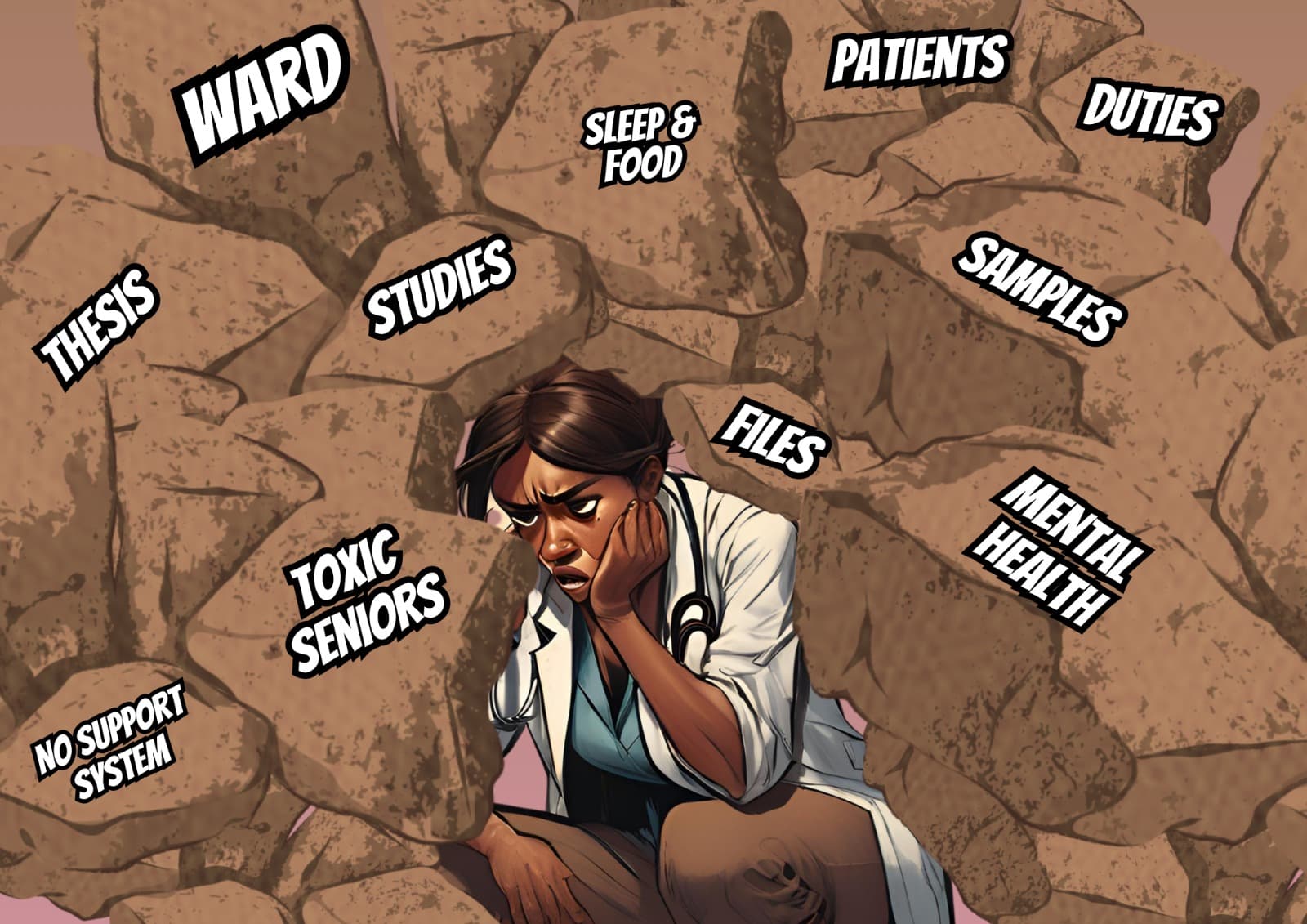
Clinical practice becomes an endurance test, where 36-hour shifts without rest are considered standard. Asking for basic human needs like rest, mental health care, or fair pay is seen as a weakness and a lack of moral fortitude rather than a necessity.
But, is that true? Can one only be a good doctor if they give up everything else that they consider important in their lives?
The System Is Broken
India's public healthcare system faces significant challenges from chronic understaffing and weak infrastructure. While the overall doctor-to-population ratio stands at 1:834, which is technically better than the WHO's recommended minimum of 1:1000, this figure masks serious disparities in rural and underserved regions.
According to the Rural Health Statistics 2021–22, over 4,000 Primary Health Centres (PHCs) in India operate without a doctor, and nearly 25% of Community Health Centres (CHCs) lack essential specialist staff.
Moreover, as of 2022, less than 20% of ambulances under the National Health Mission met the Basic Life Support (BLS) standards. Many public hospitals also lack pharmacies and diagnostic labs, rendering prescriptions and referrals practically useless for underserved patients. This systemic fragility compounds the pressure on medical professionals and undermines the very purpose of accessible healthcare.
Operating within this broken system, the doctor takes on a heavy burden of ensuring the patient’s health while many, if not most factors are operating against it. If untoward consequences happen to the patient, senior doctors and the general public at large act as though it is a personal failing of the doctor rather than the lack of support.
“I remember doing an on-call shift overnight at a charitable institution,” says Chitra (name changed), an internal medicine physician. “I had a list of clinical duties I had to handle, but on top of that, the biggest issue was arranging beds and procuring ventilators for the patients who needed them.”
“I didn't even get to my clinical duties eventually because I was running around shifting one patient or another from this bed to that. The next morning, every senior had a bone to pick with the quality of care I had provided to the new admissions. The fact that there was no person to manage mindless logistics was swept under the rug, and it was blamed on how I was a bad doctor,” she adds
In hospitals all over India, doctors push trolleys, argue over hospital bills, beg ambulance drivers to come on time, spend time figuring out which pharmacy might have the medicine this patient need,s and are still being made to feel like every patient related outcome is solely their fault.
The Toll of Overwork, Violence, and Mental Health Crisis
The consequences of this culture are devastating. A study found that resident doctors in government hospitals work an average of 100-120 hours per week, with continuous shifts often extending beyond 36 hours. This level of overwork is not just unfair; it is dangerous for both doctors and patients.
But exhaustion is only one piece of the crisis. For many doctors, the hospital is not just a place of healing, it’s a battlefield where they face not just disease, but violence. According to the Indian Medical Association, over 75% of doctors face violence during their careers. Every time a doctor is attacked, the news cycle spins briefly before society moves on, leaving the profession to fend for itself yet again.
But beyond these external factors, the grooming by medical education and the subsequent overwork have alarming effects on the Indian physician’s mental health.
A comprehensive study found that 30% of medical professionals in India experience depression, with suicide rates significantly higher than the general population. Behind each statistic is a doctor, someone's child, friend, or mentor pushed beyond their limits by a system designed to break them.
Substance use among medical professionals in India is a growing concern. A systematic review and meta-analysis revealed that approximately 40% of medical students in India engage in substance use, with alcohol being the most prevalent, followed by tobacco and cannabis. Many of these students do so because of stress and not having enough time to turn to healthier coping mechanisms.
“I was a chronic smoker throughout my postgraduate course,” says Chitra. “I just did not have time to eat, sleep, exercise, or sometimes even shower. But a cigarette was always available on hand and took only five minutes of my time, after which I could go back to doing my overwork.”
Every single one of her friends was a smoker during post-graduation, according to Chitra, and many of them still continue to this day.
Marital discord is another significant issue; three out of ten doctor couples report serious relationship conflicts, often impacting their children’s emotional health. Contributing factors include long work hours, high emotional stress, and lack of time for family, which also lead to children feeling neglected.
Additionally, doctors are increasingly dying younger, not solely due to suicide but from lifestyle diseases like cardiovascular conditions, which are exacerbated by chronic stress, sleep deprivation, and neglect of their own health. These patterns are symptoms of a broader systemic dysfunction, one that normalizes burnout, loneliness, and suffering among those who are expected to care for others.
This exploitation thrives because it's culturally sanctioned. When doctors protest for better working conditions, they face public backlash. There is an expectation from society that doctors should be superhuman, which is then maintained by teachers and mentors in the name of training.
When doctors advocate for basic rights, they're labeled as greedy or uncaring. This narrative conveniently serves a system that profits from their exploitation.
Who Does This Indoctrination Serve
In India, a doctor’s identity is often inseparable from their professional role, made so by the education system. When illness, age, or physical limitations affect their ability to work, the system offers little room for vulnerability or support.
The loss of Dr. George P. Abraham, a respected transplant surgeon from Kerala who ended his life after developing hand tremors that impaired his ability to operate, is a stark reminder of how deeply medical professionals are conditioned to equate their self-worth with their productivity.
They are taught not just to care for others, but to become our profession entirely, where over-sincerity is rewarded and personal boundaries are blurred. Accountability is demanded almost exclusively from doctors, while everything around them remains unexamined. This culture not only isolates those in crisis but quietly punishes anyone who can no longer perform at full capacity, pushing some to devastating ends.
This indoctrination then allows hospital administrators, politicians, and policymakers to rest the mantle because the system is not actively collapsing.
“I knew that the education system was not designed to teach or help me when a particular incident occurred. There was an opportunity to write a prize exam for postgraduates. I had asked a doctor in the administrative post for a few hours off to go write the exam and come back for duty. Instead of arranging an alternate doctor, he immediately started berating me, saying I should not disrupt OPD proceedings,” says Chitra
“Despite the seniors all waxing poetic about how they overwork us to build resilience and learning, I realised that all they wanted was cheap labour. Because if it were truly about learning, they would not try to keep me from opportunities that foster career advancement, such as the prize exam. This is when I realised that the system does not serve me, my learning, or my evolution into a good doctor.”
When the Only Way Forward Is Out
One of the most significant yet under-discussed consequences of this exploitative culture is the growing migration of healthcare professionals to countries with better work environments, or their decision to leave the profession entirely. Increasingly, talented and dedicated doctors are opting to pursue training and careers abroad, seeking humane hours, better infrastructure, and basic dignity at work.
Dr. Abhishek (name changed). who will begin his residency in the U.S. this year, shared: "A particular incident I recall also motivated me to pursue my residency outside of India: a 36-hour shift, which was tedious in the first place, got converted to a 72-hour shift and that made me realize how there was absolutely no concern for the health or wellbeing of the doctor but the doctor was treated as a cog in a rusted machine."
These choices are not betrayals of the healthcare system but symptoms of its failure. Until systemic reforms are implemented, this will only worsen, leaving behind a vacuum of care in an already strained system.
Redefining the "Good Doctor": Compassion Without Exploitation
Being a good doctor should not require martyrdom. Medical competence and compassion are not proportional to suffering endured. The idea that a doctor must sacrifice their own well-being to prove their dedication is flawed and unsustainable. True dedication lies not in self-sacrifice but in the ability to provide the best care while maintaining one’s own well-being.
A system that forces doctors to the brink of exhaustion does not create better healers; it creates broken individuals who struggle to function. We need to stop equating suffering with commitment and recognize that a healthy doctor is a better doctor.
Healing the Healers: A Call to Action
The solution is not just about policy changes but a fundamental shift in perception.
A profession might be a calling, but a calling does not mean that a person must divest themselves of responsibilities towards other parts of their life, like their families or their hobbies, and primarily their own well-being.
Work-hour regulations must be enforced, not just suggested. Hospitals must acknowledge that burnout impairs judgment and patient care. Institutions must integrate mental health support into medical training rather than treating it as an afterthought.
Governments must invest in more medical professionals and better infrastructure so that the burden is distributed fairly. Doctors deserve safe workplaces, free from the threat of violence, and society must see this not as a privilege but as a necessity for effective healthcare.
If doctors are expected to heal others, shouldn’t we ensure they aren’t broken themselves? The conversation must move beyond temporary outrage and towards systemic reform. Change begins when we stop romanticizing sacrifice and start demanding fairness.
The medical profession should be one of dignity, not distress. Without urgent intervention, we risk losing not just individual doctors to burnout and despair, but the very foundation of our healthcare system. The system needs healing before it breaks beyond repair.
Edited by Christianez Ratna Kiruba. Image by Gayatri.