“Sri Lanka se aaye ho kya?” (Have you come from Sri Lanka?)
“Aise baat kar rahe ho jaise ki Sri Lanka se aaye ho!” (You're behaving as though you've come from Sri Lanka!)
Thirteen years ago, I shouted these words at a poor, innocent patient's relative. I was a first-year psychiatry resident—immature, inexperienced, impatient and anxious. I had recently arrived in Assam and was working at the mental hospital in Tezpur.
The outpatient department was busy, with hundreds of patients waiting. I was struggling to manage the long queue. During a consultation, a man entered my room, breaking the line. He requested that I see his wife early because they had travelled from afar to reach here. I refused and sent him back.
Half an hour later, he tried again. Other patients' relatives scolded him for breaking the queue. Around 3 p.m., he approached me once more.
“Hum log bahut door se aaye hain, doctor sahib. Jaldi kar dijiye. Humein wapas bhi jaana hai. Lanka se aaye hain.” (We have travelled from very far away, doctor. Please see us soon. We also have to return home. We have come from Lanka.)
I was furious.
“Toh kya hua? Sri Lanka se aaye ho kya? Line matlab line! Agar phir se beech mein aaye, toh sabse aakhir mein dekhunga!” (So what? Have you come from Sri Lanka? A queue is a queue! If you cut in again, I'll see you last!)
He walked away with a sad face. In my mind, I had already judged him: What an undisciplined, uncivilised, lazy person! If they wanted to return early, why hadn't they come earlier? Why couldn't they follow the rules like everyone else?
About an hour later, their turn finally came. His wife was suffering from mixed anxiety and depression. We assessed her, prescribed medication and reassured the couple that she would improve. Before they left, I reminded them once again not to break the queue.
The woman began to cry. Her husband looked helpless and explained why he had been requesting me to see his wife early.
They lived in a remote village about 45 kilometres from Lanka, a town approximately 125 kilometres from Tezpur. They had begun their journey at 4:30 in the morning, walking to the village bus stop, waiting for transport, reaching Lanka around 7 a.m. and travelling through several stages of public transport before finally arriving at the hospital at 11:30 a.m.
They had received token number 467. After hours of waiting, they reached my room around 4 p.m. By the time they completed all the formalities, it was about 5 p.m. His greatest worry was whether they would be able to return home that evening.
Their eleven-year-old daughter and four-year-old son were alone at home. They had no phone through which they could contact them. The parents worried that the children might have nothing to eat or might be frightened to spend the night without them. As the husband described their situation, his wife cried—and then he began to cry too. He looked at me and said, “Isi liye toh baar-baar request kar raha tha, doctor sahib.” (That's why I kept requesting you, doctor.)
I had no answer.
The man I had called undisciplined and uncivilised was a father worried about his children. The woman I had asked to wait patiently was a patient struggling with anxiety and depression after a long journey. I had judged people whose circumstances I had never tried to understand.
That night, I could neither eat nor sleep properly. I kept thinking about their children waiting at home, their exhausting journey and the helplessness on their faces. Most of all, I thought about my own arrogance.
I had grown up in a protected, middle-class family in a big city. Within a hundred metres of my home, there were five major hospitals. Accessing medical care had never required me to walk to a distant bus stop before sunrise, depend on uncertain public transport or worry about reaching home before my children went to sleep. I had been sitting on a mountain of privilege, yet I judged people whose lives I barely understood.
That incident forced me to confront a painful truth: medical education had taught me to diagnose illnesses, but it had not adequately prepared me to understand the lives of the people suffering from them. I knew how to recognise symptoms, but I had failed to recognise the social and geographical circumstances surrounding them. My understanding of the social and political fabric of our country was painfully superficial.
Thirteen years later, I still remember that couple's faces as if the incident happened yesterday. I cannot undo what I said to them, but the memory continues to teach me about medicine, privilege, humility and healthcare.
Seeing Beyond the Diagnosis
Over the years, while working in remote parts of Northeast India and alongside local communities, I have gained a deeper understanding of the difficulties people face in accessing healthcare. As a clinician, clinical head and trainer, I have also helped develop systems for delivering services in remote locations. Where possible, we make arrangements for patients travelling from distant places so that they do not face the same difficulties as those who can return home quickly. It is a small administrative change, but it reflects a larger principle: healthcare systems should be designed around the realities of people's lives, not merely around institutional convenience.
Today, when I meet a patient, some of my first questions are: "How far away do you live? How long did it take you to reach here? How did you travel?" I ask partly because of the guilt I have carried since that day. Patients often see these questions as a sign that I care about their circumstances, and they begin to open up. Sometimes, a simple question reveals a barrier to treatment that might otherwise remain invisible.
That experience changed the way I understand what it means to be a good doctor. We celebrate specialists who perform complicated surgeries, physicians who see hundreds of patients, hospitals equipped with expensive technology and professionals who diagnose rare diseases. These achievements matter. But somewhere along the way, we have begun to believe that healthcare begins and ends inside the clinic.
The ability to diagnose and treat illness is fundamental to medicine. Understanding why people become ill—and preventing that suffering wherever possible—is equally important. A prescription may treat a disease, but it cannot, by itself, provide clean water, protect a worker from toxic exposure, end domestic violence or guarantee that a child has enough food to eat.
The Social Realities of Disease
Consider the police. Arresting someone who has committed a crime is a basic and necessary part of their work. Maintaining law and order is more complex; creating social conditions in which people are less likely to commit crimes is harder still. Good policing is not measured only by how many offenders are arrested, but also by how effectively crime is prevented. In a similar way, doctors who help prevent illness can be as valuable to society as those who treat disease after it develops. Both roles are essential, but prevention can spare people suffering that treatment alone cannot undo.
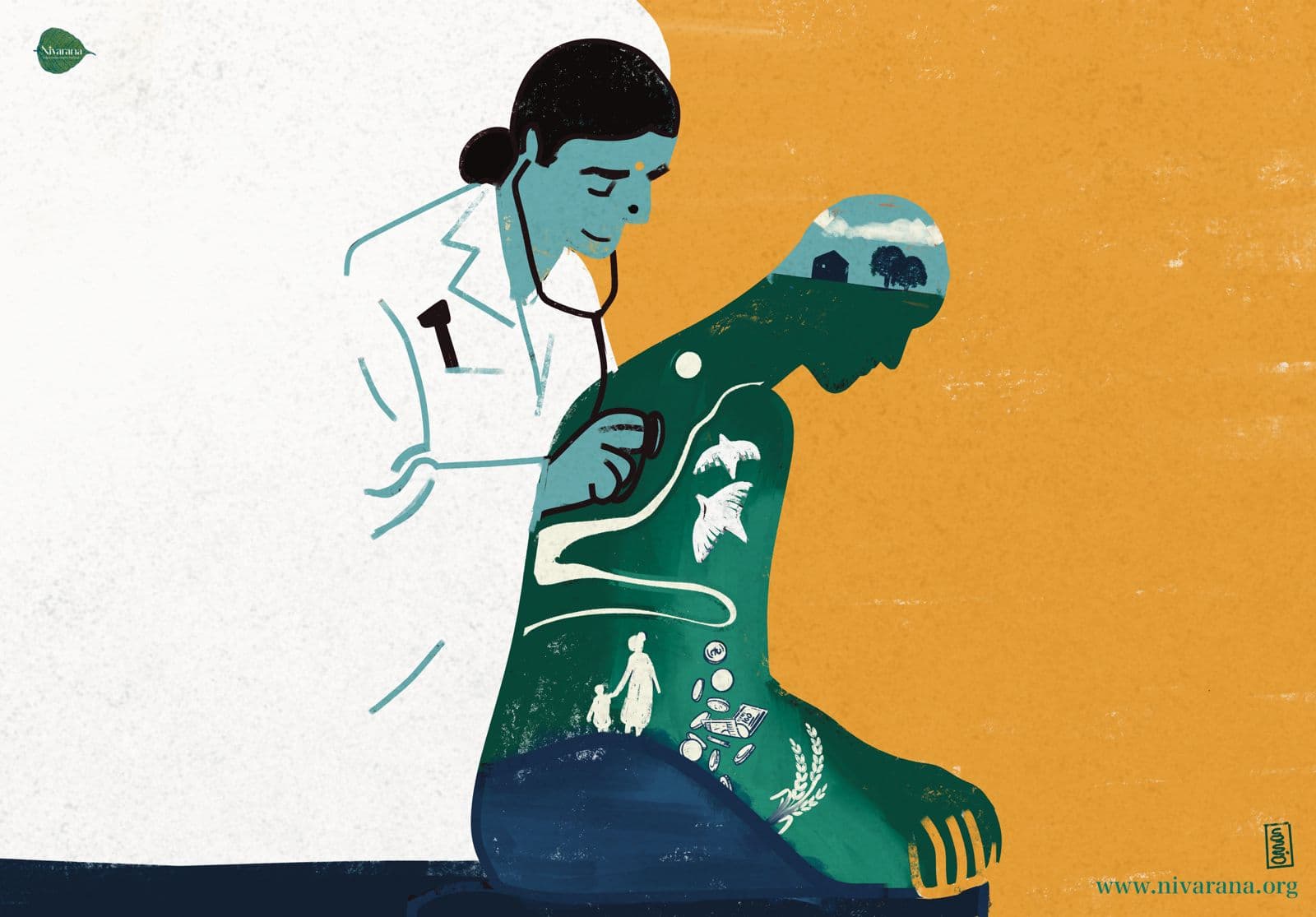
Health is shaped by the air we breathe, the water we drink, the food we eat, the houses we live in and the work we do. It is influenced by income, education, caste, gender, social relationships and access to resources. Even our ability to rest, laugh, dance and spend time with family depends partly on the conditions in which we live.
The air in a polluted city is not merely an environmental issue; it is a public health issue. A sanitation worker forced to enter a dangerous sewer faces not only an occupational hazard but also a threat to dignity, safety and health. A woman experiencing depression in a violent household may need clinical care, but her recovery may also depend on safety and freedom from violence. A child who repeatedly falls ill because the family cannot afford nutritious food needs more than a prescription.
Health is political because the conditions that shape it are influenced by decisions about power, money, resources, rights and whose lives are valued. This does not mean that every disease is caused by politics. It means we cannot fully understand the distribution of illness without examining the society in which people live.
Consider Rajendra Singh's work in Rajasthan. Trained in Ayurvedic medicine, he initially went to villages to work on health and education. But villagers helped him understand that their most urgent problem was water. Without it, crops failed, livelihoods disappeared and families were forced to migrate. Singh began working with villagers to restore traditional rainwater-harvesting structures called johads. This community-led work helped recharge groundwater, revive rivers and restore livelihoods. His experience shows that improving health sometimes requires addressing the conditions that make a healthy life possible.
Dr Smarajit Jana offers another example. Through his work with sex workers in Kolkata's Sonagachi area, he challenged approaches that treated marginalised women primarily as sources of infection. By listening to them, respecting their agency and involving them in decisions, he helped develop a community-led approach to HIV prevention. The lesson was not simply about controlling a disease; it was about recognising the dignity, rights and collective power of the people most affected by it.
Elsewhere, Alice Hamilton's investigations exposed industrial dangers to workers; John Snow's investigation of cholera highlighted the role of contaminated water; Paul Farmer challenged the idea that high-quality treatment was practical only for wealthy populations; Jonas Salk's polio vaccine demonstrated the power of prevention; and Rudolf Virchow emphasised the importance of social conditions in understanding disease. Their contexts differed, but their work reminds us that health improves not only through clinical treatment, but also through safer environments, prevention and systems that reach people who have been excluded.
What Medical Education Leaves Out
This is why we, as health professionals must ask uncomfortable questions. Why do certain communities face a disproportionate burden of illness? How do caste discrimination and social exclusion affect access to education, housing, employment and healthcare? Why do Adivasi communities in many regions face barriers to health services? Why do sanitation workers continue to work in dangerous conditions? Why do people living in heavily polluted cities face greater respiratory risks? Why do some young people experience serious problems related to substance use?
We will not find complete answers to these questions by memorising diagnostic criteria and treatment protocols alone. We need epidemiology, social science, environmental research, community knowledge and an honest examination of how resources and opportunities are distributed.
Medical education must therefore look beyond the body as an isolated biological system. International research has given us extraordinary knowledge, and we must continue learning from it. But knowledge developed in one social setting may not fully explain every Indian reality. Caste, Adivasi health, gender, poverty, disability, migration, discrimination and environmental injustice must be studied as important dimensions of health—not optional topics reserved for those interested in public health.
A psychiatry textbook may explain depression beautifully, but we must also understand the psychological effects of humiliation, violence, exclusion and chronic insecurity. A textbook may explain asthma, but we should also examine air pollution, unsafe workplaces and housing conditions. A textbook may describe malnutrition, but we should ask why a family cannot afford adequate food. This is not a choice between biology and society; both shape human life.
The Constitution of India also belongs in this conversation. Its guarantees of equality and dignity, protection against discrimination and the right to life under Article 21 provide a foundation for understanding health as a matter of rights and social justice. Medical students should learn about Dr B. R. Ambedkar and the Constitution not merely to memorise provisions, but to understand the inequalities that influence who gets the opportunity to live a healthy life.
Understanding the social determinants of health also makes us more humble. A medical degree, however valuable, does not make us experts in every aspect of human life. We may know how to treat an infection, but we cannot single-handedly eliminate poverty. We may understand depression, but we cannot independently end caste discrimination or domestic violence. We may provide excellent treatment, but we cannot guarantee that a patient returns to a safe home or can afford the medicines we prescribe.
This should not make us feel powerless. It should make us more willing to learn. Patients are not merely recipients of our knowledge; communities have their own experiences, wisdom and strengths. Community health workers, teachers, sanitation workers, social scientists, environmental researchers and local organisations often understand aspects of people's lives that we may never encounter during a brief consultation.
We do not have to become saviours who believe they know everything. We need to listen, collaborate and recognise the limits of our expertise. Our medical degree is an important part of our identity, but it is only one part. Professional status should open doors to learning and service, not create a wall between us and the people whose lives we seek to improve.
Not every doctor can work extensively on every social problem. Some will provide excellent clinical care; others will focus on research, prevention, health-system development or policy. All these contributions matter. The challenge is not to make every doctor an activist, but to help every doctor understand that health extends beyond the consultation room.
The Doctors We Choose to Become
Even small changes in practice can make a difference. When a patient repeatedly misses appointments, ask whether the problem is transport, affordability or working hours before assuming carelessness. When someone struggles to follow treatment, explore the barriers they face. When studying a disease, ask which groups are most affected and why. Learn about the communities around you, read beyond prescribed textbooks and support people working to improve the conditions that shape health.
Even when we cannot personally address a problem, we can contribute through research, teaching, ethical clinical practice, public education, collaboration or simply by treating every person with dignity. We do not have to do everything, but we should not convince ourselves that what happens outside the clinic is none of our concern.
Young medical students are often encouraged to become specialists, join prestigious hospitals, master complex procedures and achieve professional recognition. There is nothing wrong with these ambitions. But alongside them, we must ask: what kind of human beings do we want to become through our medical education?
Will we recognise disease without recognising the circumstances that make people vulnerable to it? Will we provide treatment while remaining indifferent to the discrimination our patients experience? Will we measure success only through personal achievements, or also through the suffering we help prevent and the barriers we help remove?
A doctor who treats one patient with compassion makes an important contribution. A public health worker who prevents an outbreak may protect an entire community. A researcher who identifies an overlooked health risk may prevent thousands of future illnesses. A person who helps a village secure clean water may improve the lives of families they will never meet in a clinic. These contributions differ, but each can improve health.
Step outside the small bubble that medical education can sometimes create. Learn about the social determinants of health. Read about Ambedkar and the Constitution. Ask difficult questions. Listen to marginalised communities. Understand the environment in which your patients live. Be willing to learn from people whose knowledge comes from experience rather than a degree.
Humility is not a weakness in a health professional. It is the beginning of understanding. The clinic is an important place to begin, but it should never become the boundary of our imagination.
If we truly want to become good doctors, we must learn to see not only the disease but also the person, the community and the society in which that disease exists. Medicine gives us powerful tools to treat suffering. Public health helps us prevent it. Social justice asks why the opportunity to live a healthy life remains so unequal.
The greatest contribution we make may not always be a prescription we write. Sometimes, it may be a question we ask, a barrier we help remove, a community we listen to or a harmful condition we help change. Healthcare is not merely about helping people survive illness; it is also about creating a world in which fewer people are made ill by the conditions in which they are forced to live.
Now, when I meet patients, I ask how far they have travelled and how long it took them to reach me. I ask because I remember the couple from Lanka. Their experience taught me that our assumptions can conceal the struggles people carry with them.
Our privileges and our limited understanding of the social and political realities of our country can prevent us from recognising the difficulties faced by people whose lives are different from ours. I hope that medical students will learn to question these assumptions, listen to people from unfamiliar social worlds, recognise the privileges they carry and build systems that respond to the realities of the people they serve.
And I hope, that medical students can learn to see, that for some patients, the distance to medical care is often further away than the geographical distance to Sri Lanka.
Edited by: Christianez Ratna Kiruba
Illustration by: Gayatri