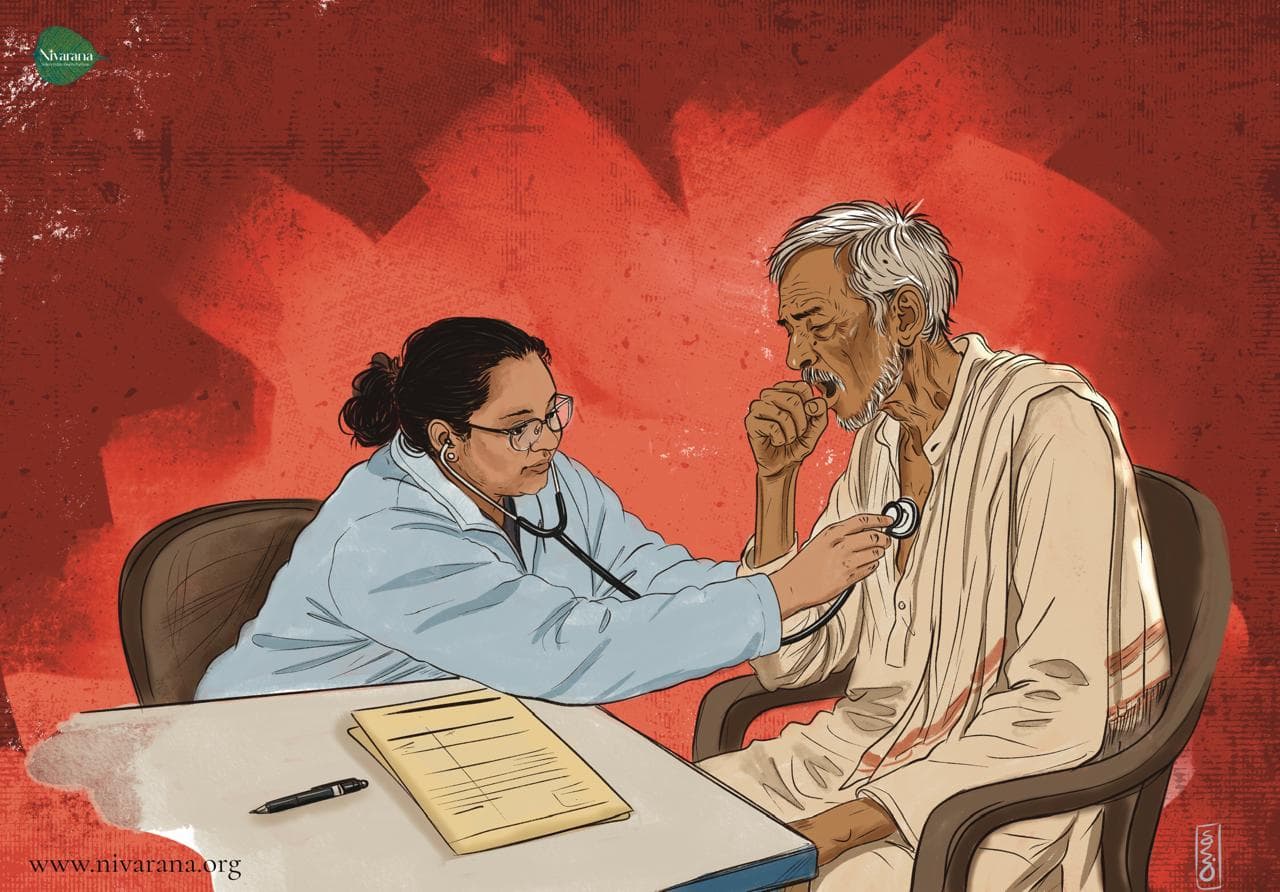
As a fresh graduate, with my post-MBBS internship just behind me, I realized that all my life experiences- professional and otherwise- were centred around Delhi, where I have lived and trained for the greater part of my life. I found myself wanting to see the ground realities of healthcare and get a clearer perspective of the conditions under which the majority of our beneficiaries seek healthcare.
This led me to the Travel Fellowship, a year-long program for young doctors who wish to work in rural and urban healthcare centres. Conducted by Rural Health Care Collective, it is an opportunity for doctors to visit and work in various rural centres in different settings over the course of a year. I had just joined Basic Healthcare Services (BHS), Rajasthan, my first centre of the Travel Fellowship, and was just about getting the hang of the place, the patients that came in and how they were managed.
A Disease Less Studied
A 45-year-old lady visited the OPD with complaints of dry cough and breathlessness, without a fever, weight loss, or appetite loss. We could not ascribe her symptoms to an acute infection, nor to chronic ailments like tuberculosis.
After consulting a senior doctor and taking a more thorough history, where she told us that she underwent treatment for TB a couple of years back, we conducted a chest x-ray, which showed us characteristic lesions of fibrosed, damaged lungs. The team arrived at the unfortunate diagnosis of Post-Tuberculosis Lung Disease (PTLD).
Despite being a recent med school graduate, PTLD did not strike me as an immediate diagnosis. This topic had somehow gotten lost in the vastness of medicine as a subject. But the reality I saw at BHS was a rude awakening.
As we were returning from Manpur, a village more than 80 kms away from Udaipur, I couldn't help but ruminate over this in the car and continued to be baffled by how I had missed reading about this disease. Going back to my course literature, the text around PTLD seems to be very matter-of-fact: healed TB infections can sometimes cause fibrosis, scarring, cavitation, and structural volume loss in the lungs, which can persist for life.
Just as wounds can heal with jagged scars, TB, too, can sometimes leave scars in its wake– but the elastic, collapsible tissue of the lungs, once scarred, sets into place. Instead of expanding and contracting to let air in and out, it holds the same stale air in place, leaving the person gasping for breath. When I did try to read about it, it seemed like a desert of research, with scanty evidence.
Despite having exhaustive guidelines for the management of every kind of TB under the sun, our national TB elimination programme, too, does not seem to deal with PTLD.
Rather than a rarity, I found that every OPD session had a few patients who, after having completed their TB medication course, still found it hard to breathe. Tests often confirmed that the TB bacteria were successfully removed, but the patient's lungs bore lifelong scars; the damage made every breath a challenge. A small hospital-based study in this area found PTLD in 35% of patients who had completed their treatment.
Was attempting to manage the symptoms the only way to go for now? Seeing patients with PTLD made me wonder about their quality of life.
They were not even active tuberculosis patients anymore; their Anti-Tuberculosis Treatment (ATT) was completed, they were declared TB-free, and the health system registered a successful case of treated tuberculosis. However, the patient had not found relief.
She had been told to tolerate the nausea, tingling, and other side effects of the anti-tubercular drugs and reassured that she would feel better at the end of it all. Now, she wakes up in the middle of the night, wheezing and breathless. It was agonizing to see their condition and not be able to do anything to help them. So, I decided to conduct interviews with some people living with PTLD so as to understand the impact on the quality of life of those affected by it.
Beginning Conversations to Understand
I started by interviewing 20 patients with PTLD. Their backgrounds, nutritional status and occupational history were noted, and I asked them a few questions to assess their quality of life. I noticed that most PTLD patients were males, much along the lines of TB incidence itself.
PTLD symptoms like coughing and breathlessness seemed to appear years after treatment for some and within a couple of years for others; at times, the symptoms never entirely resolved, lasting from the diagnosis of TB throughout the treatment, and persisting even years after being “cured.”
I found that a painful cough was a persistent issue for almost everybody. Work and/or household chores were severely affected; some patients spoke of being unable to do any household chores at all. Others had to change their professions, or their children had to take up work prematurely, possibly compromising their education and quality of life.
Out of the 20 people I interviewed, 13 spoke of facing discrimination because of their disease. Having to sit at a distance from others at home or in shared public spaces, or living in a separate room, and having separate utensils seemed common. This, along with the burden of chronic symptoms, seemed to be associated with low self-esteem.
50-year-old Devaram from Goriya hamlet tells us that he had TB 20 years ago and has been taking medicine for PTLD for the last 10 years. He also has hypertension. His son lives with him but doesn't take good care of him. Devaram's self-esteem remains low, but he feels relieved from treatment and hopes he will get better.
35-year-old Tulsibai of Patiya hamlet has a 16-year-old daughter who takes care of her. She has two more young kids, and she sleeps away from them to prevent them from getting the same disease. Her eldest son, who works away in the city, sends home money.
Her TB treatment was completed around a year back, but she has again had a cough and breathlessness for the past two months, for which she is again getting treatment. She also has anemia. Her biggest problem is that whenever her condition worsens, she doesn't feel like working at all and gets worried about her young kids. She wonders when she will get better.
Something that astonished me was that when asked what they expected would happen after being treated for PTLD, their unanimous reply was “theek ho jayenge” (we will get better).
This reflection of hope brought tears to my eyes- as a doctor, I knew that the damage done to their lungs, which were scarred and hardened, was irreversible. The medications only provided relief for the symptoms but did not cure the disease itself. The medications could help ease their breathing in the short-term, but they could not soften the scars their lungs carried.
What does Treatment of a Disease Mean?
Pondering upon this issue led me down another train of thought- about what we mean by "treatment".
As clinicians and physicians, medical doctors prioritise curing disease. The absence of the TB bacteria in a previously sputum-positive case is a win in our books. However, isn't it also important that our treatment brings a sense of wellness to the patient?
We may tell ourselves that six months of treatment cures the patient of tuberculosis, but does treatment really stop at eliminating the causal bacteria from their bodies by giving tablets for 6 months? And without addressing the biggest and most common cause of TB - undernutrition.
The imprint of tuberculosis is often etched irreversibly into our patients' bodies and lives, shaping their daily experiences long after the completion of treatment. Do we wait and think of the quality of life our treatments allow our patients? What effect did the disease and its cure have on their lungs, their families, their livelihoods, their mental health and their financial condition? Is a patient ever completely cured of tuberculosis?
We do try to destigmatize TB, but our attempts seem feeble to me. TB is a debilitating disease and leaves a person coughing and breathless, sometimes forever.
How can we expect people not to be scared of it or avoid the presence of those who contract it? Can one quantify the tangible and intangible costs of wages lost, or of time spent in queues to see a doctor and get medicines? Can one reverse the permanent scars on the human lung or the permanent effect of a discriminatory comment on a person's mental health?
I have now started thinking of TB as a chronic condition rather than a curable disease. The discrimination stays. The weakness persists. People are prone to relapse.
Without addressing the nutritional, environmental and occupational factors that enable TB, “successful treatment” will remain a clinical achievement, not a community win. Recognising and compensating people living with PTLD has to be an integral part of our vision of a TB-free India.
This can only be achieved when we devote resources towards estimating its burden across the population, studying determinants that lead to worse consequences for some, and leading trials that can generate evidence for preventing, managing, and hopefully curing PTLD.
We need to accept that the management of tuberculosis is incomplete without centering the experiences of the people living with it and do better in providing support even after completion of drug therapy. This can be achieved through bi-annual follow-ups after treatment completion and early management of symptoms of lung disorders. That could also provide data to study more about PTLD and make better guidelines, treatment protocols, and provide better care.
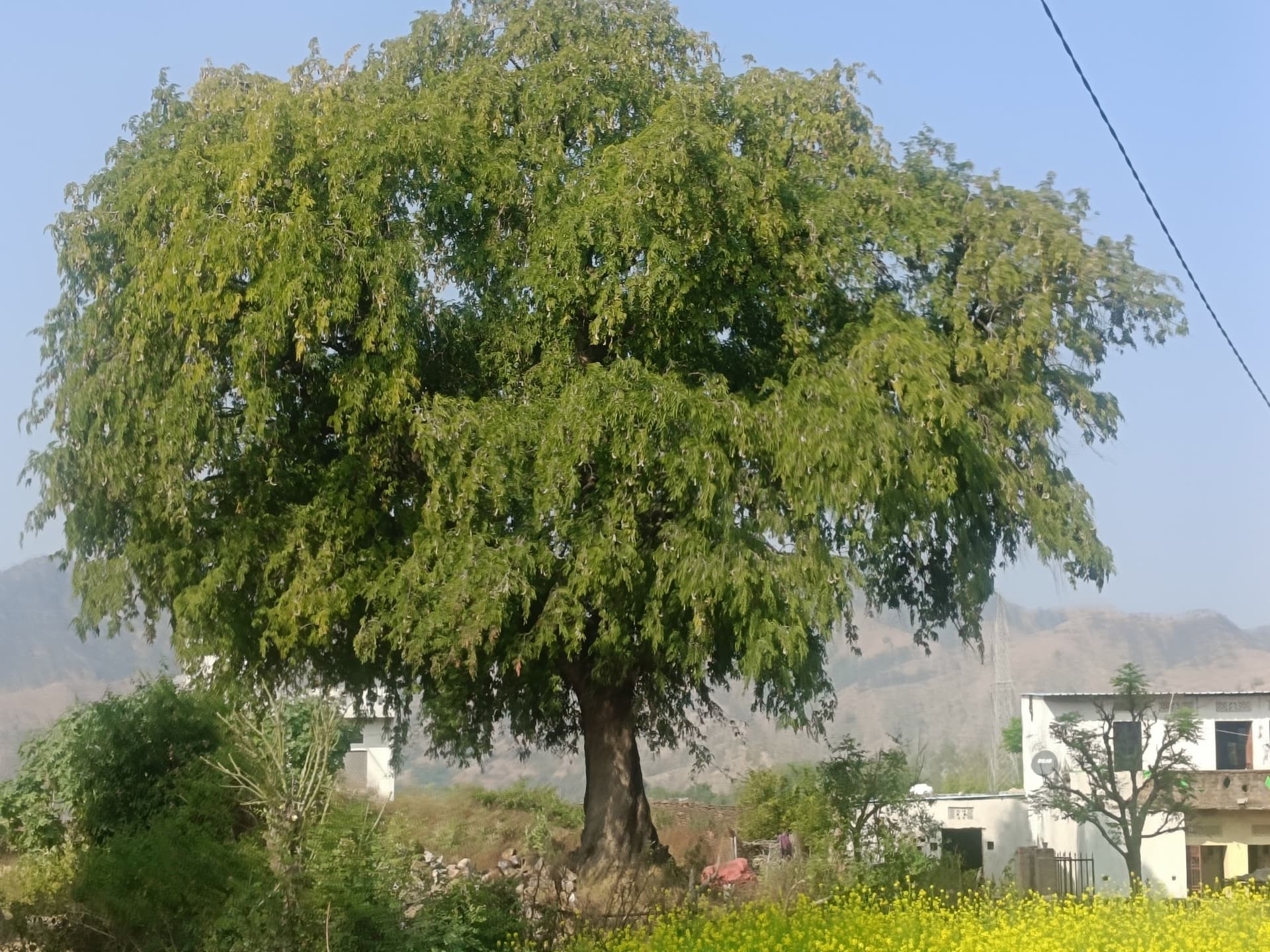
(This lone tree standing tall at the entrance of a hamlet in South Rajasthan reminded me of the paradox around me– of the clean air around us, and the coexistent factors that made each breath a struggle for so many of my patients.)
The Way Forward
During my stint at BHS I became aware that as per the National Tuberculosis Elimination Program in India (2020), we were supposed to end TB by 2025.
While discussing its progress, I laughed out loud because I realised there is no way we are close to controlling it, let alone eliminating it. According to the WHO, we had 186.6 TB patients per lakh population in 2024.
I have seen many patients whose anti-tuberculosis treatment had to be started based on history and examination alone, without waiting for any microbiological confirmation, patients whose treatment had to be extended, and household contacts getting infected. I have witnessed several extrapulmonary TB patients being misdiagnosed and mistreated.
Until the root causes are worked upon, we cannot begin to speak of eliminating Tuberculosis from India. Until good nutrition for all, safe workplace practices, and contextual community-based solutions are implemented, TB will remain a persistent villain.
I strongly believe in working with people and understanding their lived experience. For me, the claim that we will be able to eliminate Tuberculosis in this decade is akin to an ostrich hiding its head in the sand to pretend that impending danger does not exist. Here, again, I'm reminded of that unanimous “theek ho jayenge". The epitome of human hope remains a surprise to me.
Edited by Radhikaa Sharma
Image by Gayatri