An 85-year-old gentleman was admitted to a rural secondary care hospital for palliative care. He had developed gangrene (death of tissues due to the cut off of blood circulation), in his left arm after allegedly consuming a pesticide with suicidal intention 3 weeks ago. He hails from an elephant-infested estate area at least 5 hours away from the nearest tertiary care facility.
Since suicide attempts are considered medicolegal cases and health workers are uncomfortable in getting involved, he was referred from one government health centre to another higher center until he finally made it to the medical college hospital.
The pesticide had by then been absorbed into his body, and the negative effects of the poisoning had started. This led to him requiring care in the ICU.
In the process of treatment, he had developed a blood clot in one of the major blood vessels supplying the left arm, due to which he developed severe pain and discoloration of the hand. This was managed immediately, and a surgical procedure was performed to remove the clot. The damage that had already happened to the hand was, however, irreversible, and it led to a full-blown gangrene of the hand. He spent a few more days at the medical college, where he underwent a series of consultations with various departments and tests before being discharged to this rural palliative care center.
When the doctors managing this patient contacted me for a surgical consultation, I thought it was for the gangrene. I was surprised that it was for the pain that the patient had been complaining about in his anal canal instead. After seeing the patient and examining him, I realised that the medical college had completely failed this patient by not addressing the single main issue that had caused all other complications.
The very reason the patient consumed the pesticide was due to the unbearable anal canal pain and bleeding. No one bothered to ask this the entire time he was admitted. It only required a simple rectal examination to find out that his actual diagnosis was rectal cancer that had become very advanced and had begun causing severe pain and difficulty in passing stools.
This moment forced me to confront a deeper discomforting question about what we mean by “comprehensive care” in our medical institutions - especially medical colleges that pride themselves on being thorough.
The Value of Comprehensive Care
Medical colleges in India, from time immemorial, have been regarded as the centers of comprehensive evaluation and management of every possible medical condition. They’ve been a reliable last resort for every single patient referred from various healthcare facilities that couldn’t manage them.
In a medical college, the patient gets seen by a series of doctors at various levels, which is often annoying for the patient who needs to give the same information multiple times and be examined accordingly. In the medical college where I trained, if a patient were to undergo any planned operation, there would be at least five levels of evaluation- first in the outpatient clinic by the trainee/ consultant, followed by an intern, junior resident, senior resident, consultant, and finally the head of the unit after admission.
This system was designed primarily for the training of junior doctors, but more importantly, it served as the most effective tool in correctly diagnosing a patient and offering the best possible treatment. For instance, a patient admitted for a hernia operation gets diagnosed with cancer of the intestine because the trainees did a thorough examination. It’s also common for surgical patients to get diagnosed with a spectrum of medical conditions like diabetes, hypertension, heart disease, or thyroid abnormalities during the evaluation.
To quote another example, during my residency, there was a patient admitted for a colectomy (removal of part of the large intestine for cancer). One of the important contraindications for this operation is that the cancer hasn’t spread to other organs, in which case, surgery is not going to be curative. What would be appropriate then for the patient would be chemotherapy.
Rarely, even advanced scans can miss the spread of cancer to small organs such as lymph nodes. During the rounds when the patient was being presented, the most junior member of the team picked up a significant lymph node and suggested that it may be the cancer spreading. Sure enough, it turned out to be correct, and the patient was saved from an unnecessary surgery and instead directed to the most appropriate treatment.
Fast forward just 10 years, and the comprehensiveness seems to have been lost in the medical colleges. The importance of spending time with the patient, taking their history (details about the illness and other related information), and examination cannot be overemphasized. Regardless of the battery of investigations and scans, a good history and examination continue to remain crucial in diagnosing a patient’s condition.
In the example above, had a thorough history been taken from the patient, one would definitely conclude that his problems were related to defecation, which would’ve prompted a rectal examination, thereby making the diagnosis obvious. The patient was seen by multiple departments, but none bothered to find out the most important detail- ‘what really made him take this drastic decision of trying to end his life?’
What has Changed in the Recent Days
The current medical education system has been under constant scrutiny. (for more details, read the article “The Pathophysiology of Declining Medical Education in India’ on Nivarana)
Among many reasons, the one that is commonly debated upon is the lack of emphasis on spending enough time around patients during clinical postings. A significant part of the MBBS curriculum is dedicated for patient centred learning known as clinics. Here, the students are encouraged to talk to the patients and examine them, and make a presumptive diagnosis. The senior doctors then go over the patient details with the students, teaching them the importance of history taking, examination, and the relevant investigations required to make an accurate diagnosis. A significant portion of this evaluation is in talking to and examining the patients, and the investigations only form a limited part of the management.
In today’s practice, however, patient-centered evaluation seems to have taken a back seat, and the management is completely investigation-driven. In the government medical colleges, the busy schedule, overcrowded OPDs and casualties, and lack of beds make comprehensive evaluation challenging, and often patients' symptoms are overlooked. In contrast, the private sector is known to give undue importance to the most unimportant symptoms, pushing patients to undergo unnecessary higher investigations and surgeries.
For instance, a perfectly healthy middle-aged gentleman visits a private clinic with a furuncle (boil). The surgeon tells him that it can be life-threatening and he needs to get admitted immediately, be taken to the operating theater, and have it removed, followed by some more days of admission, antibiotics, and dressings.
The system is lacking the right balance between negligent government healthcare and over-vigilant private healthcare.
The MBBS curriculum needs to be patient-centred and not NEET super specialty-centred. The young doctors must be taught the importance of holistic evaluation of patients and ‘listening to them’ before jumping into the battery of investigations. The most common complaint that patients have today is that the doctor wouldn’t listen to them, or didn’t give them a chance to speak. More often than not, 80% of the conversation by the doctor happens while looking at the computer screen in front of him, containing the patient’s results. Patients still long to have one and the only thing that matters- a compassionate person treating them.
Loss of the Trusted Family Doctor
If we are in our 30s or older, most of us grew up around that doctor who catered to our healthcare needs that we called ‘our family doctor’. Viral fever, food poisoning, diarrhea, abdominal pain, skin infection, headache, gastritis, or chest pain- they seemed to have all the remedies. For the longest time, I didn’t know that our family doctor was actually a dermatologist since he knew every single medical condition very well and could treat most of them. The training is intended to make doctors the jack of all trades, although the master of none.
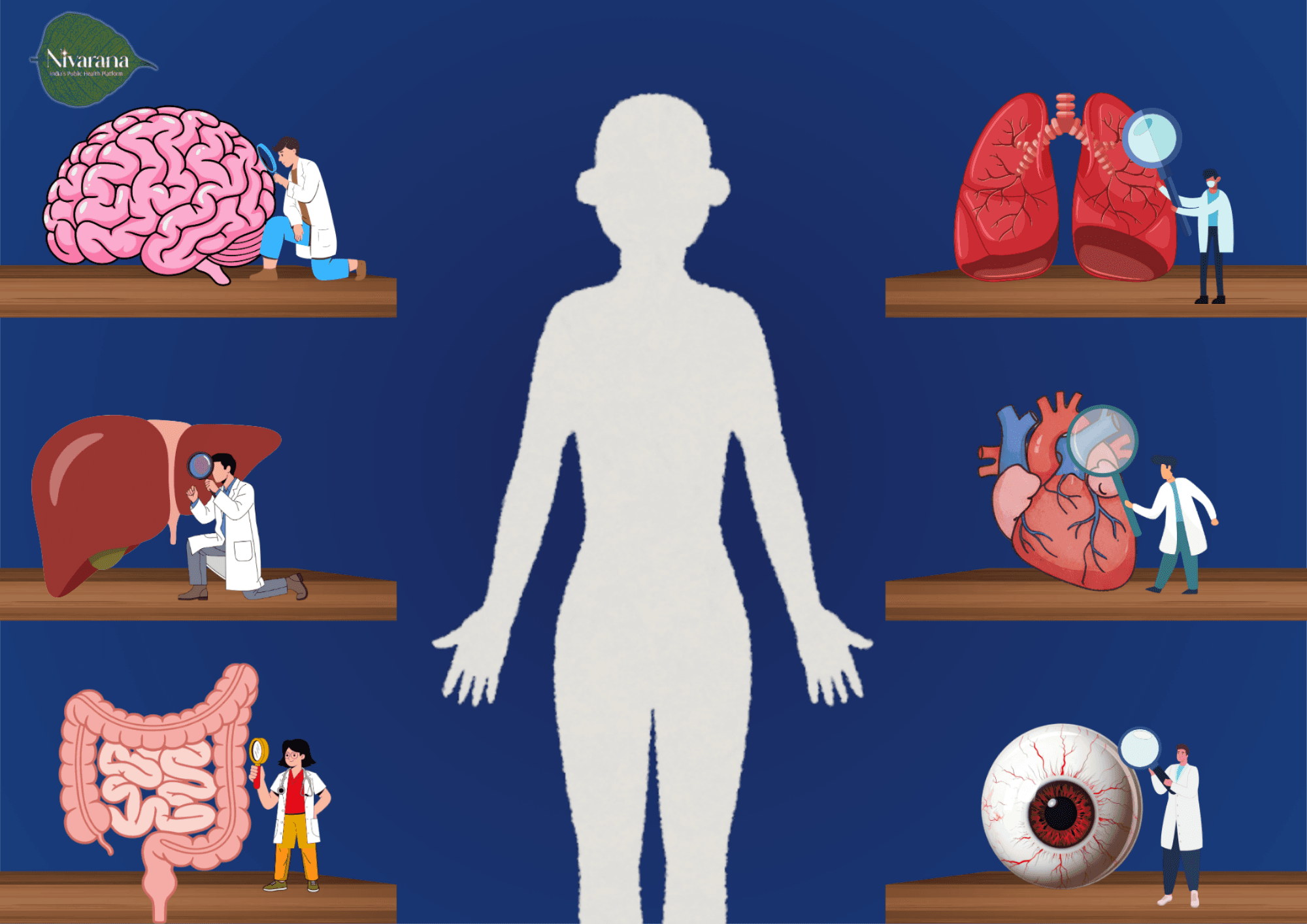
For a patient to go through multiple consultations in multiple departments, yet have the primary complaint undiagnosed, shows a failed system. In a country like ours, the family doctors become a crucial link between managing common diseases and minimizing the bottleneck at the specialty clinics and tertiary care.
This will reduce neurosurgeons managing tension headaches, medical gastroenterologists managing common gastritis and food poisoning, and urologists managing uncomplicated urinary infections. With almost every MBBS graduate seeking super specialties and sub-specialties, the country will soon begin to miss the all-rounders who can assess patients' symptoms, treat most conditions, and appropriately refer necessary ones to the specialists.
Family medicine is currently offered as a postgraduate course in India, but clearly, every doctor passing out of a medical college with an MBBS should be a competent family physician. Courses such as post graduate diploma in family medicine that give importance to patient-centric care should be encouraged. Opportunities such as rural sensitization program, rural health fellowship, travel fellowship, and NIRMAN should become widespread to motivate young doctors to take up broader and meaningful roles in the community.
Towards Reclaiming Comprehensive Care
If medical colleges are to reclaim the idea of “comprehensive care,” the solution cannot lie in more protocols, more scans, or more subspecialties. It must begin with restoring the primacy of clinical medicine—history taking, physical examination, and continuity of care—as non-negotiable skills rather than nostalgic ideals.
First, medical education must be structurally redesigned to reward time spent with patients. Clinical postings should be protected from being reduced to paperwork and service provision. Bedside teaching, supervised history-taking, and mandatory complete physical examinations must be assessed with the same seriousness as entrance exams and examination scores. What is not evaluated will never be valued.
Second, medical colleges need explicit accountability for diagnostic closure, not just procedural outcomes. A patient passing through multiple departments without a unifying diagnosis should trigger review—not be normalized as complexity. Regular interdisciplinary audits and communication that asks what was missed, why it was missed, and who was responsible for asking the first question can prevent such failures from being repeated.
Third, family medicine and generalist training must be central, not peripheral. Every MBBS graduate should leave medical school capable of functioning as a competent family physician—able to listen, examine, prioritize, and refer appropriately. Expanding and legitimizing family medicine pathways, rural fellowships, and community-based training programs is an important part of health system strengthening.
Fourth, healthcare systems must protect doctors from medicolegal fear that replaces care with referrals. Suicide attempts, palliative cases, and complex social contexts demand ethical courage, not bureaucratic avoidance. Legal frameworks and institutional leadership must make it safer to care than to pass the patient on.
Finally, we must confront an uncomfortable truth: technology has become a substitute for thinking. Investigations should follow clinical reasoning—not replace it. A rectal examination costs nothing, requires no machine, and yet could have prevented an old man from losing his hand, his dignity, and his remaining time.
The measure of a medical college is not how many departments it has or how advanced its ICUs are, but whether it can still answer the most basic question when a patient walks in: What is wrong, and what matters most to you right now? Until we rebuild systems that allow—and demand—that question be asked, “comprehensive care” will remain a hollow promise written on hospital walls, but absent at the bedside.
Edited by Christianez Ratna Kiruba
Image by Janvi Bokoliya