For three days, forty-two-year-old Meenakshi did not sleep.
In a small, dimly lit bedroom in tier-two Trichy, her seventy-eight-year-old father was entering the terminal phase of pancreatic cancer. The high-tech, aggressive oncological battles were over. The tertiary hospital had discharged him to home care with a brief nod toward supportive treatment. But the quiet peace the family was promised quickly dissolved into a visceral, screaming agony.
The local pharmacy down the street flatly refused to stock oral morphine. Meenakshi spent forty-eight hours navigating local bus routes, traveling across district lines to a government medical college, and waiting in crowded corridors just to secure a small, inexpensive bottle of syrup. While she was crossing highway toll gates, pleading with institutional pharmacists, her father was dying in pain at home, alone.
The public discourse around healthcare access in India loves a massive, high-stakes battle. We talk constantly about the soaring costs of third-line oncology therapeutics, the availability of cutting-edge cardiac stents, or the heroic expansion of insurance caps like Ayushman Bharat Pradhan Mantri Jan Arogya Yojana to keep someone alive in a tertiary intensive care unit bed.
But nobody wants to talk about the pharmacy bills that arrive after the battle is lost.
As a counselor navigating the landscape of gerontology and end-of-life care, I have watched the conversation around access to medicines completely ignore the quietest, most agonizing phase of human life. This is the transition from trying to cure to simply trying to comfort. The moment a patient enters supportive or palliative care, the definition of access morphs from a macro policy problem into a daily, exhausting psychological war. And right now, the system is designed to let the caregiver break.
The Invisible Pivot in the Bill
There is an unspoken, comfortable assumption among families that when you finally stop aggressive, futile interventions for an aging parent or a terminal patient, the financial bleeding stops. It does not. It just shifts to a different column.
I remember sitting with Ramesh, a sixty-five-year-old retired bank clerk, at his kitchen table. His wife of forty years was bedbound in the next room, dying of advanced breast cancer. The day they made the harrowing choice to stop salvage chemotherapy, their private insurance coverage ceased entirely. Because Indian insurance frameworks and state-sponsored schemes like Pradhan Mantri Jan Arogya Yojana remain fiercely, stubbornly tied to active acute hospitalization, outpatient supportive care and home-based symptom management are left entirely out in the cold.
Every Saturday, Ramesh would place a neat stack of rupee notes on his counter, calculating what he could afford from an absurd, unglamorous cocktail of daily symptom management. He was not buying high-profile drugs. He was buying liquid laxatives to fight the paralyzing constipation caused by heavy pain medications. He was buying anti-emetics for constant nausea, phosphate binders for severe fluid shifts, and the endless daily maintenance tablets for chronic conditions like diabetes or hypertension that do not miraculously vanish just because a person is dying.
For the average middle-class Indian family, this creates a toxic, silent psychological paralysis. The latest National Health Accounts estimates reveal that out-of-pocket expenditure still swallows nearly half of India's total health expenditure. Crucially, retail pharmacy purchases consistently make up the largest single share of that financial burden. At the end of life, it forces families into an unmentioned ethical corner where they must stand at a neighbourhood pharmacy counter and watch life savings dissolve into strips of daily blister packs, quietly calculating the exact rupee value of a loved one's dignity.
The Paperwork of Pain: A Decades-Old Ghost
If you want to see how policy completely detaches from the dirt-level reality of Indian towns, look at the geography of pain relief.
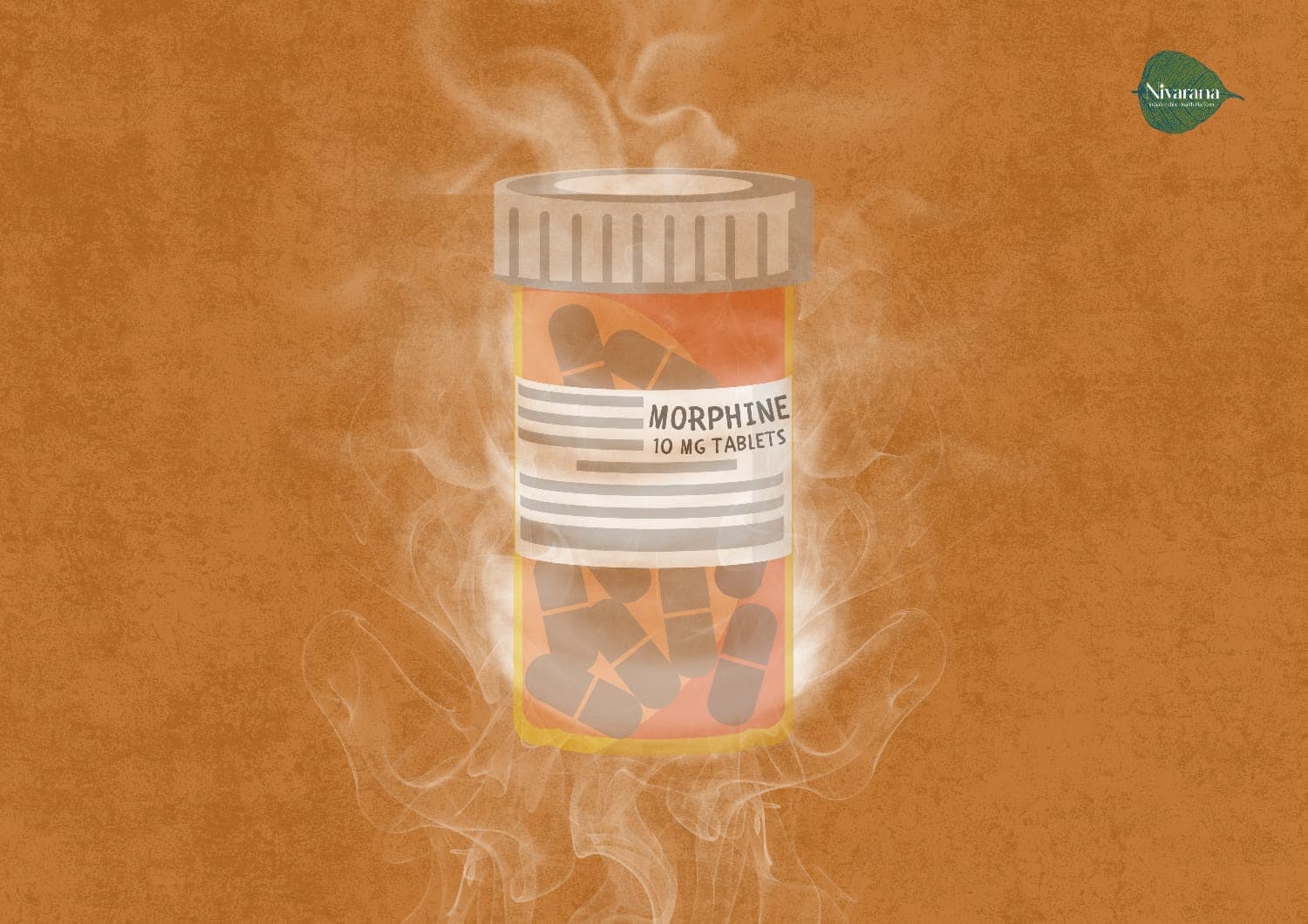
On paper, India achieved a massive milestone by passing the Narcotic Drugs and Psychotropic Substances Amendment Act of 2014. The amendment was specifically designed to untangle the draconian, multi-layered bureaucratic red tape by creating a single-window licensing system for Recognized Medical Institutions. It aimed to make stocking oral morphine, which is the cheapest, most effective essential drug on the World Health Organization list for severe terminal pain, nearly effortless for local hospitals.
Yet today, more than a decade since that law was enacted, if you step outside a tier-one corporate oncology hub, oral morphine is a ghost. The landmark report by the Lancet Commission on Global Access to Palliative Care and Pain Relief revealed a devastating reality. Less than four percent of the Indian population requiring palliative care has access to adequate opioid analgesics.
Why? Because the system is paralyzed by historical fear. Standalone neighborhood pharmacies and smaller community hospitals flatly refuse to apply for Recognized Medical Institution status. They are not afraid of addicts. They are terrified of administrative harassment. A minor clerical error or a slight mismatch in a handwritten narcotic inventory log can bring down severe legal scrutiny, heavy fines, or regulatory threats from local drug inspectors who still view palliative narcotics through the lens of criminality rather than basic human rights.
The Divided Landscape of Care
This bureaucratic gridlock creates a cruel lottery where access is dictated entirely by where you live and how much you can pay. Palliative infrastructure varies drastically across different states and clinical settings. In the public sector, outside of a few progressive states, palliative care is almost non-existent at the primary healthcare level. If a patient is declining in a small tier-three town or a rural pocket in states like Bihar, Uttar Pradesh, or Madhya Pradesh, public health facilities face chronic stock-outs of baseline analgesics.
Conversely, Kerala, through its unique Neighbourhood Network in Palliative Care, successfully delivers decentralized, community-driven care to over sixty percent of its needy population by embedding it directly into local primary health centres and panchayats.
The setting itself introduces an entirely separate layer of inequity. In elite, private tertiary oncology hubs in tier-one metros, pain management is readily accessible. However, it is hidden behind a paywall of high consultation fees and private pharmacy markups. For a family utilizing home-based care without institutional backing, they are left stranded in a regulatory no-man's-land, converting the devoted caregiver into an amateur, desperate medical courier.
The Myth of the Infinite Caregiver
When policy think-tanks evaluate equitable access, they count pharmacy storefronts, supply chains, and price caps. They never measure the physical mileage of the person holding the prescription.
Consider Sunitha, a twenty-eight-year-old information technology professional who took a sabbatical to look after her grandfather suffering from advanced dementia. An aging body in decline does not experience crises on a predictable, outpatient schedule. One rainy Tuesday at midnight, her grandfather experienced a sudden spike in terminal breathlessness and acute cognitive agitation. The massive, hard tablets she had been prescribed weeks ago were now useless. His swallowing reflex had failed.
The structural barrier here is two-fold.
First, our medical supply chains rarely prioritize geriatric-friendly formulations like sublingual liquid drops or transdermal patches outside of major cities. Second, the regulatory framework governing narcotic prescription refills is intensely rigid. To prevent diversion, laws often restrict the quantity of essential pain medicines that can be dispensed at a single time, legally forcing the caregiver back to the hospital clinic for every single refill.
To get a simple prescription altered or refilled to match her grandfather's failing physical capacity, Sunitha had to leave him in the care of a neighbour, commute two hours to the distant tertiary hospital, wait for half a day in a crowded outpatient department corridor, and plead with an overworked physician just to get a signature on a fresh prescription slip. The system treats the caregiver's time, labour, and mental health as a free, infinite resource. It relies entirely on the cultural guilt of the devoted child or spouse to fill the massive cracks in the state's infrastructure.
Expanding the Threshold
If we are ever going to talk honestly about equitable access, we have to stop defining it as the mere existence of a drug on a factory shelf. True access requires concrete, systemic re-engineering.
The first step lies in regulatory simplification and inspector sensitization. The Ministry of Health, along with state drug control administrations, must actively train regional drug inspectors to view the 2014 Narcotic Drugs and Psychotropic Substances guidelines as a mandate for patient access rather than a mechanism for policing. Moving the Recognized Medical Institution application process into a transparent, centralized digital portal will eliminate the administrative paranoia that deters local pharmacies from stocking essential pain medications.
Equally important are decentralized formulary mandates across settings. Public Health Centre formularies under the National Health Mission must be updated to mandate the stocking of geriatric-friendly formulations, such as transdermal fentanyl patches, sublingual liquid drops, and concentrated syrups. True access means recognizing that a body at the end of life cannot process a handful of massive tablets.
We must also work toward strengthening home-based palliative care networks, systematically scaling community-led distribution models nationwide and learning from Kerala's example. By formally training and compensating local Accredited Social Health Activist and Anganwadi workers in basic palliative screening and symptom tracking, essential symptom-management drugs can be delivered directly to the patient's neighbourhood.
Finally, digital prescription continuity and refill easingdeserve urgent attention. Palliative care must be integrated into national digital health frameworks like the Ayushman Bharat Digital Mission. For registered, authenticated end-of-life patients, the system must allow extended refill windows, such as a thirty- or sixty-day supply for confirmed terminal cases, and simplified remote tele-consultation prescription alterations. This ensures that an exhausted caregiver never has to choose between leaving a dying patient's bedside and standing in a hospital queue for a signature.
Policy shifts are often measured in percentages, budgetary allocations, and administrative amendments, but their failures are measured in human exhaustion. Without these changes, access remains a luxury of geography, setting, and class.
Until these gaps are bridged, Meenakshi will still be forced to cross district lines while her father spends his final hours in avoidable pain. Ramesh will continue to stand at the neighbourhood counter, quietly trading his life savings for a few hours of his wife's comfort. And Sunitha will still have to leave a fading mind alone at midnight just to hunt for a signature on a slip of paper.
The true metric of our healthcare infrastructure is not how aggressively we fight death in a high-tech intensive care unit. It is found in how smoothly, affordably, and compassionately we facilitate the exit. Until our policies bridge the gap between theoretical law and the gritty reality at the pharmacy counter, true medical equity is just a myth we tell ourselves to feel civilized.
Edited by Christianez Ratna Kiruba
Image by Janvi Bokoliya