As I got off the phone with a friend who worked as a senior manager at a reputed company, I was very disturbed. She had shared with me that her husband was forcing her not to apply for a promotion at her job so that she could be more available for “his” children. The promotion is long overdue and she was very excited about it which would also mean a big hike in her salary. “How much ever the promotion will pay, I will pay you more than that” was his line of defense.
She was very disappointed and hurt by his reaction.The fact that her career was as important as his and maybe it wasn’t just about the money, hadn’t crossed his mind. She may have not taken up the promotion because the workload would have increased but she wanted to have that choice rather than being told that she should not apply. She did apply though but did not get the promotion finally. That was not all. He had hit her a few times in the past, but when she retorted one day, “if I as much as give you a tight slap, will your masculinity be able to take it?”, he had stopped.
My friend’s sister, however, was not so “lucky”. A trained engineer, who quit her job before getting married so that she could look for a new one at her husband’s place, was stuck in a bad marriage. The husband was unwilling to shift to a bigger city where she could get better opportunities. She had become financially dependent on him and he treated her badly. Once, when she asked for Rs 200 from her husband to buy him a gift, she got slapped because gifting was considered frivolous and a waste of money by her in-laws. She does not even think of returning to her parents’ home to save their prestige in the society and the in-laws take full advantage of the situation.
Another friend described that during her final stages of pregnancy she was pushed off the stairs by her drunk husband who apologized for his mistake when he was sober. But the apology counted for nothing. The terror with which she spent the night huddled fearing for her and her child’s life was grave. Could his apology wipe off the hours of sheer horror and trepidation that she underwent in those hours? And does the trauma ever leave?
After that incident, she was constantly in a state of alarm looking for signs of his drunkenness long before he came home so that she could bolt herself for safety. After a long period of struggling with physical and emotional abuse, counselling and all efforts to save the marriage, she is currently in the process of divorcing him. However, she cannot be seen partying or talking to men because her lawyer has warned her that all these could be used to malign her character in court. The friend mentioned that her soon to be ex had been sending indecent proposals and pictures to other women on social media for years, all the while being married. However, it was up to the woman to preserve her character so that she may not end up losing the custody of her children. The irony is that the man is not even interested in the welfare of his children since he has abandoned his family for a long time but he has promised to make life hell for her.
As I was talking to the friend who has been mentioned earlier in the article she said that she was not alone. She knew a lot of women in her office and outside who face the same dilemma. Working women should be allowed to work as long as they add to the income but they cannot be seen to be ambitious in their workplaces. It was almost as if they should be grateful that they are allowed to work outside. Nothing at work should impede their care giving role at home which is their primary role. Is this the empowerment that our foremothers foresaw for us? Was the fight for education and opportunities just for the woman to add to the family’s income and not to build a fulfilling career for herself?
All this reminded me of an incident during my graduation where the boyfriend of a girl who was the topper of our class remarked jokingly “itna padh likh kar kya hoga, wai chulha choukha hi karna he” (what will happen if you study so much, you will finally end up in the kitchen). In this seemingly joking statement, eons of patriarchal violence is contained. It makes my blood run cold when I think of the implications of sabotaged dreams and aspirations. It also implies the punishment that may be meted out if a woman leaves her rightful place, “the home and the kitchen”.
What is Violence?
These are just some of the more obvious cases of violence against women I know personally. The World Health Organization (WHO) defines violence as the intentional use of physical force or power (threatened or actual) against oneself, another person, or a group/community. It is a public health challenge, as it causes—or has a high likelihood of causing—injury, death, psychological harm, maldevelopment, or deprivation. The most important part of the definition of violence is the intent to hurt. The hurt could be physical, emotional, financial. sexual or a combination.
Impact of Violence
Consequences of physical assault can be wide ranging; from bruises, to gaping wounds, debilitating injuries to death. Sexual assault is very much a reality where STDs, HIV/AIDS, unintended pregnancies and unsafe abortions can result. Physical assault is also a part of these women’s lives but the emotional trauma that they have silently endured far outweighs the visible signs of physical abuse. Signs of physical assault are visible, recognized and treated. Even within a system which is callous to women issues, health care professionals are trained to look for and treat physical injuries. Based on them, legal action can also be summoned. But what happens to the bodies which have absorbed years of emotional abuse?
One of the consequences of physical violence is the emotional trauma that follows. Emotional violence does not leave behind physical wounds but they scar the soul, every single time. And the body remembers. It stores them resulting in severe, lasting repercussions such as chronic anxiety, depression, PTSD, low self-esteem, emotional exhaustion, emotional dysregulation, cognitive dissonance and memory issues.
It has been found that chronic stress rewires the brain leading to structural and functional changes that mirror physical trauma. It can even manifest in physical symptoms such as chronic pain, gastro-intestinal problems, and fibromyalgia and chronic fatigue syndrome among a host of other psychosomatic traits. Isolation, loneliness, ,shame, eating disorders (especially bulimia nervosa) are commonplace among abused women. The effects are numerous but in a society which still stigmatizes mental health and emotional issues are routinely dismissed and pushed under the carpet, awareness and recognition itself becomes a massive hurdle. Even health care systems do not have adequate services and professionals to meet the demand.
Violence does not end with the victim/survivor alone. It has intergenerational impacts. When a woman suffers from abuse, she does not suffer alone. Her children become the first calamities. Abused women may react differently. Some women will carry on as if nothing has happened even if the brutality occurs in front of the children. Some women may become overprotective of their children. Some may become distant and neglect their children and there are cases where women have turned to abusing their own children.
Witnessing hostile situations at home stunts the growth and development of children and affects young boys and girls differently. It reinforces the gendered notions of aggressive behaviour in boys and learned passivity and helplessness among girls. It greatly affects their interpersonal relationships as they grow into adults. Coming from such families, these children learn violence as a way of life and carry the cycle forward. These children are more likely to be victims of emotional, physical, or sexual abuse and have health issues such as obesity, diabetes including mental health problems.
This continuation of the cycle can be halted if the institutional apathy is arrested. Health care institutions are the first stop for victims of violence. Health care professionals have to be sensitized and trained to recognize symptoms of not only physical abuse but also mental/emotional abuse. Treatment of both physical and emotional abuse should be undertaken with equal urgency. It cannot suffice to just treat the physical symptoms and let the emotional abuse go under the radar. Mental health is equally important and health care professionals have to be trained and sensitized in this department.
The treatment should not be limited to the woman being abused but should be extended to her family members too, particularly her children. Young boys and girls are at an impressionable age and their mental health has to be of utmost concern, since they are silent onlookers of the spectacle of violence that plays out in their homes on a regular basis, be it physical beatings or verbal degradation. Intensive therapy and counselling has to be made accessible to children of women who experience intimate partner violence to arrest the impact that the violence has on their young psyches.
Are we Heading Forward?
In India, spiritual leader Aniruddhacharya has been accused of making derogatory remarks saying women with multiple relations were not of good character. What could be more paradoxical than when Girdhari Lal Sahu, husband of Uttarakhand Women Empowerment Minister Rekha Arya allegedly said "women of Bihar can be obtained for marriage for Rs 20,000 to Rs 25,000". The statement leads credence to the fact that even though one's wife may be the light bearer of woman empowerment, the mentality of looking at women as commodities does not go anywhere.
One cannot discount the verbal violence directed towards women when one considers that the Bangladesh Jamaat-e-Islami chief Ameer Shafiqur Rehman compared working women with prostitutes and did not receive backlash from Nurunnisa Siddiqua, secretary of the women’s wing of the party who concurred that men are the managers of women as per the Holy Quran. When "leaders" of the society make such claims it is reflective of the entire society.
The extensive criticism of this ideology cannot mask the stress, anxiety and fear that these words trigger. The current situation of the rise of right wing ideologies across the globe paints a morbid picture with restricted abortion rights for women. Institutions are being used to maintain stranglehold on women’s lives.
Margaret Atwood’s The Handmaid’s Tale does not seem impossible anymore. But It does not end there. A UN Spotlight Initiative issue brief warns that climate crisis is driving a surge in gender based violence by intensifying the social and economic determinants that engender continuing violence. Extreme weather, displacement, food insecurity, and economic instability compound the pre-existing inequalities and make women even more vulnerable to violence, particularly in already fragile communities.
Violence in any form has to be recognized, condemned and halted else the human civilization will be shouldered by people who are broken both physically and mentally. Willful blindness can no longer be a choice. Violence is a public health issue and it is high time it is framed as a health care concern for appropriate policies to be formulated.
Edited by Christianez Ratna Kiruba
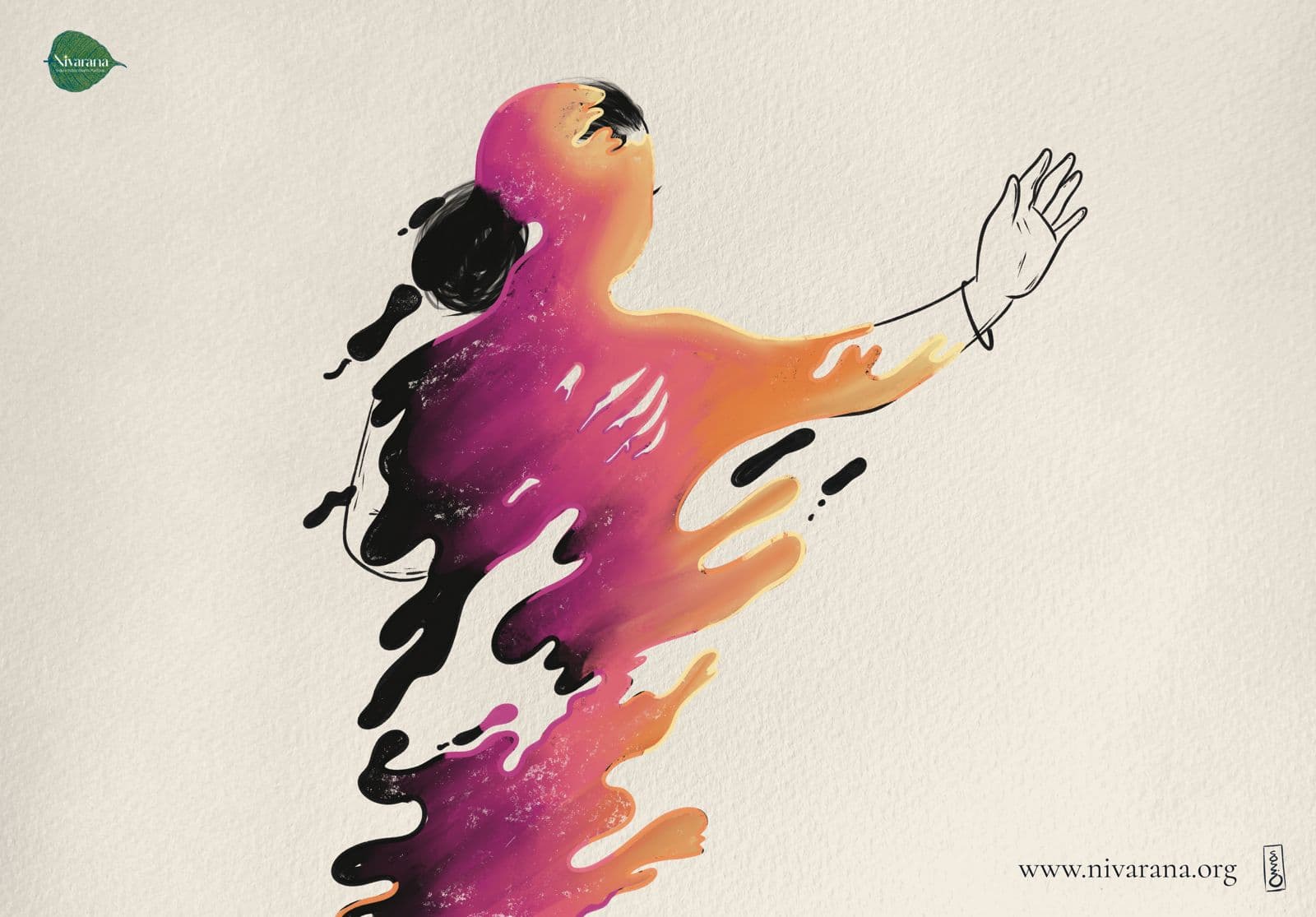
Image by Gayatri