“I want to do a small project in tuberculosis, which involves some service to the community. Could you please guide me?” asked my third-year MBBS student Siddharth. I readily agreed, happy to have pulled in one more into the bandwagon of my enthusiasm for tuberculosis and community care! Soon, his friends Anushri and Gayatri, who were also interested, became part of our team, and we developed a proposal to screen the population in three slums of our urban area for tuberculosis (TB) and follow up their care pathways.
We spoke to the TB diagnostic centre of the National Tuberculosis Elimination Programme (NTEP) in the area, regarding the activity, and they agreed to do the Truenat testing for the individuals we screened and identified to be at risk. Permission letters and ethical clearance were obtained from our college, and the trio set out into the field for screening.
They screened around 800 consenting individuals from the area using the 4-symptom questionnaire, which is routinely used for active case finding activities by NTEP (The programme expanded it to a 10-symptom questionnaire in September 2025 after our activity was over). They also carried out awareness sessions for the households on the symptoms of TB and the need for getting tested.
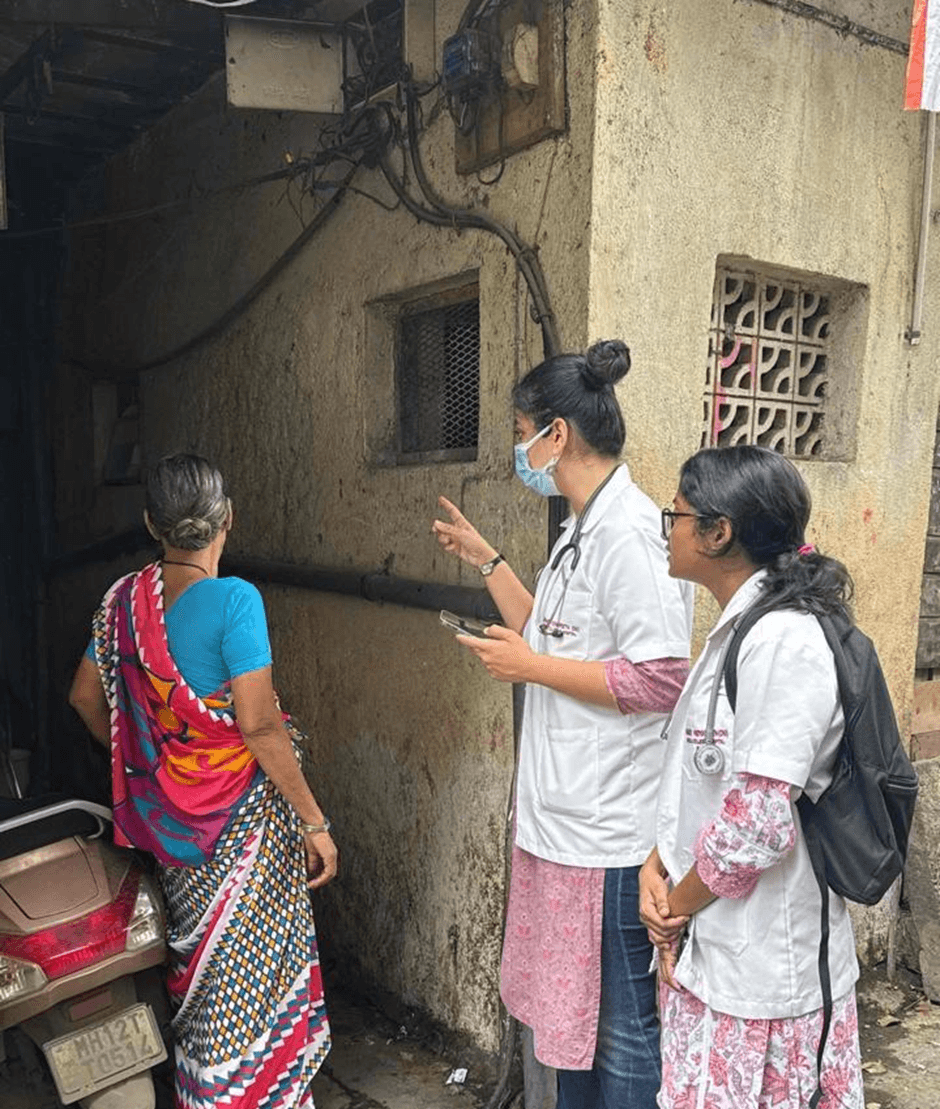 (Gayatri and Anushri during TB screening in the slum)
Going around the three slums on their scooty, hopping house-to-house, on holidays, they even faced the wrath of some very hostile family members who shouted at them for paying a visit!
But they continued, imbibing the good spirit of true community health work, with a smile on their faces. The team identified 4 individuals with presumptive TB and counselled them to go for testing at the NTEP centre with the referral slip we gave. It was planned to follow up with them after a week to know the test results or to know the reasons for not going for testing, and to motivate them to do testing.
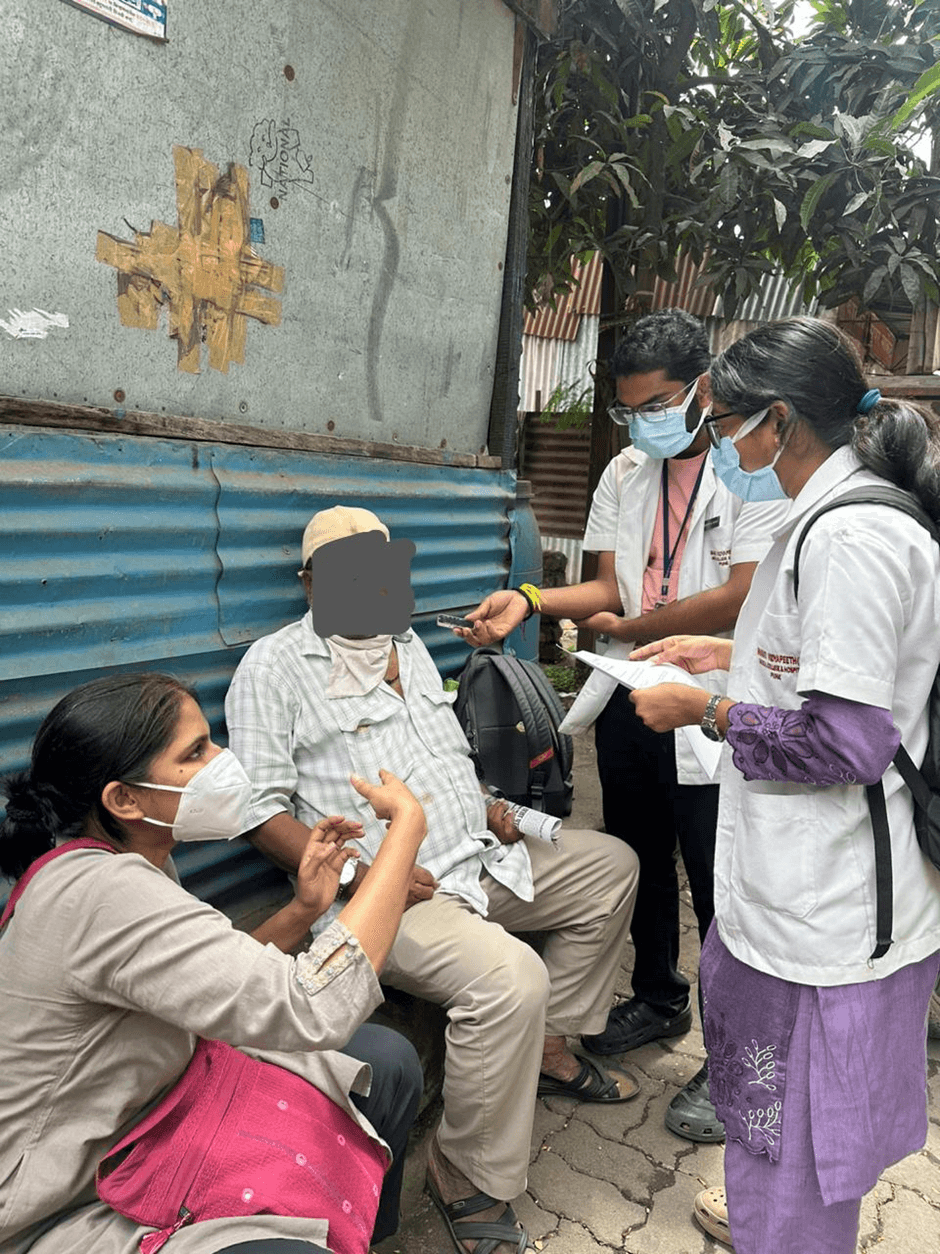
(Swathi, Siddharth & Anushri during TB screening in the slum)
Now came the dreaded ‘Public health complication’, a routine occurrence in most of our field interventions- none of the four had gone for testing! While I was expecting this, the trio was disappointed. But they were not ready to give up. They enquired the reasons (which were indeed the most common ones- hesitancy to get tested, fear of stigmatization, loss of wages) and realized that persuading the presumptive TB individuals to go to a centre and give a sputum sample for testing was hard.
They tried approaching the NTEP centre to send their ASHA workers to collect samples, but as is the case with most of urban India, effective fieldwork and linkage mechanisms were not present. The centre made it clear that no facilities for the field collection of sputum samples exist. So, we quickly constituted a team of medical social workers and MBBS interns of our college, trained them in the correct method of sputum sample collection and triple-layer packaging of samples for transportation to the laboratory.
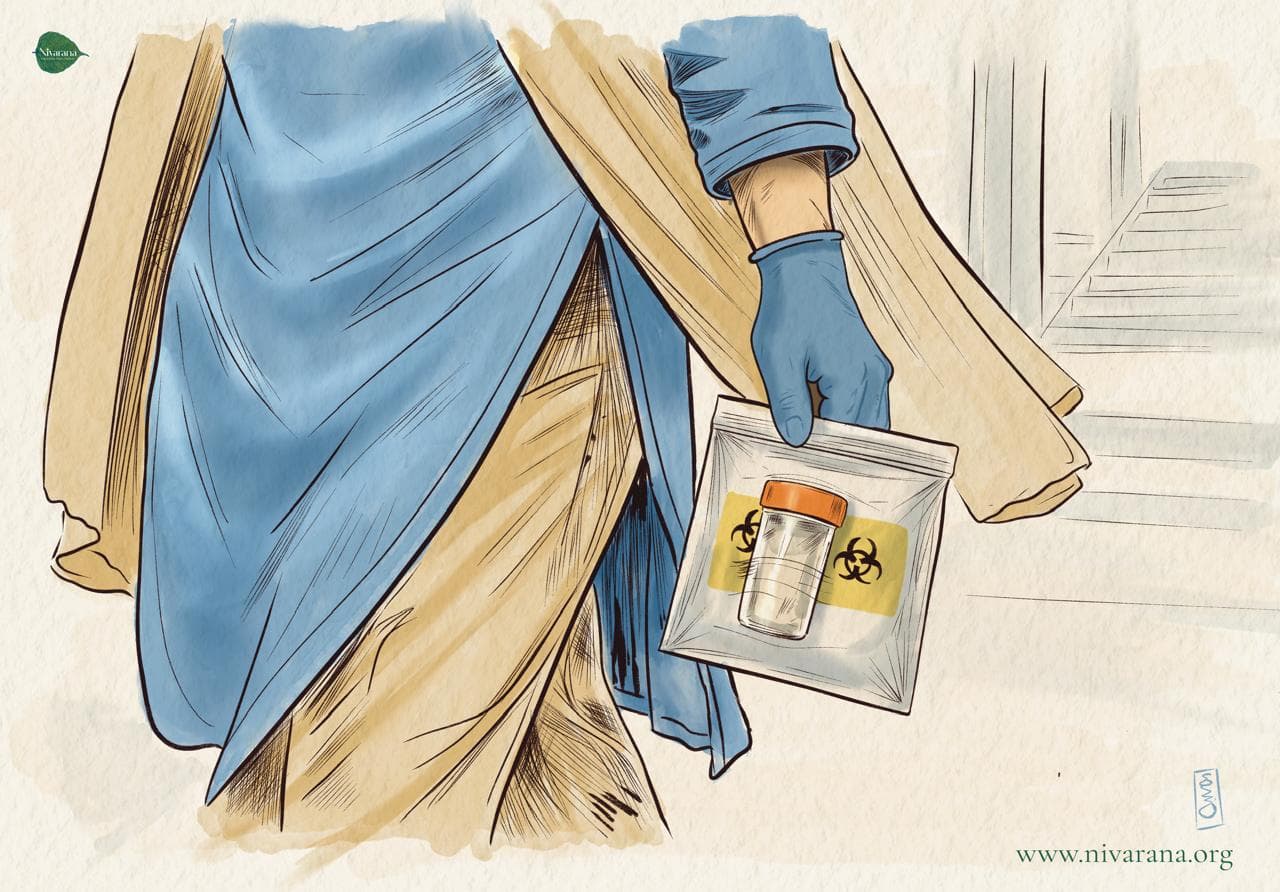
We liaised with our Microbiology department to obtain consumables for sample collection, and the team went to each of the presumptive TB households and collected good-quality sputum samples. Then it was transported to the NTEP centre for testing, where the centre personnel expressed amazement on seeing the samples triple-layer packaged appropriately as per the protocol! Truenat was done, and one sample turned out to be positive for TB with no Rifampicin resistance, while others turned out to be negative.
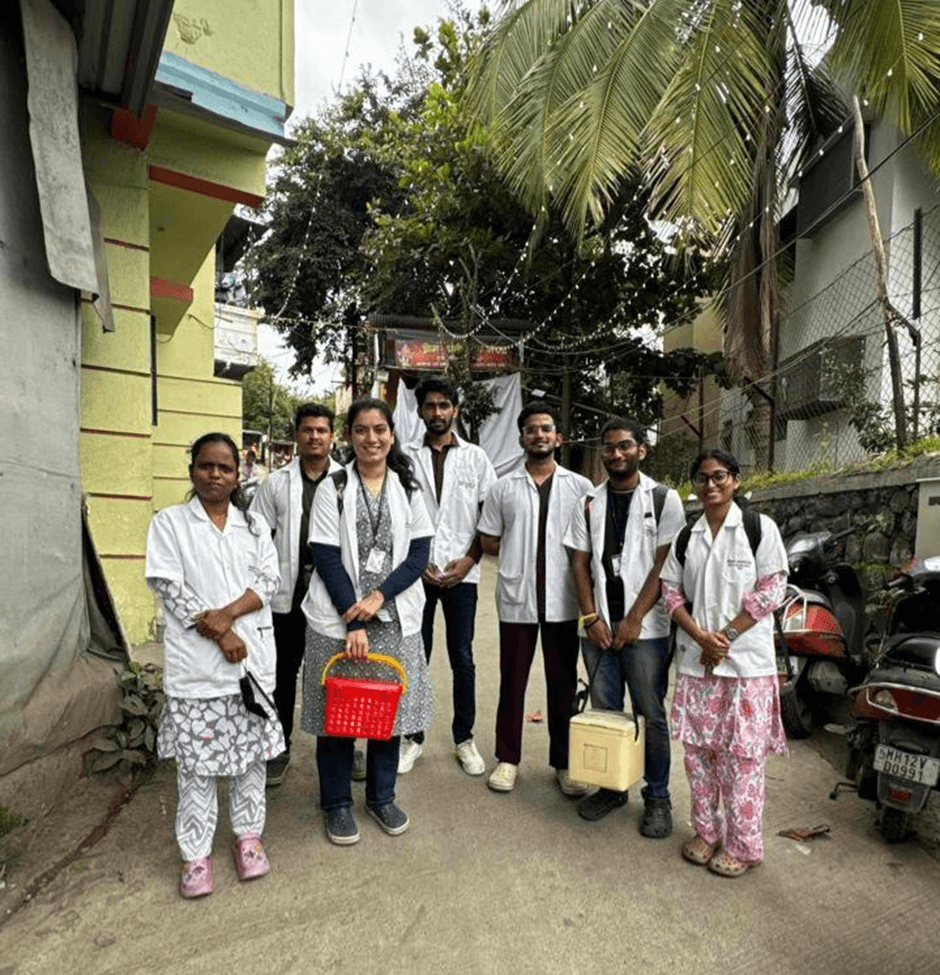
(Team constituted for sputum sample collection from the field, consisting of researchers, a social worker, and MBBS interns)
Now came the next ‘public health complication’- getting the lady who is TB positive (let’s call her Ganga) to come and collect the report from the centre and start treatment. On meeting the NTEP centre personnel, we realized that she hadn’t shown up for two days. We promised to bring Ganga to initiate treatment and set out for her home.
55-year-old Ganga lived in an overcrowded, filthy slum area where there was no concept of a drainage system. Over a hundred families were squeezed into a small area, and dirty water flowed all around.
Ganga shared a tiny one-room house in this area with her husband, and it was a task to reach her place through the narrow alleyway. We took her outside to a well-ventilated space a few metres away, where we could talk in privacy and explained to her about the need to go to the centre to collect the reports (since our function was to facilitate the screening, we were not authorized to reveal the result to her).
She told us about her bodily weaknesses, inability to go to work, and the difficulty in climbing the stairs of the building where the NTEP centre was situated (it was on the second floor of the nearest municipal corporation hospital building). My reassurance that everything is arranged at the NTEP centre and that she just needs to go worked. She was counselled about her result, and treatment was started.
The trio kept checking on Ganga’s medication adherence, wellbeing and other parameters over the course of her treatment.
They had also learnt a valuable lesson on the practical on-ground difficulties faced while trying to implement a public health intervention.
Siddharth told me that this whole activity made him realize that what is envisioned in policy is often very far removed from what is practiced in reality. Gayatri was in awe of the diverse needs of the population and how the programme had to balance them. Anushri rightly labelled it the ‘human side of public health work’.
They all realised how sputum sample collection and transportation still remains as a challenge in our TB care scenario. Additionally, the apathy from the community in getting tested owing to a lack of awareness compounded the issue. Very often, we dismiss initiatives of community screening due to their low ’yield’ of positive cases. But in our exercise, though the ‘yield’ was only one person, which is minuscule, it resulted in a life saved and three students whose worldview was transformed.
After Ganga’s third-month follow-up visit for our study last week, Siddharth came to me to update. He said to me with a bright smile, “Ganga is doing very well now. She is taking her medication regularly and has started going to work for a week. She asked me if she could stop the drugs. I reinforced to her not stop the drugs and to take the full course.”
“Don’t you feel content about what you have done? It was your effort that saved a life!”, I smiled. “Yes ma’m, I feel so happy,” he replied. The teacher inside me beamed with joy, the community health physician inside me, however, realised that even Ganga’s care was insufficient. Siddharth was quick to catch on, he said, “Ma’m, she still has not got her Ni-Kshay Poshan Yojana money, and also, her husband has not been initiated on TB preventive treatment yet.”
This made me realise how the first good step only reveals what steps need to be taken further. There were indeed miles to go before we slept.
Edited by Christianez Ratna Kiruba
Image by Gayatri