Seven-year-old Munni comes home from school, shoes dusty, braids loose. Her grandmother takes her bag and tells her to wash her hands. Munni’s eyes search for her mother. The room is dark, silent. Her mother lies face down, with a black eye and bruised cheeks. Munni hugs her from behind, feeling a sharp pain in her belly.
Dadi calls her to eat. The house is quiet. Her father comes home, eats, and sleeps in Dadi’s room. Munni has questions, but something inside her stops her.
The next day, she overhears her mother talking to a neighbor. “I heard the noises; I thought it was your turn today.” They laugh. Munni doesn’t understand, but she feels the same sharp pain. The bruises, the shouting, the laughter- they all signal that this is expected. No one is angry. No one stops it. Violence has a rhythm, like summer heat, like water cuts.
Munni watches ants carry crumbs twice their size. If it is “someone’s turn,” she wonders, will it be hers one day?
Through silence, justifications, and humor as armor, Munni learns the unspoken lessons: this is normal. Endurance is safer than resistance. The quiet heaviness of the house presses down on her, teaching the most powerful lesson: domestic violence, normalized by family and society, can feel invisible, even to those who live through it every day.
Violence rarely announces itself in the consulting room. A patient may present with repeated accidental injuries, while others may report headaches, insomnia, or gastrointestinal complaints. Unless physicians and nurses are trained to consider abuse as a possible cause, the underlying violence often remains invisible. In that brief consultation lies an extraordinary opportunity to intervene safely and meaningfully.
A Widespread Global Problem
Violence against women is widely recognised as a pervasive violation of human rights and a major public health concern. The World Health Organization defines violence against women as any act of gender based violence that results in, or is likely to result in, physical, sexual, or psychological harm to women.
Globally, an estimated one in three women experiences physical or sexual violence in their lifetime, according to the World Health Organization 2021 data. Data from the National Family Health Survey 5 confirms that 29% of women age 18-49 have experienced physical violence since age 15, and 6% have experienced sexual violence in their lifetime.
However, despite these numbers, only 14% of women who have experienced physical or sexual violence by anyone have sought help to stop the violence; intimate partner violence remains widespread across regions and socioeconomic groups within India according to the data from International Institute for Population Sciences in 2021. The health consequences are profound and enduring, placing healthcare systems at the forefront of both identification and response.
Violence against women is not only a law and order problem; it is a public health emergency. It unfolds quietly in clinics, maternity wards, emergency rooms, and mental health services. Healthcare providers are often the first, and sometimes the only, professionals with whom survivors can safely speak. In those moments, the physician can either be an agent of protection or a passive witness.
Increasing Sickness in Women and the Relationship With Trauma
Violence against women in India is strongly associated with significantly elevated levels of depression, anxiety, and trauma-related symptoms, with survivors frequently experiencing persistent psychological distress.
Psychological abuse and controlling behaviours, even in the absence of physical violence, contribute to worsening mental distress over time, indicating that non-physical forms of violence have substantial mental health consequences. A high proportion of women exposed to intimate partner violence report post-traumatic stress symptoms, including sleep disturbances, irritability, and intrusive recollections, reflecting enduring trauma impacts.
The psychological burden of violence is often accompanied by somatic complaints such as sleep problems and bodily tension, demonstrating the interconnected nature of emotional trauma and physical symptom expression. Furthermore, maternal experiences of domestic violence significantly increase the risk of anxiety, depression, and other common mental disorders among adolescents, highlighting a clear intergenerational transmission of mental health vulnerability.
Women are disproportionately affected by chronic illness and autoimmune diseases and are prescribed antidepressants at higher rates than men, with conditions such as multiple sclerosis shifting from historically equal prevalence to significantly higher diagnosis rates among women
Dr. Gabor Maté argues that health is deeply shaped by relational and social environments, emphasizing that chronic emotional stress alters neurological, hormonal, and immune functioning in ways that can contribute to autoimmune and chronic disease.
In his book, When the Body Says No, he explains that trauma and prolonged stress dysregulate stress-response systems, creating measurable physiological consequences. Furthermore, Maté contends that patriarchal cultural norms position women as ‘shock absorbers’ of society: being the default caregivers responsible for maintaining relational harmony and often at the expense of their own emotional and physical needs. This chronic, socially reinforced self-suppression may help explain women’s heightened vulnerability to stress-related mental and physical illness.
Structural and Cultural Limitations in Healthcare
It is important to acknowledge that physicians want to help women who experience violence, yet structural and cultural limitations constrain many. There is a significant gap between traditional biomedical education and the realities of holistic, trauma-informed, socially aware care.
Medical training has historically emphasized disease, organs, and pathology over context, social determinants, and lived experience. As a result, barriers persist. These include lack of formal training in responding to intimate partner violence, limited consultation time, fear of offending patients, uncertainty about legal implications, inadequate referral networks, and ongoing cultural stigma.
Addressing these barriers requires institutional commitment, workforce education, and integrated policy development. While documentation systems and referral pathways are critical, incorporating trauma-informed care into medical curricula and everyday practice is equally essential.
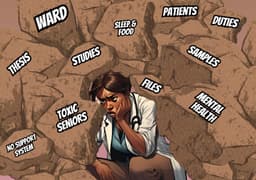
Medical training in India teaches students how to remain calm, efficient, and objective in moments of crisis, which is essential in emergency care. Yet when patients present with injuries rooted in violence, the work often extends beyond sutures and forms.
There is a quiet and difficult line between clinical detachment and apathy, and learning to stand on that line with steadiness and compassion is rarely part of formal teaching. Students are encouraged to protect themselves emotionally, but they are not always shown how to do so without closing off to the human story in front of them. With more space for reflection and guided conversations about trauma in the medical curriculum, medical education could help carers cultivate a kind of strength that is not only technically competent but deeply humane.
How We Can Change
Doctors need to be trained in trauma-informed care. Even brief empathetic engagement with a provider has been shown to reduce psychological distress and increase the likelihood that survivors will seek further support. A regulated, attentive presence is not ancillary to treatment; it is therapeutic. Cues of safety from healthcare professionals include welcoming facial expressions, calm vocal tone, respectful interactions, empowering intake procedures, and active, compassionate listening.
There are a few small steps that any physician can take to begin incorporating trauma-informed care in their daily practice
Identifying Abuse
There is a need for physicians to identify and actively look for the likelihood of violence when women present to them with symptoms that might be psychosomatic. Actively asking and giving the space for disclosure is paramount.
Understand the Dynamics of Abuse
Survivors often return to their abuser for complex reasons: fear, financial dependence, isolation, hope for change, or love. Leaving is a process, not a single event. Research shows that survivors may cycle through leaving and returning multiple times before they can safely leave permanently.
The key insight here is that the physician must understand that if their patient chooses to return to the abuser, it is because that is how the dynamics of abuse function. Their choice to return is not a reflection on the physician's care or worth.
A patient who returns to the abuser still deserves compassion and support when they come back to the provider, and not disappointment. For Example: Instead of thinking, “I failed because they went back,” think, “I am still here, and I can continue to offer support when they’re ready.”
Shifting from Fixer to Supporter
One cannot force a survivor to leave, but you provide ongoing support, validation, and resources. Most women in the Indian context do not want to leave or are unable to leave. Indian physicians must be ready for that reality and focus on what they can control. Often this involves safety planning, medical care, mental health support, and creating a safe space for disclosure.
Even small shifts such as screening for adverse childhood experiences, asking about social stressors, and validating emotional suffering can profoundly impact patient well-being.
Lifelong Support, Not Immediate Resolution.
As most Indian women most likely will not seek mental health support beyond the immediate healthcare provider, they must get an empathetic and non-judgmental space in the doctor's office. Prioritising non-coercive care, asking for consent before examining, and respecting their boundaries within the doctor's office provides them with a safe space that they are unable to find in their familial environment.
Being consistently available, nonjudgmental, and noncoercive can make the difference when a survivor is ready to seek help again, and sometimes the best gift you can give a survivor is believing in their story.
Maintaining Boundaries While Staying Compassionate
Doctors must also protect their emotional well-being by recognizing what is theirs to carry and what is not. Using reflective practices, supervision, or peer support to process frustration, sadness, or anger is important. Journaling or debriefing with colleagues after challenging encounters can prevent burnout and compassion fatigue.
This work is demanding and emotionally intensive. And hence it is important for doctors to also remind themselves that their choices are not a reflection of their care. Practicing self-compassion to prevent burnout as regulated clinicians create regulated clinical spaces.
Break the Silence: Honor Women, End Violence
In many Indian homes, violence against women survives not only because of the act itself, but because of the silence that surrounds it. We are a country that reveres the feminine as divine, that bows before goddesses as symbols of power, protection, and creation, yet we often look away when real women are harmed. This contradiction should trouble us deeply.
It is not acceptable to treat violence against women as a private matter or an unfortunate inevitability. We have been taught that family honor must be preserved at all costs, but there is no honor in silence that protects abuse and abandons those who suffer.
A cultural shift begins when we see women not as vessels of reputation, not as symbols of sacrifice, and not merely as victims, but as complete human beings whose safety and dignity are non-negotiable. Change takes root in ordinary spaces, in conversations at home, in classrooms, and in the way we raise our children to understand that love can never demand fear or silence.
But until then, doctors' offices and spaces of healthcare delivery have the potential to be pockets of safety for these women if the medical curriculum prioritises teaching trauma-informed care
Edited by Radhikaa Sharma
Image by Janvi Bokoliya