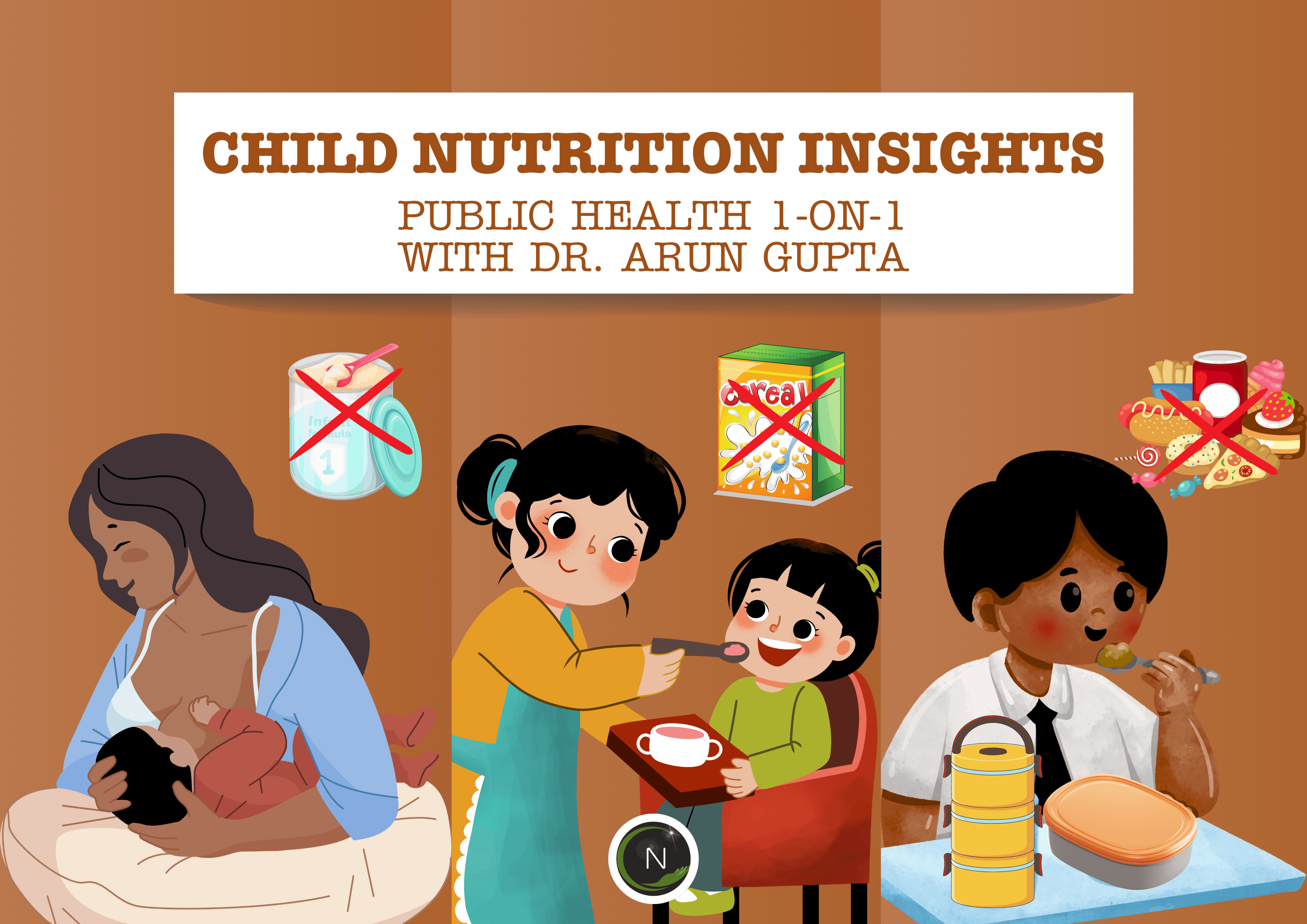
This article is transcribed from an interview given by Dr. Arun Gupta, a paediatrician and public health scientist to Nivarana in 2022
In the 1980s, a young paediatrician in Punjab began to grow disquieted by the health practices he saw. While babies were separated at birth from mothers for observation, bottle-feeding was considered the norm. “Meanwhile, rampant diarrhoea in the wards led to deaths of babies like ninepins,” says Dr Arun Gupta. There had been little to no mention of successful breastfeeding in his postgraduate training.
His concern grew when he conducted a small study among 100 mothers- all instructed to feed their newborns a particular formula. As the growing dependence of mothers on infant formula became evident, Dr. Gupta realised the lack of accurate information available to these parents. In addition, promotional ploys used by companies emotionally persuaded parents that formula feeds were better for their babies- which was categorically untrue. This led to him becoming a relentless advocate to champion the cause of breastfeeding against the tide of corporate interests.
“I challenged the Indian Paediatrics- an academic journal of the Indian Academy of Paediatrics as to why they got money from Nestle for advertisements,” says Dr. Gupta. At a time when multinational companies targeted new mothers with the promise of convenience and modernity, Dr. Gupta found allies in like-minded paediatricians and a public health group VHAI (Voluntary Health Association of India), who called for a ban on baby food promotion.
After meeting with the International Baby Food Action Network(IBFAN) at Manila in 1989, Dr. Gupta decided to take his advocacy even further. He moved to Delhi and founded the Breastfeeding Promotion Network of India (BPNI) in consultation with four more paediatricians. He gave up clinical practice in the early 1990s and devoted himself to BPNI full time.
“Nutrition plays a key role in protection and improvement of child health, development and survival. For Infants and young children, the key nutrition comes from breastfeeding. Initiating breastfeeding within an hour of birth and providing skin-to-skin contact to babies is critical in saving more than 20% of newborn lives. Analysis has also shown that early breastfeeding is associated with protecting from undernutrition in young children. However, infant formula is introduced to newborns commonly and more so during cesarean births. WHO adopted the International Code of Marketing for Breastmilk Substitutes in 1981, which restricted the marketing and promotion of formulas and feeding bottles. The then PM, Mrs Indira Gandhi, supported this back home- but it took almost 11 years to get the law passed in the Parliament.“
The Infant Milk Substitutes, Feeding Bottles, and Infant Foods (Regulation of Production, Supply, and Distribution) Act of 1992 (IMS Act) was a landmark legislation that set the stage for safeguarding breastfeeding practices across the nation. It curbed corporate influence on young families, which prioritised profit over the health of populations. Companies could no longer make unsubstantiated claims or exploit emotional advertising to persuade mothers to switch from breastfeeding to formula feeding.