Lakshmi, a 60-year-old lady from rural Tamil Nadu, came to the surgical OPD with complaints of abdominal pain for the past month. After some tests were done, we found that she had cancer in her large intestine - a condition that would require surgery to remove it.
The bigger worry, however, was whether it would be possible to do surgery on her at all, considering how poorly nourished she looked.
Lakshmi was just skin and bones with a BMI of 15 (Normal: 22.5-27.5). She looked extremely pale, and her blood tests showed a haemoglobin of 5.7, less than half the normal. As expected, her blood tests also revealed that she was severely deficient in protein and other nutrients.
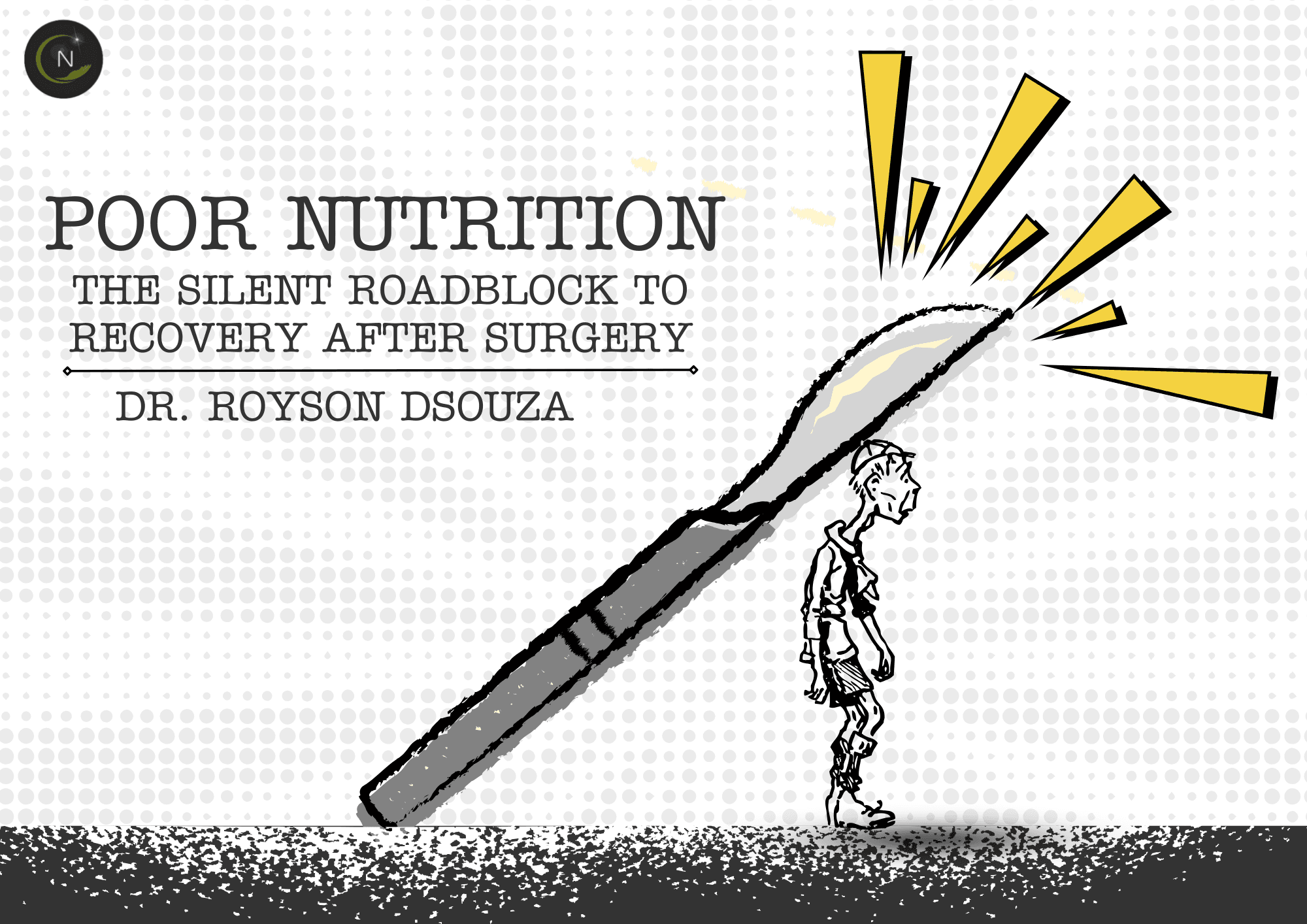
The outcome of any surgery depends a lot on the individual's nutritional status.
Malnourished patients are at a higher risk of developing complications like infection, poor wound healing, prolonged weakness, and even death in severe cases. Disease and poor nutrition form a vicious cycle where one impacts the other and causes the patient's condition to worsen.
If the disease affects any part of the digestive system, food intake or absorption will be affected—and the result will be even worse.
Lakshmi belonged to a poor household that was surviving on agriculture. Being a dependent member of a large family, she experienced neglect. Her diet on most days consisted of only two meals of kanji (rice with water). Since she developed abdominal pain, her food intake was further reduced, worsening her already malnourished body.
Any patient with cancer of the large intestine requires a fairly major operation. In patients who are malnourished but do not require urgent surgery, it is best to postpone it and build them up nutritionally. Unfortunately, Lakshmi’s tumor was blocking her intestine. If not operated immediately, the blocked intestine could burst and cause a life-threatening infection.
Hence, she underwent emergency surgery, but the procedure had to be modified because she was malnourished. Her tumor was removed, but the ends of the intestines on either side of the tumor were not sewn together as the chances of them fusing were extremely low. This is because her body did not have enough reserve nutrition to undertake such a healing task.
Therefore, a stoma (intestine brought out through the abdomen for the stools to pass) was created.
Sadly, her condition did not improve after the surgery. She developed an infection of the surgical wound due to low immunity (another result of poor nutrition). She could not begin eating in time as her intestines hadn't regained their function soon after the surgery. When she required chemotherapy after the operation, adequate doses of the same couldn’t be administered as her body wouldn’t tolerate the side effects.
Eventually, Lakshmi abandoned her treatment and did not return to the hospital. Before she did so, she often complained about her poor quality of life. “I always feel tired and sick. I am unable to do things I was able to do before my illness. I feel like I am a huge burden on my family as they have to look after all my needs,” she said.