Mahadevamma (name changed) stays in a village near the Tamil Nadu border of the Chamarajanagar district. During the last month of her pregnancy, feeling suddenly unwell, she sought care from a Primary Health Centre near her home, which promptly referred her to the district hospital.
Given the seriousness of the situation, she was accompanied by her parents to the faraway district hospital, but felt suddenly at sea. Mahadevamma was asked to visit a certain room in the hospital premises, where they could not find anyone. They did not know why they were sent to that room- who were they supposed to meet, what would happen next, nothing.
Mahadevamma and her parents had travelled the entire day just to reach the district hospital from the primary health centre, and they had not eaten anything all day. She had lost a day’s worth of wages and had not even met a doctor. Stranded in an unknown town, Mahadevamma’s panic grew. What is she to do next?
What was the problem?
Mahadevamma’s story is a representative story of how most of the Adivasi people struggle to receive dignified care at public hospitals. India is home to more than 700 distinct Scheduled Tribes (STs), many of whom self-identify as Adivasi (first people), reflecting their historical claim to indigeneity. They comprise more than 8% of the Indian population.
Adivasi communities are one of the most marginalized and vulnerable communities in India. Historically, they have faced structural challenges leading to poor socio-economic development as compared to other communities. This also reflects in the poor health indicators of ST communities across the nation. Both research in Adivasi health as well as the experience of NGOs suggests that this is largely a systemic issue, rather than being due to problems in their healthcare seeking. Both health equity and justice considerations, therefore, require health systems to address this through innovative program design that makes health services responsive to Adivasis.
Universal Health Coverage (UHC) is an important target identified under the SDGs. Universal Health Coverage is the principle that all individuals and communities should have access to the full spectrum of quality health services they need. This includes promotion, prevention, treatment, rehabilitation, and palliative care. These services should be available without resulting in financial hardships for citizens. It is also about building a health system that leaves no one behind, ensuring equity, financial protection, and health security for everyone.
Efforts to improve the health status of Adivasi populations in India have often suffered from a lack of a culturally sensitive and appropriate approach to designing and delivering health care. Meaningful participation platforms for Adivasi communities to engage with health services have also been lacking.
Often, Adivasi community members do not trust modern healthcare facilities. Many report prior care-seeking experiences marred by disrespectful communication. Being ignored by care providers is one of the prime reasons for refusing to access “free” healthcare in government hospitals and primary health centres (PHC). Most of them struggle at each step of the care pathway, much like Mahadevamma and her parents.
Experiences in distant city/district hospitals can be daunting for anyone who does not have experience in navigating through large city spaces. Many Adivasi patients lack social networks in large cities when it comes to receiving health care. Taluk and district hospitals often lack adequately trained staff with awareness of Adivasi identities, or the skills needed to deliver culturally appropriate care. Even if an Adivasi Accredited Social Health Worker (a frontline health worker) is available to accompany them to visit a district hospital, they are often unable to navigate and support care or explain management options to patients.
Chamarajanagar district in Karnataka is home to several Adivasi communities, including Soliga, Jenu Kuruba and Betta Kuruba. Mistrust in public hospitals among Adivasi patients was highlighted in an article in IDR by Susheela Kenjoor Koraga and Mahantesh S K. The Tribal Health Navigator program (THN program) being implemented in the Chamarajanagar district and four other districts by the Tribal Welfare Department of Karnataka offers learning and insights on how we can potentially improve coverage of health services for Adivasi communities and thus move closer to achieve Universal Health Coverage.
What was the solution, and how did it develop?
In 2012, IPH Bengaluru’s research team partnered with the Vivekananda Girijana Kalyana Kendra (VGKK) in a Participatory Action Research project with the Soliga Adivasi community in Chamarajanagar to improve maternal health. Supported by the WHO Alliance for Health Policy & Systems Research, the initiative aimed to co-design and implement interventions with local communities as partners. A common theme that emerged through the participatory workshops was the sense of alienation for Adivasi patients seeking care in distant district hospitals.
The Jilla Budkattu Girijana Abhivruddhi Sangha (known as the Jilla Sangha) is a federated community-based organisation (CBO) of Adivasi communities from villages, sub-district and districts. It was one of the partners who sought to implement a pilot initiative. “Health navigators” were deployed – community members who could help Adivasi patients referred to district hospitals for care. The Jilla Sangha took the lead, and, in collaboration with the IPH Bengaluru’s team, co-designed and implemented a pilot where community-based navigators were identified in each taluk of the district. They would support Adivasi patients. This pilot revealed that community members felt supported by the ‘navigator’.
This small pilot emboldened the IPH team and the Zilla Sangha to approach the Tribal Welfare Department to consider implementing a larger-scale program in the Chamarajanagar district within the district and taluka hospitals. The Karnataka state Tribal Welfare Department proactively responded to the suggestions and developed a program called “Tribal Health Navigator Program’ to be implemented in five districts of the state - Chamarajanagar, Kodagu, Mysuru, Udupi, and Dakshina Kannada. The Jilla Sangha and IPH Bengaluru's team actively engaged with the Tribal Welfare Department and supported the initial development and implementation phase of the program.
How does the program work?
The program provides one Adivasi nurse each as a Navigator at the Taluk and District hospitals. These Navigators can be contacted at the entry of the hospitals and their phone numbers are available with health care providers at the hospitals for communication and coordination. On a daily basis, they identify (or patients often approach them) Adivasi patients and support them.
These Navigators carry out multiple activities, often going beyond the mandate of their role. They guide patients to the hospital when they receive an initial call from any village. When patients reach the hospital, they are accompanied to different sections for consultations or for carrying out investigations.
The Navigators engage with hospital staff on behalf of the patients and talk to patients/caregivers about care plans and decisions made by care providers. They act as conduits, communicating with patients and attendants in their native language (Sholaga / Soliganudi) while also speaking Kannada, the language of communication in hospitals.
They sometimes look after patients when the caretaker needs a break or steps out of the hospital for some reason. If a patient needs to be transferred to another health facility, they accompany the patient and the family to support this transition. The support provided by the Navigators is an important part of how Adivasi patients and their families experience the program, helping ensure that care is both safe and dignified.
Community’s experience of the program
The program has assisted more than 2200 Adivasi patients between May 2023 and December 2025. As more Adivasi patients experience the support of the Navigators through this program, many community members now feel confident to visit hospitals to access care. The trust with the Navigators has become synonymous to a large extent with the trust placed on hospitals among many Adivasi beneficiaries. One of the female Adivasi community members during an interview shared, “Yes, in our village, whenever someone falls sick or needs to go to the hospital, we contact them (the Navigators).”
This confidence and trust have been partly facilitated by having access to the Navigators’ phone numbers. Those who have visited hospitals and received support from the Navigators share their experience with others in the community and also share their contact information. Often, the Navigators receive a call from villages if someone needs to visit the district/taluka hospital, and they further receive guidance from the Navigators.
During interviews, many community members shared that the Navigators are considered their own. With a shared Adivasi identity, they have been endorsed by community members, making people feel comfortable approaching the Navigators whenever they need to visit the hospitals. They also find it reassuring that Navigators undertake multiple tasks to ease their burden when they reach hospitals to receive care. As a woman remarked during an interview,“There’s a strong bond and trust, since they’re one of us.”
What does this program demonstrate?
Universal health coverage is not merely making free health services available through hospitals or primary health centers, but also ensuring that all populations, especially the systemically sidelined, are covered. Studies have shown that Adivasi communities do not automatically benefit from the mere physical availability of free health services, since structural and socioeconomic barriers sideline them before they ever approach a health centre.
India's commitment towards universal health coverage requires that health services are not only just made available, but are also used. The THN program reaffirms the need for health program design with communities through NGOs and other intermediaries using participatory learning and action. It has been shown to result in better acceptance by the communities and, hence, likely better utilization leading to better UHC.
In the context of health inequities and achieving UHC, the focus on innovating need not always be on new technologies. Small, thoughtful ways of reaching the last mile need human interventions. While simplistic, the effect such initiatives can have on how we approach equitability is massive. Innovations in processes answer the “how” of ensuring access and utilization of care. This new way of engaging with communities, demonstrated by the THN program, is one such process innovation to attain UHC.
Edited by Radhikaa Sharma
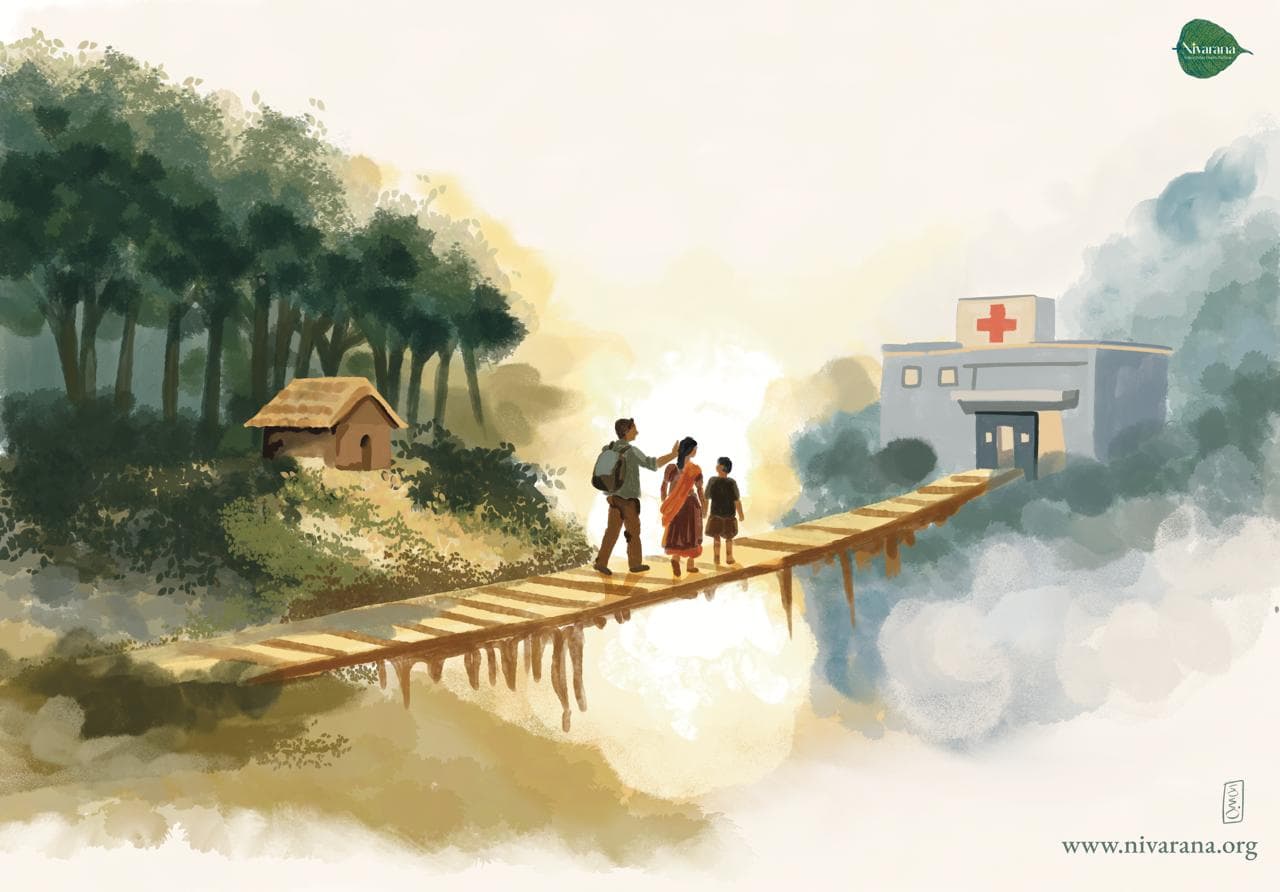
Image by Gayatri