Reena*,a 35 year old factory worker with two children, is married to Suresh* who works as a shopkeeper. She works eight hours at the factory and returns home to take care of household chores, then helps her children with their homework. By night, she is completely exhausted; there is no rest- only more chores centred around caregiving for family. Every night, her husband insists on having sexual Intercourse, citing it as the foundation of marriage.
Worried about the next day, the lack of contribution in house work by her husband and the unmet emotional needs in marriage, she finds it difficult to agree to have sex. At times, her husband suggests “experimenting” and trying out acts he enjoys seeing in pornography, such as anal sex and wife swapping. She is horrified by his requests, but cannot confide in anyone about her troubles. Even her closest friends and family would lose respect for her, were she to share her experiences aloud. After all, aren't the secrets of the marital bed supposed to be kept between husband and wife?
Varsha* presented 3 days after delivery with excessive bleeding. Assuming that it could be a case of secondary post partum hemorrhage (bleeding from the uterus after childbirth), the doctor examined the patient. On examination, the doctor found no problems except for a long vaginal tear. The patient explained, sobbing quietly, that she could not refuse sexual advances from husband. Having recently undergone a vaginal childbirth, her birth canal was still tender and inflamed, and sex led to vaginal tears and bleeding. (*Names changed to protect identity)
Many women in the peri-menopausal and menopausal age group report vaginal dryness and a drop in sexual desire. Women with cancer and other long term illnesses often are found requesting their doctors to prescribe no sexual activity for a particular period. They also ask if the doctor can counsel their husband to restrict sexual activity during treatments which can be exhausting or painful, such as radiotherapy.
If women share these issues with their close friends or families, they are advised to “adjust”; their husbands might start having an extra marital affair if they refuse to comply with sexual requests. On the other hand, there are also male patients who visit out-patient departments for other illnesses, going on to share, with distress, that their wives’ sexual desires don’t match theirs, and they refuse sex very frequently.
Marital Realities- Sex, Superiority and Consent
Such stories are not uncommon in our country, but they lead us to an uncomfortable truth. The forcible acquiescence to sex within a marriage is marital rape or sexual violence within intimate relationships. It is characterized by forcing or attempting to force a partner to take part in a sex act, sexual touching or non-physical sexual event when the partner does not or cannot consent.
Marriage is considered sacrosanct in our country. The marital union is respected, and is central to society in most cultures. There is also a rise in non-marital intimate relationships in India, such as live-in relationships, with long term partners often sharing similar dynamics as married spouses. Sexual intercourse within intimate relationships like these can have physical and mental health benefits. However, disproportionate power in relationships can lead to in violence.
The National Family Health Survey-5, conducted across the country, revealed that 23.3% of Indian women are married before 18 years of age, even though child marriage is illegal. Working women constitute only 41.7% of the fairer sex, mostly employed in agriculture, domestic work or construction work. The remaining 58.3% of women perform unpaid domestic work– cooking and cleaning, or caregiving work for children and elderly in their own homes.
Our society is patriarchal, and men are deemed superior to women. They are considered the head of their households, and bestowed with decision-making powers for the entire family. In such societies, girl children face gender discrimination in the home, schools and society, right from their births. Girl children are susceptible to experiencing childhood abuse and neglect at the hands of parents and relatives. They may also grow up witnessing violence within their own families.
How Society Disempowers its Women
These childhood experiences, and the culturally accepted practice of moving to the in-laws’ residence after marriage, can result in skewed beliefs in a woman’s own mind. Having grown up in a world where men wield power and make decisions, she may rationalize abuse within marital relationships.
Women are systemically isolated from their own support systems;friends and family are left behind, replaced by her in-laws and husband. The new identity of a wife and soon, a mother, can reduce the woman’s own identity, leading to unhealthy attachment and dependence upon husband and in-laws.
With this new identity as a wife and a mother, a woman is expected to be subservient and sacrificial. This can make it difficult for the woman to identify signs of violence in her own marriage; humiliation, insults, jealousy, control and physical abuse take on different forms, and are sometimes hard to identify.
Women can struggle to leave abusive relationships due to multiple reasons. Economic dependence on her husband, or fear of losing her children and her standing in society often holds a woman in an abusive marriage. Most of all, the stigma associated with refusing to comply with tacit social norms keeps women silent in the face of abuse.
Conflicts arise in every healthy relationship, and can be resolved peacefully. In marital conflicts, however, violence can result due to the lopsided dynamics between the husband, in-laws and wife.
Such violence between husband and wife can result in mental and physical health consequences for both the couple and their children.
The World Health Organisation defines Intimate Partner Violence as a pattern of behavior in an intimate relationship such as marriage that is used to gain or maintain power and control. This type of violence can take different forms such as physical, sexual, emotional, economic or psychological and even abandoning the wife.
Of the married women in India, 29.3% experience spousal violence and 6% report sexual forms of violence. As per the National Crime Records Bureau 2023, of all the crimes against women, 31% are committed by husbands and in-laws.
Hiding in Plain Sight
Sexual violence within the marriage can take on different forms. Husbands may force the wife to have vaginal/oral/anal sex; have sex with someone else; drink or take any substance to have sex against will; have sex without condom; replicate a sex act from pornography; video-record sexual act; have sex with the intention to hurt wife; threaten to sexually abuse someone if the wife refuses sex; have sex during vulnerable physiological state such as menstruation, pregnancy, breastfeeding or menopause.
One can wonder how sex within marriage can be considered violent, when most marriages, arranged or love, are consensual acts between two adults. However, for every sexual act, enthusiastic consent is required from both the partners. If the consent is not provided enthusiastically and forced sexual acts are committed, even within marriage or romantic relationships, sexual violence occurs.
A culture of shame and silence surrounds this issue, and it is a taboo to discuss it in public. Scientific literature has documented that when women are exposed to sexual violence, it results in direct reproductive health issues such as genital injuries (bruises and abrasions), increased risk of unplanned pregnancies, abortions, sexual transmitted infections such as HIV, still births, pelvic inflammatory diseases, urinary tract infections.
Recurrent nonconsensual sex can affect women’s physical health, resulting in heart disease, diabetes, hypertension, irritable bowel syndrome, chronic pain, headaches or migraines. Working women can find it difficult to concentrate and be productive at work, affecting their financial stability. The powerlessness when experiencing sexual violence can result in mental health issues such as low self esteem, loneliness, depression, post traumatic stress disorder, anxiety, suicidal thoughts and attempts.
To cope with the physical and mental pain of this violence, women may resort to unhealthy habits or coping skills. Since it is culturally unacceptable for a woman to smoke or drink in our country, she might choose other unhealthy habits- overworking, social withdrawal, overeating, or self blame. Long term use of these negative coping skills can lead to multiple mental health disorders. In the National Mental Health Survey 2015-2016, we observe that females have a higher prevalence of depression (3%) compared to males (2.4%) and neurotic and stress-related disorders (females 5.7%, males 4.8%).
Sexual violence within marriage is usually not seen in isolation; it is often accompanied by other forms of violence such as cruelty and dowry harassment from in-laws. In understanding violence, an intersectional lens is a useful tool to understand the experiences of women. Social status of gender, poverty, education, caste, tribe, disability, employment, housing conditions, responsibility of child rearing, religion, sexual and gender minority status concurrently influence the experience of violence.
Solutions- on Paper and in Reality
One of the key pillars of achieving Vision of Viksit Bharat by 2047 is 70% women workforce participation. In line with the drive for formalization of the economy, more women should enter formal sector employment with adequate social security coverage such as health insurance and pension. Social norms of marriage and child rearing should respect the autonomy of women.
Rigorous implementation of Child Marriage Act, 2006 to protect the victims and penalizing the promoters should be ensured with community participation. Under the Protection of Children from Sexual Offences Act 2012, sexual acts within a child marriage should be treated as an aggravated penetrative sexual assault.
In Protection of Women from Domestic Violence Act 2005, any act which endangers the physical or mental health, safety and wellbeing of the woman due to sexual abuse is also considered as domestic violence. As per Section 85 of Bhartiya Nyaya Sanhita Section 85, if the husband commits any act of assault causing bodily harm or mental cruelty such as emotional torture, he can be punished with up to 3 years of imprisonment along with fine.
Mission Shakti, launched by the Ministry of Women and Child Development, brings together key support systems for women through its two components—Sambal and Samarthya. While Sambal focuses on safety through initiatives like One Stop Centres, Women’s Helpline (1091), and Nari Adalat, Samarthya provides support services such as Shakti Sadan and Working Women’s Hostels. One Stop Centres offer integrated medical, legal, psychological, and shelter services for women facing violence, while Shakti Sadan supports rehabilitation and reintegration. Although Nari Adalat is yet to be implemented nationwide, it aims to provide accessible, community-based justice.
While these laws and restitutions for women exist in theory, societal expectations and norms- paired with administrative delays and low conviction rates- often hinder large-scale change. While we have come a long way in protecting women’s rights, society continues to equate marriage with unconditional consent.
Sexual violence remains unmentionable in polite society, and its consequences surface in our clinics, labour rooms, and mental health services.
Any meaningful change depends on how marriage itself is understood. Consent has to be recognised as ongoing, specific, and revocable. This understanding is shaped early, through what children observe at home, what young people are taught about relationships, and how men come to understand intimacy. Norms around partnership need to address respect, communication, and mutual willingness.
Healthcare settings are often where the consequences surface. Women seek care for injuries, chronic pain, reproductive concerns, or psychological distress, while the context of violence remains unspoken. Simple, validated screening tools can be used in clinical settings to identify violence within marriage, administered with privacy and sensitivity. Training healthcare workers in respectful healthcare for suspected DV patients can make disclosure possible and care accessible.
Responding to such disclosures requires preparedness. Healthcare workers need training in offering mental health first aid, recognising trauma, and documenting injuries appropriately. They also play a crucial role in linking women to support systems: psychiatric care, legal services, police support, and safe shelter and rehabilitation services. Care only begins at diagnosis, and must extend to enabling access to rehabilitation and recovery.
Prevention begins earlier. Age-appropriate reproductive and sexual health education for children and adolescents, including discussions on consent and gender-based violence, is essential. Schools and Anganwadis provide a critical platform for this engagement. Strengthening the School Health Programme under Ayushman Bharat, along with building the capacity of Health and Wellness Ambassadors, can help embed these conversations within existing systems.
The problems underlying marital rape and sexual violence are multifaceted, and any sustainable action towards resolution must be similarly multi-pronged. A community- based, culturally grounded, intersectoral response must link health systems, education, legal services, and social support. Most importantly, we need to show girls and women that they aren’t alone. Ensuring dignity within marriage is not just a private concern; it is a reflection of the values a society chooses to uphold.
Edited by Radhikaa Sharma
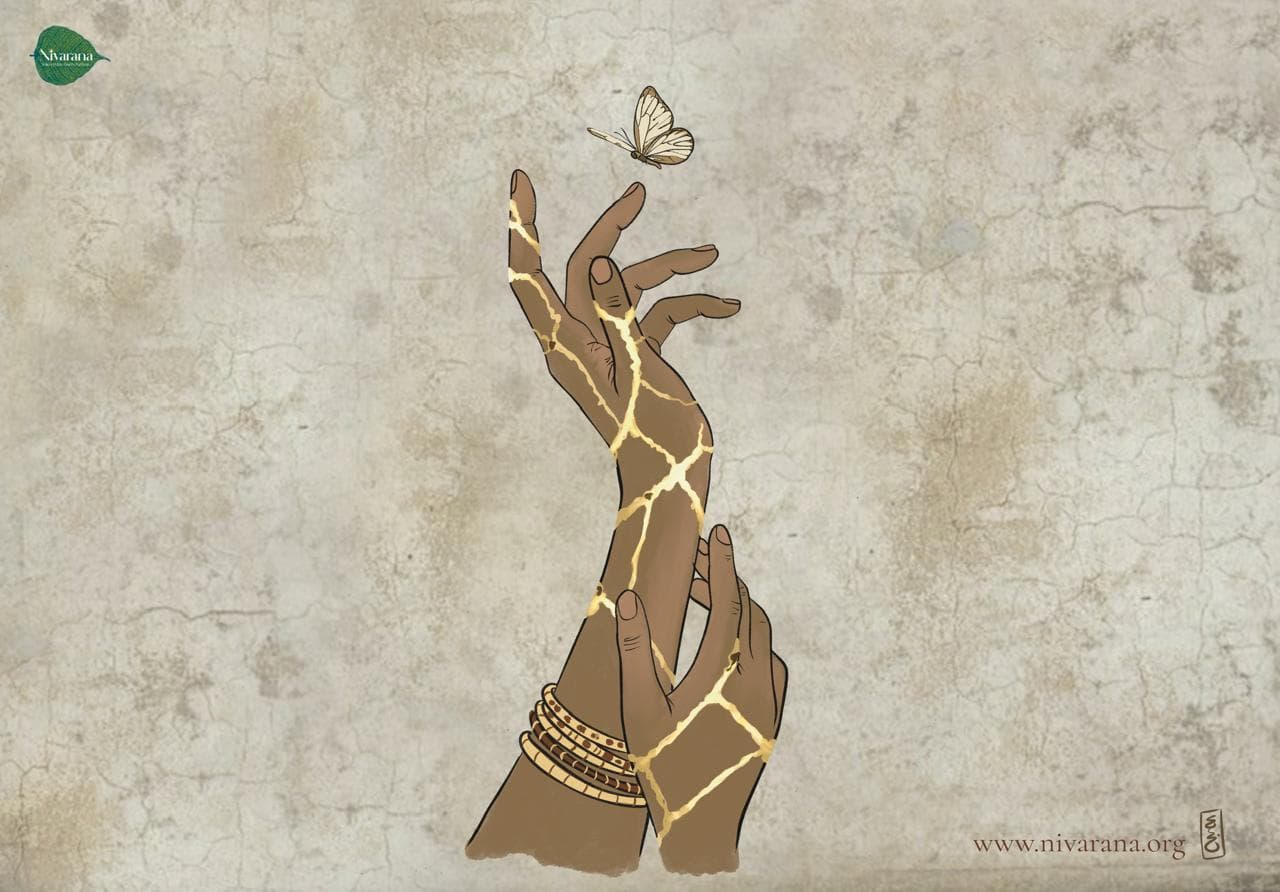
Image by Gayatri