In November 2024, the Bellary District of Karnataka began to report sudden, unexpected deaths in its maternal wards. Women, who were otherwise healthy after cesarean section deliveries in the District Hospital, began to develop high fever soon after the surgeries, and passed away. An investigation into these deaths revealed that the Ringer Lactate solution administered to these women was contaminated with endotoxin. Endotoxin is produced by bacteria, caused by substandard regulation of the production process.
These findings revealed the dark underbelly of the counterfeit drug racket in Karnataka's pharma sales. Last year also saw verified reports about counterfeit drugs in the state.
We, the members of the Drug Action Forum-Karnataka (DAF-K) and Savatirika Arogya Andolana Karnataka (SAA-K), protested these shocking incidents. To raise public awareness and demand free and quality medicines in government health facilities, we organised a “Right to Health Jatha” in 15 districts of Karnataka in February 2025, along with many other human rights groups.
During last year’s Jatha, we conducted district-level press meets, protest rallies, and submitted a memorandum to the Chief Minister of Karnataka through the local District Deputy Commissioners. Despite all this, we received no positive response from the Chief Minister.
Consequently, along with around 40 other progressive, people-centred partner organisations and networks, we organised a “Right to Health” Jatha in all 31 districts of Karnataka from February 2-17, 2026.
Our demands from the state government are as follows: to provide free and quality medicines in all health facilities, to not privatise government hospitals using the Private-Public Partnership model, and to enact a Right to Health legislation.
Free High Quality Medicines in all Government Health Facilities
“Whenever a person seeks outpatient treatment anywhere in India, 60% to 70% of the expenses are on medicines. So, we demand that all government health facilities in the state provide free and quality medicines to all. There should be 24X7 availability of all essential medicines in all public health facilities. No patients should be asked to purchase medicines from private medical shops", says Swathi S. B., a public health doctor and member of SAA-K.
According to a Medicine Expenditure survey conducted by the SAA-K in 2024, across 12 districts of Karnataka, 568 persons spent Rs. 4,05,140/- on medicines, she states.
But these free medicines must also be of good-quality and sourced through proper mechanisms according to the people in the Jatha.
This has already been established by a few states, such as Tamil Nadu (1995), Kerala (2007), and Rajasthan (2011) in the past to provide free medications to the people in their state.
In 2003, the Karnataka state too had such a plan. It had created the Karnataka State Medical Supplies Corporation Limited (KSMSCL) to provide free medicines; unfortunately, this is not functional on the ground as yet.
The CAG report in 2024 clearly outlines major flaws in the public procurement of medicines in Karnataka. Typically, we find private pharmacies flourishing just in front of many government hospitals across Karnataka, a clear proof of the inefficiency of KSMSCL in implementing the Free Medicines scheme, something that must be worked on as a priority.
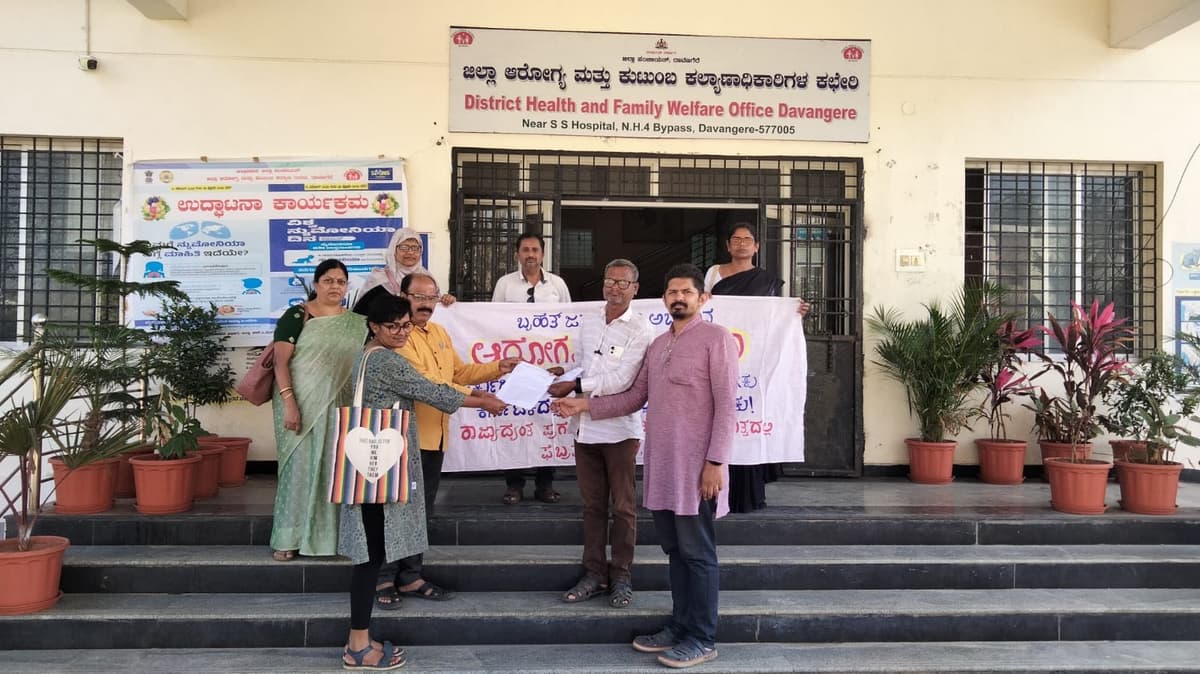
(Davangere, Feb 2026, Right to Health Jatha handing a memo to the District Health and Family Welfare Office)
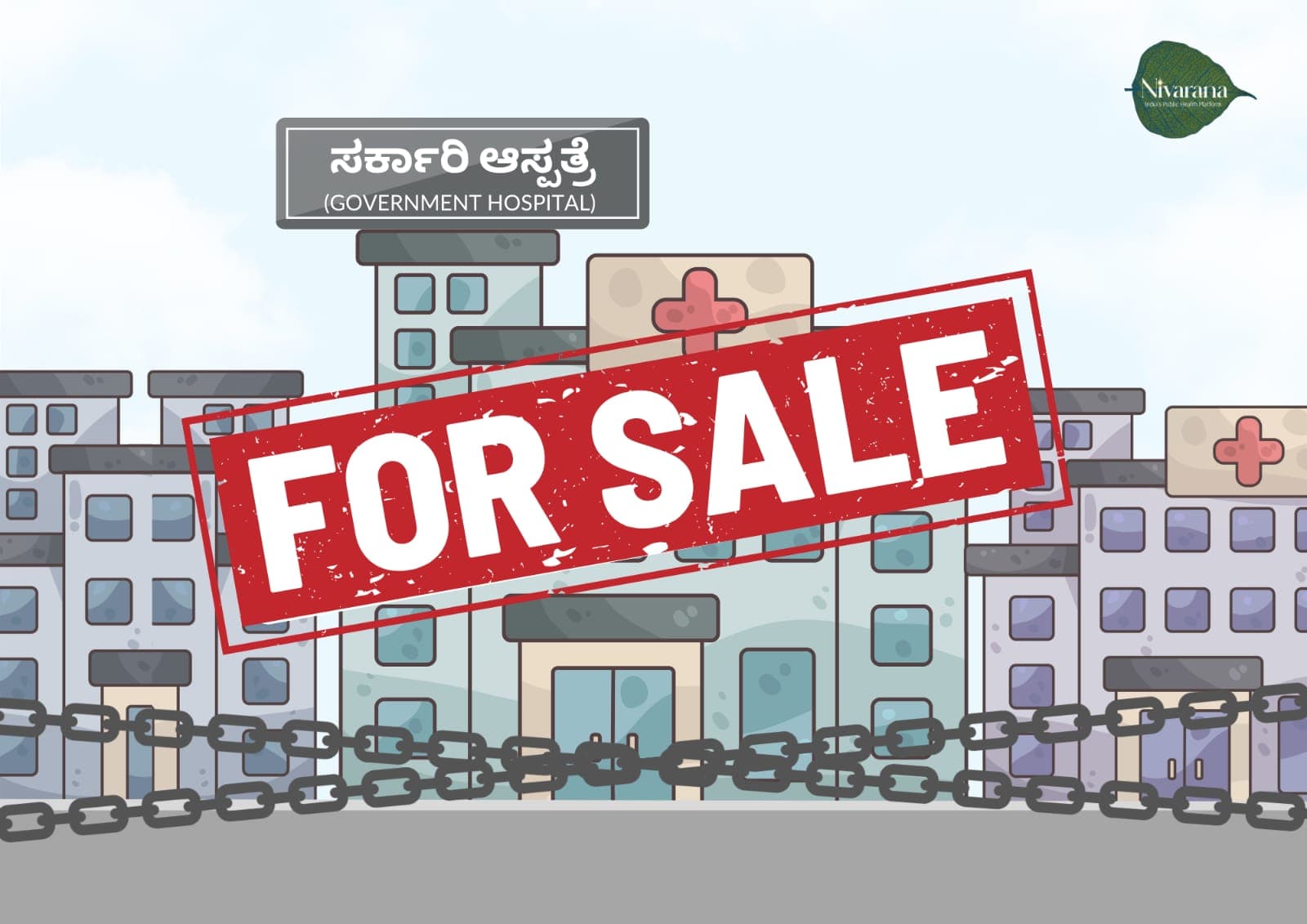
No Privatisation of Government Hospitals
In 2024, the government of Karnataka announced a proposal to privatize seven district hospitals (in Tumakuru, Vijayanagara, Kolara, Dakshina Kannada, Udupi, Davanagere and Bangalore Rural districts) as these districts lack a government medical college. Currently, the government plans to hand over these District Hospitals to the private sector under the PPP (Public Private Partnership) model, as per the guidance issued by the NITI Aayog.
“Privatizing District Hospitals is totally anti-people as it will violate their basic rights through excess healthcare charges and denying treatment to the needy," said Gopal Dabade, an ENT surgeon and President, DAF-K, who co-organised both the Jathas.
"We acknowledge that the Chief Minister of Karnataka recently announced that Vijayapura will have a government medical college and the withdrawal of the privatization plan for Vijayapura Medical College after a sustained protest by locals. Similarly, the Government of Karnataka must withdraw its plan to privatize the seven District Hospitals identified in the state,” he said.
Swathi S.B demurred, calling for the complete withdrawal of PPP-based privatisation of eight district hospitals, arguing, “..such models increase treatment costs and reduce accessibility for the poor, Dalits, Adivasis, transpersons, persons with disabilities, minorities, workers, slum residents and other vulnerable groups who rely primarily on public health institutions.”
Referring to their prolonged struggle from November 2025 - January 2026, against the proposed privatisation of the Government Medical College and hospital, Bogesh Sollapura from Vijayapura who joined the Jatha along with fellow activists remarked, “Our 106-day long sustained agitation sent some of us to jail for up to 15 days. The Chief Minister’s intervention gave people hope that public hospitals will remain accessible to the poor”. Further, he urged the government to abandon the PPP plan entirely.
A “Right to Health” Legislation
Health is a fundamental human need that the state must fulfil and is part of the fundamental Right to Life and Liberty (Article 21 of India’s Constitution). However, as the government isn’t fulfilling this crucial duty, the Government of Karnataka must legislate on the Right to Health.
The Government of Rajasthan has already established a “Right to Health Act,” while the neighbouring states of Kerala and Tamil Nadu have been providing affordable and accessible healthcare for many years. Over 70 countries, including Thailand, Brazil, Nepal, and Spain, have enacted a Right to Health legislation. The Right to Health is urgently required in Karnataka.
“The statewide mobilisation across 31 districts has strengthened public dialogue on health as a fundamental right and expressed hope that the government will initiate time-bound policy action. The memorandums we submitted contain our demands and testimonies gathered from communities across Karnataka”, Dr. Dabade added.
Regulating Private Hospital Charges
Participating in the Jatha at Davangere, Jabeena Khanum, activist with the Neralu Beedi Karmikara (Workers) Union, observed, “Treatment in private healthcare institutions in Karnataka is exorbitant, pushing people into nearly lifelong debt. This violates Article 21 (Right to Life and Liberty) of the Indian Constitution. So, regulating charges at private health facilities is the constitutional duty of the Government of Karnataka.
For this, the Government of Karnataka must enact the Right to Health legislation with a provision to regulate the charges in private health facilities”. She raised concerns about maternal and child health, stating, “Women and children in our areas are not receiving proper medicines and adequate facilities in government hospitals, which forces poor families to spend heavily from their pockets.”
Vaishali N Byali, Co-chair, Movement for Gender and Sexual Pluralism, who travelled to many districts with the 2026 Jatha said, “The Right to Health must become a reality in Karnataka for all, irrespective of gender, sexuality, caste, class, disabilities, location, occupation, religion and other identities and vulnerabilities – especially for the poor (rural and urban), working class majority, Dalit-Bahujan and Adivasi communities, slum dwellers, gender and sexual minorities, religious minorities, persons with disabilities, marginal farmers and other disadvantaged communities”.
She stressed the urgency of legislative action, noting, “The Right to Health Act is not just a policy demand but a constitutional necessity. Healthcare should be a guaranteed right for all – especially, for marginalised communities who depend entirely on public hospitals.”
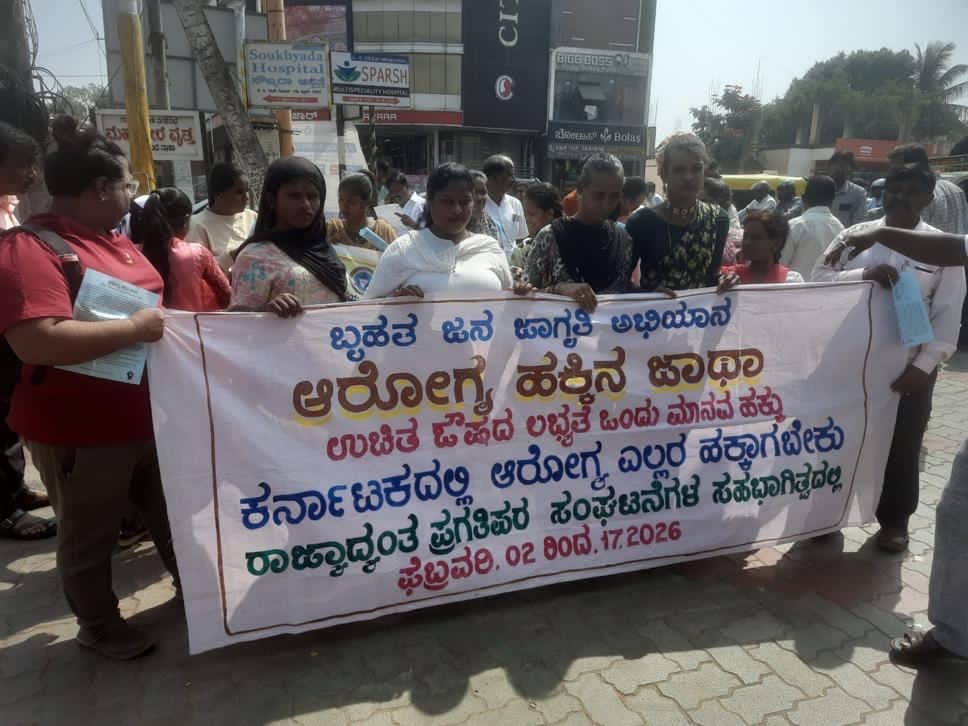
(Gadag, Feb 2026, Transgender and gender diverse persons participate in the Karnataka Right to Health Jatha 2026)
Jatha Diary - Ground level updates
In every district, the Karnataka #RTHJatha2026 participants held local rallies, media interactions and submitted memoranda to District Health Officers and District Commissioners or their official representatives. At Bidar, Karnataka’s northernmost district, Veena, a feisty Dalit trans woman and seasoned human rights activist and other local trans persons, briefed the media about the realities of government health facilities after the local Jatha. They highlighted the roadblocks in accessing reliable healthcare especially for the socio-economically disadvantaged and reiterated our demands for affordable, accessible and reliable universal health systems
During the Jatha, the Beru Bevaru kala thanda (theatre troupe) rendered powerful performances on the streets. “Their words, music and enactments communicate the objectives and demands of this Jatha faster and better than the memoranda, pamphlets and other text”, observed Basavaraj Vishwakarma, a Queer community leader.
They were vocal about the need for the Right to Health Act and accessible and affordable public health care, as the Jatha passed through Kalburgi and Yadgir districts of northern Karnataka, where Basavaraj hails from. Their folk songs highlighted themes of health rights, public accountability, and equitable access to healthcare, reinforcing the message of the Jatha.
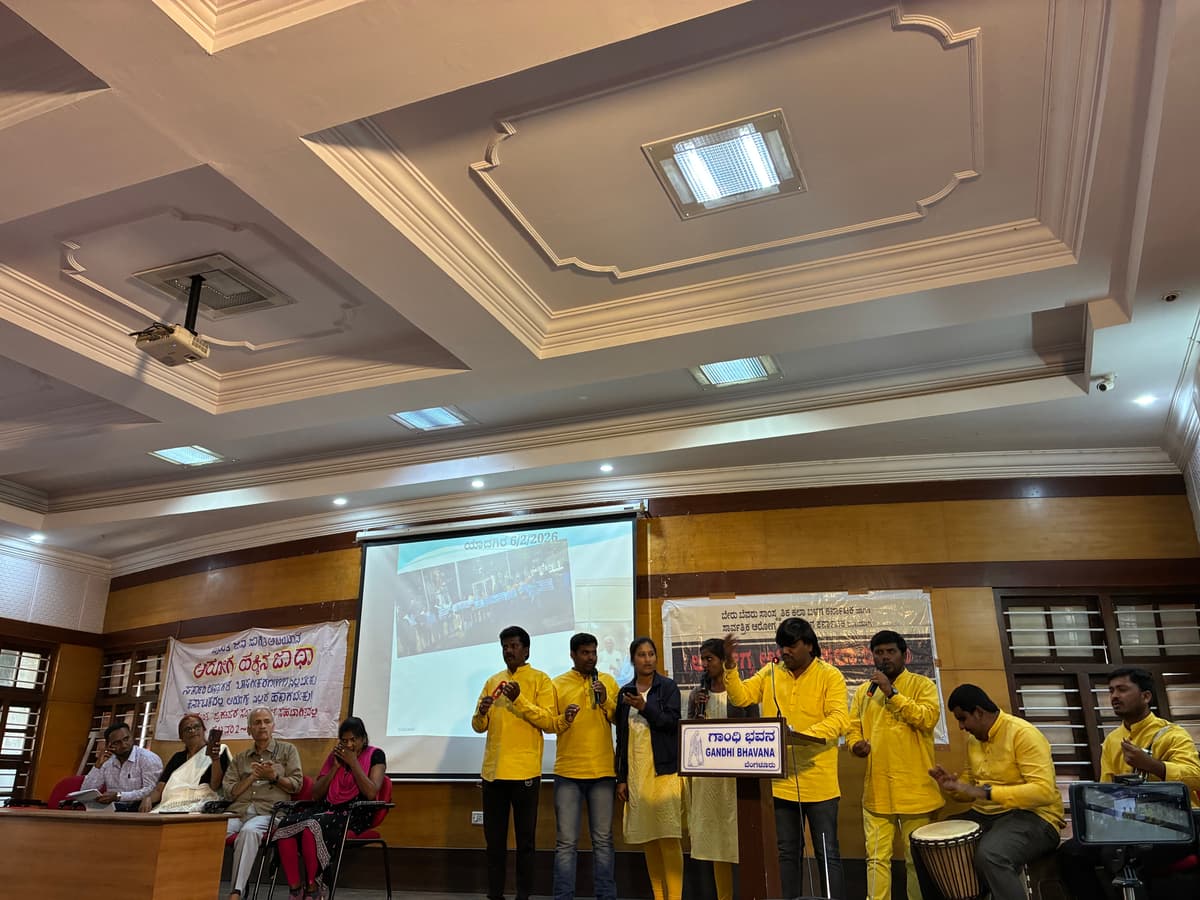
(Bengaluru, Feb 2026, Jatha cultural team performs at the Right to Health Jatha's concluding meet)
The Jatha culminated in a public meeting at Bengaluru, where the Karnataka Health and Family Welfare Minister assured that the State is moving forward on the proposed Right to Health Act and strengthening public health systems. Addressing representatives, health activists, workers’ unions, community-based organisations and district delegations who participated in the Jatha, he said that the government has been closely observing the work undertaken by public health movements in Karnataka.
SAA-K and DAF-K Representatives submitted a detailed memorandum in Kannada to the Health Minister, highlighting key demands emerging from the statewide consultations and district-level public hearings conducted during the Jatha. Earlier in the meeting, community representatives from different districts presented ground-level testimonies on the state of public health services.
Addressing these concerns, the Health Minister acknowledged the sensitivity of the PPP issue. “Due to long struggles and protests, the Chief Minister has already decided regarding the Vijayapura government medical college privatisation issue. However, these decisions are not solely mine, and I cannot promise a blanket halt to all PPP ventures,” he clarified.
Later during the valedictory session, Prasanna Saligram, public health researcher and SAA-K member, said, “For nearly 25 years, medicine supply in government hospitals has remained inconsistent. It is the State’s mandate to ensure free, quality medicines, and we will continue to monitor the system through people’s audits and community engagement.”
Syed Ismail, Chief Pharmacist, Karnataka State Medical Supplies Corporation Limited (KSMSCL), accepted that “60 to 70 percent of treatment expenditure is on medicines”. He agreed that ensuring free and quality medicines in government health facilities is among their priorities. The Jatha concluded with all participants resolving to continue monitoring the fulfilment of the demands and also draft a People’s RTH Bill.
Edited by Radhikaa Sharma
Image by Janvi Bokoliya