
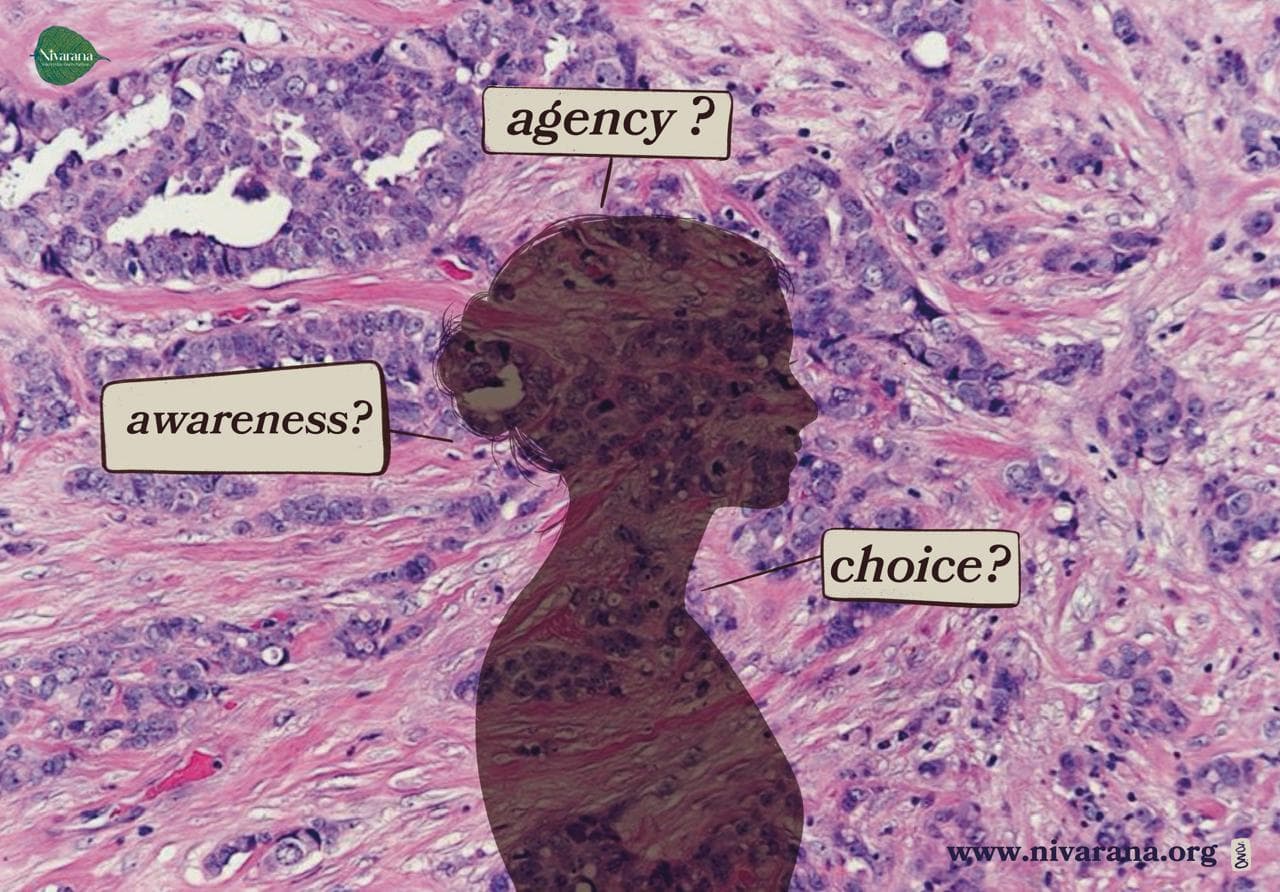
At 35, a breast cancer diagnosis already feels like the ground disappearing beneath your feet. What I did not expect was to discover – through my own late-night research, not my doctor – that the treatment meant to save my life could also render me infertile, and may even throw my body into early menopause.
In consultations, the focus remained clinical: treatment cycles, drugs, surgeries, timelines. There was little space for emotional vulnerability, and the topic of ovarian functioning surfaced only because I asked. Until then, there was no meaningful acknowledgment of what these treatments might mean for my future.
As I began to process the possibility of infertility, the questions quickly grew larger than cancer itself. They became questions of bodily autonomy, informed consent, and the right to self-determination. What does it mean to make life-altering medical decisions without being fully informed? What does reproductive justice look like within cancer care in India?
I am aware that my ability to ask these questions is shaped by privilege. For many patients, survival eclipses everything else - appointments, financial strain, and the reorganisation of family roles. In that urgency, conversations about fertility, autonomy, and long-term consequences often disappear, especially for those already navigating structural vulnerabilities.
But another, more unsettling realization took shape. As a single woman at 35, I do not fit the social script that centres marriage and motherhood. And in a system where a woman’s reproductive capacity is often understood only in relation to childbearing, my fertility did not seem to register as something worth discussing.
It is a quiet but profound stripping of agency—the idea that the concern for one’s reproductive future only if it aligns with socially sanctioned motherhood. That her right to know, to decide, to prepare, is conditional.
Doctors, after all, do not exist outside society. They carry its sexist and patriarchal assumptions—about age, marriage, and whose fertility matters. The irony is stark: medicine has a term like “geriatric pregnancy” to mark delayed motherhood. The biological clock matters enough to name it and pathologise it but not enough to inform women when a medical treatment may take away that possibility altogether.
Cancer Treatment and Fertility: The Missing Conversation
Cancer treatment-induced infertility is not incidental—it is medically documented.
Cancer treatment options that can adversely affect ovarian and testicular function include chemotherapy, which has a varying impact depending on treatment-related and patient-related factors. They also include radiation therapy directed to the pelvic or abdominal region, as well as whole-body radiation. Additionally, surgeries that involve the reproductive organs can negatively impact ovarian and testicular function.
Chemotherapy, in particular, can trigger temporary menopause during treatment, with uncertain recovery afterward. For many patients, the only way to determine permanent menopause is to wait for return periods - sometimes up to two years after treatment ends.
Infertility is one of the life-altering consequences of cancer treatment, and fertility preservation is one of the key concerns of young survivors. Despite this, oncofertility care—the management of fertility before and after cancer treatment—remains an underdeveloped aspect of oncology in India.
What does Oncofertility Counselling Look Like?
Oncofertility counselling is relevant for cancer patients who are children, adolescents or adults in their reproductive age. It involves informing patients (or guardians in case of minors) of potential fertility risks, assessing individual risk based on treatment and patient related factors, and referring patients to specialists for fertility preservation before treatment begins.
Oncofertility counselling also involves preparing patients for a possible early menopause or hypogonadism and managing its long-term effects
Infertility Beyond Biology: Social and Psychological Fallout
Infertility is not merely a medical outcome; it is deeply social. For men, fertility is often tied to notions of virility and manhood, there is no social permission for emotional vulnerability. Testicular cancer can threaten their masculinity. For women, infertility can lead to stigma, isolation, and increased risk of domestic violence and abandonment. Women are often blamed, and men are protected by silence even medical evidence shows male factor infertility.
In both cases, gendered expectations shape how infertility is experienced and addressed.
Cancer treatment can feel disempowering already due to the long-term side effects, sometimes loss of autonomy, and/ or altered bodily functions. Being deprived of a choice (family planning) that is otherwise deeply personal can lead to frustration, feeling of inadequateness, and other psychosocial ramifications for survivors.
Cancer survivorship is a term that encompasses the physical, psychosocial and economic experiences of a person who has been diagnosed with cancer. Cancer diagnosis and its treatment tends to be life-altering and its ripples can be traced long after diagnosis and treatment. For cancer survivors, treatment-induced infertility becomes another layer of isolation - one that is rarely acknowledged in survivorship narratives in India.
Barriers to Fertility Preservation
Even when information is available, access is not equitable.
Key barriers to fertility preservation for cancer patients include high costs - egg freezing, storage, and IVF are prohibitively expensive and largely privatized. Geographical disparities further limit access, with fertility services unevenly distributed across regions.
Time pressure is another major obstacle, as urgent cancer treatment timelines may limit the time window for fertility preservation. Healthcare provider related reasons also contribute: clinicians may make assumptions based on age, marital status, or class, and many lack adequate training in fertility preservation hindering timely discussions and referrals.
The aspects like who can afford egg/sperm freezing, the overall cost involved in comparison to average income, lack of coverage by most health insurances and fertility services being offered primarily by private entities indicates a clear class inequality in access to fertility preservation.
The invisibility and stigma associated with same-sex relationships, social penalty of coming out, stereotypes associated with parenting in diverse family structures other than heterosexual married relationships, pose as significant barriers for the LGBTQIA++ community in access to oncofertility care.
Oncofertility in India: Policy Gaps and Structural Inequality
Fertility preservation is not part of standard oncology care in India. There is no legal obligation for doctors to inform patients about the infertility risks associated with cancer treatment options. There is also no mandate for oncofertility counseling, and no standardised referral pathways are in place.
As a result, whether a patient is informed depends largely on the doctor’s discretion - an indicator of persistent medical paternalism. Our prior discussions also suggest that fertility preservation in India is accessible primarily to those with financial and social capital. Existing legal frameworks further entrench exclusions.
According to INDIAN MEDICAL COUNCIL (Professional Conduct, Etiquette and Ethics) Regulations, 2002 (Section 7.16) , it is mandatory to counsel and take consent from both husband and wife before a surgery in one between the couple and which may result in sterility. Since chemotherapy and radiation are seen as therapeutic treatment, those obligations don’t kick in for these forms of cancer treatment. Also, same-sex marriage isn’t recognised in India and there is an assumption of heterosexual marriage in the aforementioned consent protocol, thereby excluding LGBTQIA++ couples from this clause.
While same-sex couples can freeze their egg/sperm before starting cancer treatment, it doesn’t translate to future family building and co-parenting rights. Laws relating to surrogacy, adoption on and Assisted Reproductive Technology, in India reinforce patriarchal family structure and they are mostly hostile towards LGBTQIA++ reproductive rights. The same LGBTQIA++ exclusions also prevent cancer survivors from these communities from experiencing parenthood.
This creates a system where access to reproductive futures is uneven—and often unjust.
Dignity, Survivorship, and the Right to Choose
International guidelines like ASCO, ASRM recommend that all cancer patients of reproductive age be counselled about fertility risks and preservation options available to them. India is yet to institutionalise such practices.
Lack of regulations pertaining to oncofertility counselling and the resulting inconsistent oncofertility counselling amounts to undermining patient autonomy.
Given the profound psychosocial impact of infertility, such a foreseeable functional impairment should trigger ethical obligations to inform the patient and provide reasonable access to fertility preservation, the omission of which is violation of informed consent when interpreted in a comprehensive manner.
This raises a fundamental question: does cancer care in India account for quality of life beyond survival?
Survivorship is not just about preventing recurrence. It is about dignity, autonomy, and the ability to imagine a fulfilling life beyond illness. And that demands a patient-centric approach to cancer care in India.
While inspirational stories of cancer survivors float around every now and then, we need to acknowledge the role of class location and a solid support system in acting as shock absorbers for cancer survivors that also help them rebuild their lives after active cancer treatment.
The Way Forward
Oncofertility right is not a niche concern. It sits at the intersection of public health policy, strife towards gender and reproductive justice, class inequality in access to fertility preservation, queer exclusion.
Quality of life in cancer survivors falls through the cracks of policy gaps and survivors are left without structural support.
Ensuring reproductive autonomy for cancer patients requires a comprehensive and coordinated approach across clinical care and health systems. This begins with mandatory oncofertility counseling before treatment, enabling patients to make informed decisions about their reproductive futures. It also necessitates the inclusion of fertility preservation in national oncology guidelines, along with comprehensive insurance coverage and strong public-sector support to ensure equitable access to these services.
Equally important is the development of inclusive reproductive laws and guidelines around adoption, surrogacy, and assisted reproductive technologies (ART). These frameworks must recognize diverse family structures and safeguard the right to parenthood for LGBTQIA++ individuals, ensuring that reproductive autonomy is upheld for all patients regardless of identity.
Finally, strengthening provider capacity is essential. Oncofertility should be integrated into the training curricula of oncologists, surgeons, and nursing professionals so that future practitioners are equipped to address these concerns. In addition, regular and structured continuing medical education (CME) sessions on oncofertility are necessary to keep practicing clinicians informed about evolving standards and best practices.
Until then, many cancer survivors will continue to navigate not just the loss of health—but the quiet erasure of choice.
Acknowledgement
Many thanks to my dear friend Shrestha Mohapatra for her valuable inputs and edits.
Edited by Christianez Ratna Kiruba
Image by Gayatri