In 2022, approximately 199 in every one lakh people in India were infected with Tuberculosis (TB), with 23 in every one lakh people dying because of this disease. To put this in perspective, with India's population, this translates to roughly 3,22,000 TB deaths annually.
This is approximately equivalent to 285 Vande Bharat Express trains crashing. Unlike such a hypothetical catastrophic event, TB deaths are largely invisible to the public eye. They occur slowly and persistently, hidden by social disadvantage, in communities already marginalized by poverty, poor housing, and food insecurity.
TB and Malnutrition: The Vicious Cycle
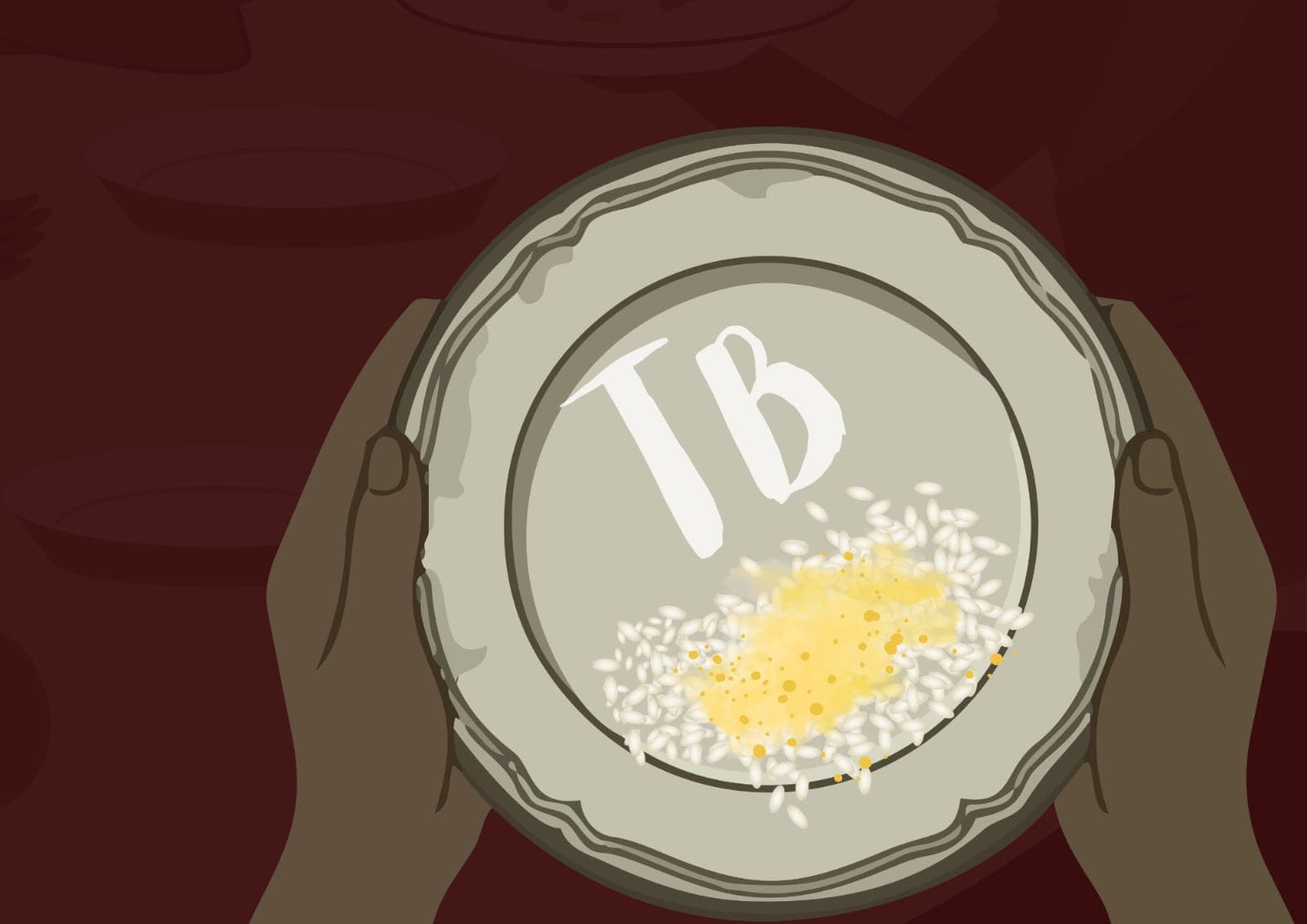
A complex determinant often left unaddressed in the fight for the elimination of tuberculosis is undernutrition. Undernutrition is attributed to a whopping 55 % of the TB incidence in India, putting it ahead of other comorbidities like HIV(5%) and diabetes(9%). Affecting almost a third of the children under 5 years of age and 12% of the Indian population overall, TB and undernutrition are co-epidemics sharing a bidirectional relationship.
The incidence of TB is much higher in patients with chronic undernutrition, and TB itself leads to worsening nutritional status in patients with low baseline weights. Undernutrition impairs cell-mediated immunity, the first line of defense against tubercular pathogens, while the increased BMR and inflammation from the disease in turn exacerbate the anorexia and muscle breakdown. This vicious cycle leads to increased severity of disease, delayed sputum conversion, increased risk of drug-induced hepatotoxicity, and higher mortality rates.
Microview: The role of Healthcare Providers
When a malnourished child from a slum or a migrant worker arrives at the hospital, this is a critical point where the right decisions taken can lead to full recovery. However, many factors lead to a large gap between what should ideally happen and what happens. However, if every single link in the care pathway, from patients to various healthcare workers work in unison, this gap can be reduced.
Patients face various barriers to proper nutritional intake and assessment. Stigma is a major factor that could lead to a decrease in nutritional intake. Many patients avoid eating in a communal setting or hide their diagnosis from family members who might be responsible for household food distribution. Economic barriers are perhaps the most tangible factors that directly affect the quality and quantity of food received.
A recommendation of a protein-rich meal seems a distant dream when basic cereals are in short supply. Additionally, access to healthcare facilities and follow-up is compromised by distance to healthcare facilities, opportunity costs for daily wage workers, and inadequate transport infrastructure in remote areas.
The responsibility of addressing TB is distributed among various actors. Each has a detailed role which is often times inconsistently fulfilled to no fault of their own. For instance, community health workers, particularly ASHAs (Accredited Social Health Activists) and ANMs (Auxiliary Nurse Midwives), serve as the frontline link between the healthcare system and communities. Their role includes identifying TB suspects and helping support treatment adherence.
Theoretically, this should include monitoring their nutritional status as well. In practice, their capacity to provide comprehensive nutritional support is hampered by an overwhelming workload and a lack of resources. On the other hand, physicians bear the burden of TB diagnosis and management. In reality, limited time, high patient volumes, and the focus on pharmacological treatment mean that nutritional assessment, when it occurs, is often perfunctory.
Similarly, DOT (Directly Observed Treatment) providers are accurately placed to witness patients’ daily struggles firsthand. Beyond observing medication intake, they could critically monitor weight trends and ensure early identification of nutritional decline. However, their role is often narrowly defined and incentivized around treatment completion rates rather than holistic recovery. This leaves nutritional monitoring as an afterthought.
Furthermore, nutritionists and dieticians remain a grossly underutilized expert resource. Their knowledge of translating nutritional requirements into culturally appropriate, economically feasible meal plans could help increase nutritional intake in TB patients. Yet they are rarely integrated into TB care pathways, and their services remain concentrated in tertiary care settings inaccessible to a majority of TB patients.
Effective nutritional support for TB patients requires coordination across healthcare and social welfare systems. A seamless referral path needs to be established between clinical identification of TB and malnutrition to enrollment in government nutritional schemes. In practice, these referrals are haphazard at best.
Here is where social workers could come in to play. Social workers could play a pivotal role in assessing social determinants of health, facilitating access to welfare schemes, and connecting patients with community-based grassroots organizations and food banks. Yet social services remain severely limited in India's health system, particularly at the primary and secondary healthcare settings where most TB patients are treated.
Macroview: Policy Mechanisms
The National Tuberculosis Elimination Programme (NTEP) set ambitious targets for the attainment of the SDG 2030 agenda for TB by 2025, with a targeted 80% reduction in incidence, 90% reduction in mortality, and zero catastrophic expenditure as a result of the disease. Recognising the critical need for holistic management of underweight and malnourished patients, the government has launched multiple initiatives for the nutritional supplementation of patients.
People living below the poverty line with tuberculosis are prioritised for enhanced rationing through the Public Distribution System, integrating the objectives of the NTEP within the existing infrastructure for food security. Underweight patients are provided with Energy-Dense Nutritional Supplementation (EDNS) in the form of food packets at the health centres for 2 months. The Nikshay Poshan Yojana, launched in 2018, has been revised to provide a Direct Bank Transfer (DBT) of INR 1000 instead of 500 to account for food inflation and increased energy needs for TB patients.
The Nikshay Mitra initiative under the Pradhan Mantri TB Mukt Bharat Abhiyaan (PMTMBA) has expanded coverage to include household contacts. Thus, food baskets and other supplements reach the entire family, accounting for the preventive management of household contacts of patients, who are also undernourished and at high risk of TB transmission. A retrospective study on patients from Jharkhand demonstrated that the DBT under NPY has led to reduced lost-to-follow-up rates, which can ultimately facilitate improved adherence to treatment.
Despite significant progress, there are many challenges to the attainment of nutritional goals for TB. The public distribution system focuses more on increasing calorie intake through cereals like wheat and rice. According to the WHO guidelines, almost 15-30% of the energy intake must be protein-derived, especially for patients with tuberculosis whose bodies are already in a state of high protein catabolism.
There have been reports of the utilization of the amount transferred via the NPY for non-nutritional purposes. Patients from the private sector report much higher rates of non-receipt of the DBT, while others had to wait for almost 3 months to receive their first transfer, delaying their access to nutritional support significantly.
The private sector also shows poor uptake and utilization of the NPY due to social stigma, lack of physician accountability, and fears of insecurity due to the sharing of financial details. While there is significantly greater coverage in the public sector, the lack of awareness among patients and dormant government-linked bank accounts posed difficulties in accessing the scheme.
The findings of the recently published RATIONS trial and the McQuaid Modelling Study provide invaluable insights into the changes that could be incorporated into the existing policy for better outcomes and coverage. A field-based, cluster-randomised controlled trial, RATIONS, set out to evaluate the effect of providing nutritional support to household contacts of adult patients. The household contacts of the interventional cohort, along with the patients of both cohorts, were supplied with food baskets containing 1200 kcal energy and 52g of protein per day for 6 or 12 months (in case of MDR TB).
The TB incidence was decreased by nearly 40-50% in household contacts, while patients with TB had a 35-50% lower mortality, better weight gain, low rates of loss to follow-up, and high rates of return to normal work. These baskets were delivered at home, in addition to the NPY transfers the patients had already received, reflecting the need for a policy that enables access to a balanced protein-heavy diet. The McQuaid study further highlighted the cost-benefit analysis in favor of nutritional supplement programmes as in the RATIONS trial by using mathematical modelling to estimate the impact and cost-effectiveness in the long run.
The private sector can be engaged through stronger capacitation and training of physicians under the NTEP, while enlisting the support of bodies like the Indian Medical Association/Indian Pharmaceutical Association for advocacy and engagement.
Conclusion
India has shown one of the fastest declines in the incidence of TB in the last decade, but we are still far from achieving our 2030 targets for TB elimination. Given the overwhelming evidence of the importance of nutritional support for TB management and recovery, at the programmatic level we need to further strengthen our policy toward comprehensive, holistic coverage.
Through a multi-pronged approach focused on enhancing the engagement of the private sector and civil society, the gaps in TB diagnosis and treatment delivery must be sealed. And ultimately, as physicians, the responsibility of humane and sensitive counsel falls on us. A TB mukt Bharat demands accounting for social determinants of health, especially solving for the vicious cycle between TB and malnutrition.
Edited by Christianez Ratna Kiruba
Image by Janvi Bokoliya