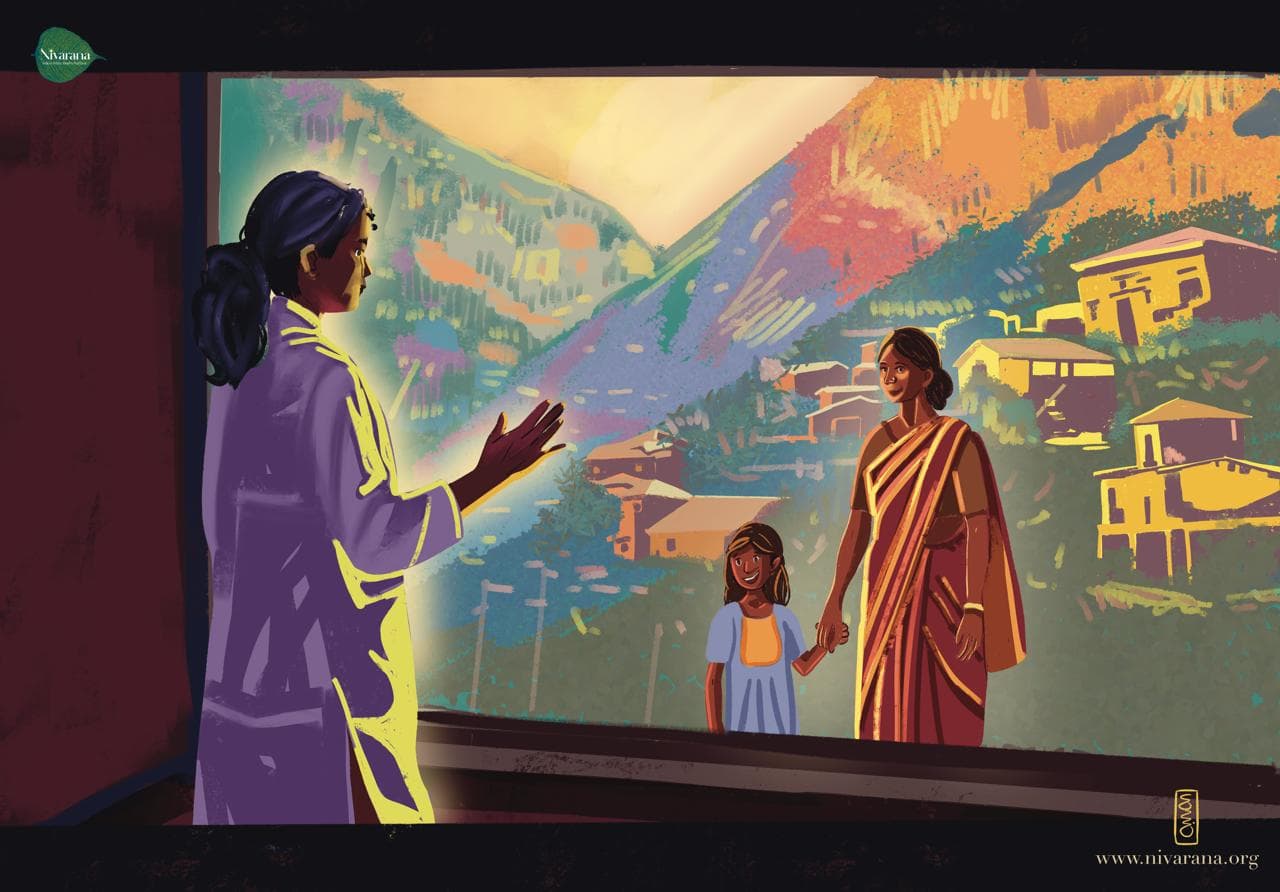
When I first put on my crisp white coat in dental school, I thought I had finally “arrived.” There I was - a future dentist, armed with shiny new instruments and thick textbooks that smelled of fresh ink and sleepless nights. My professors drilled it into us: precision was everything. The perfect cavity prep, the neatest sutures, the endless hours memorizing tooth morphology.
And don’t get me wrong - I learned a lot. I could identify caries at ten paces and wax up a molar until it gleamed. But somewhere between late-night study sessions and exam-hall anxiety, I started noticing the things we weren’t taught.
Like how to comfort a classmate crying quietly after failing a practical exam.
Or how to explain a treatment plan to a patient who nodded politely but clearly didn’t understand a word of our jargon. Or how to steady your own shaking hands when exhaustion and self-doubt begin to creep in.
The truth is, medical education trained us to treat bodies, not people. And almost never ourselves.
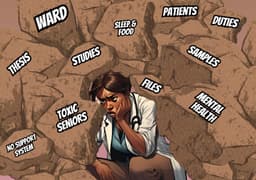
A few years later, as I began my Master of Public Health, I started seeing patterns I once only felt. A 2024 National Medical Commission survey found that nearly 28% of undergraduate medical students in India struggle with mental health disorders. That’s more than one in every four students. Another study showed that within just six months of starting medical school, first-years already face high levels of stress and depression.
But these aren’t just numbers — they have names, laughter, and faces I remember. I still think of a friend who used to stay late after clinic hours, perfecting her cavity margins, tears silently slipping under her mask. Or the senior who told us “it’s okay to ask for help,” only after he himself collapsed from burnout.
The lesson became even clearer during my community postings.
Picture this: I’m sitting under a tin roof, dental kit in one hand, notebook in the other. The air smells faintly of antiseptic and rain-soaked earth. A mother walks in, holding her son by the shoulder - a shy boy of about eight, his cheek slightly swollen from a decayed molar.
As I prepare to explain fluoride, hygiene, and fillings, I notice the mother fidgeting with the edge of her sari. Her eyes aren’t just tired - they’re anxious. Midway through my explanation, she interrupts softly, “Didi… will my daughter have to drop out of school? My husband’s job isn’t steady these days.”
For a second, I’m confused. What did her daughter’s schooling have to do with a toothache? Then it hit me that the boy’s dental pain had kept him from eating, from sleeping, from going to school. The family had already spent what little money they had on local remedies and travel to reach the clinic. The mother wasn’t just asking about the cavity. She was asking if this illness is one small, painful tooth - was about to tip their already fragile life into another crisis.
Her question stayed with me long after I packed up my instruments. Because it wasn’t really about the tooth. It was about how a single health problem can ripple through an entire family and drain money meant for school fees, food, or rent. It was about how health and livelihood, education and survival, are woven together in ways our textbooks never showed us.
I froze. My textbooks hadn’t prepared me for this. No diagram of dental pulp told me how to respond to poverty, to inequality, to life outside clinic walls. That moment stayed with me. I realized oral health or any kind of health isn’t just about the tooth or the body part we treat. It’s about the world the patient lives in.
After that day, I started seeing things differently.
Once, during a dental camp in a nearby village, a young boy refused to open his mouth no matter how much I tried to calm him down. His mother kept apologizing, saying, “He’s scared of doctors.” Later I found out the family had once been shouted at in a government hospital for not bringing the right papers. The fear had stuck with them not of the illness, but of the system. That hit me hard. We were supposed to be healers, yet somewhere, our system had made people afraid to even ask for help.
I’ve done the same too. There were days I was so focused on finishing my quota of cases that I forgot to ask if my patient was okay, or if they were nervous. Sometimes we get so caught up in being efficient that we forget to be kind.
And then there were the nights before exams - friends fainting in clinics, running on caffeine and fear, all of us laughing it off because that’s just how it was. We called it dedication, but it was really exhausting wearing a brave face. Somewhere along the way, the pressure to be perfect made many of us less gentle with patients, with classmates, and with ourselves.
That’s when I began to imagine a different kind of classroom. One that isn’t limited to four walls or PowerPoint slides. A place where learning happens in real communities, not just labs - where students don’t just memorize facts, but actually understand what health means in everyday life.
A classroom where we learn to slow down, to listen, to treat both our patients and our peers with care. Because medicine, dentistry, or public health should be about healing people, not just passing exams.
Imagine a curriculum where exams test not only how many cranial nerves you can name, but also how well you can listen. Where rural and urban students learn side by side, their stories are as valuable as their grades. Mental health is not a whispered afterthought, but a visible, supported part of training — with wellness hours, reflection circles, and mentors who check in, not just mark attendance. Simulations include not just emergency drills, but also how to break bad news, manage fear, and build trust and where self-care is not seen as weakness, but as the foundation for caring for others.
I began to notice how our training often forgets the human side of healing. We are taught to diagnose, prescribe, and restore but not always to listen, comfort, or understand. Somewhere between practical exams and viva sessions, empathy slips through the cracks.
This isn’t about replacing science with sentimentality. It’s about balancing teaching, compassion and communication alongside clinical skill. Because the best doctors and dentists aren’t just technically excellent; they’re emotionally intelligent. They don’t just fix what’s broken - they help people feel whole again.
Reimagining medical education means adding chapters on community, compassion, and connection. It means teaching students that healing is not a one-way act but a shared human experience. Because the doctors, dentists, and health workers of tomorrow must do more than treat diseases - they must build trust, reduce fear, and understand the lives behind every diagnosis. And maybe, in learning to care for others more completely, they’ll also learn to heal themselves.
In India, there’s an effort to fix that. The AETCOM module — Attitude, Ethics, and Communication — introduced by the National Medical Commission, is one step toward teaching future doctors and dentists that good medicine starts with good humanity (NMC AETCOM Book). Some dental colleges have begun adapting these sessions through role plays, reflection journals, and community postings helping students connect beyond the clinic chair.
Globally too, the classroom is changing. In the United Kingdom, medical schools now integrate compassion-based learning into every stage of training. The NHS “Compassion in Practice” framework reshaped healthcare education around six core values i.e. care, compassion, competence, communication, courage, and commitment , values that are now embedded in how students are assessed and mentored.
Research backs up these transformations. A 2019 systematic review found that 75% of compassion-focused education interventions led to measurable increases in empathy and compassion among trainees . Another study on teaching empathy and compassion in undergraduate programs showed significant improvements in communication skills and reduced burnout .
These programs prove that compassion isn’t just an emotion - it’s a skill that can be taught, practiced, and measured.
That’s what reimagining medical education means to me: adding chapters on community, compassion, and connection. A classroom not defined by walls or projectors, but by conversations and shared experiences. One where students don’t just treat disease, but understand the stories behind it.
Because healing is never a one-way act, it’s a shared human experience. And maybe, in learning to care for others more completely, we’ll also learn to heal ourselves.
Edited by Christianez Ratna Kiruba
Image by Gayatri