Where the Patient is Abandoned: Living with Untreatable Rare Diseases in India
Despite recent advances in genetic diagnosis and treatment, millions of Indians with rare diseases remain trapped between a healthcare system that cannot diagnose them and a policy framework that cannot treat them.
With the current state of technological advancement and knowledge in medical sciences, the unsaid belief held by the average patient is that doctors know it all. It therefore hits a rare disease patient hard to see this myth shattered upon their first visit to a clinic.
There are currently more than 6,500 reported rare diseases for which knowledge is scant and treatments unavailable. Although individually rare, together they are estimated to affect 350 million people worldwide, with 70 to 90 million in India. Most are caused by faulty genes; about 50-70% manifest in infancy, while others are adult-onset. Once symptoms appear, many progress rapidly, causing severe disability and/or shortened life spans.
A common feature is how little we know about these diseases. Misdiagnosis is rampant because most doctors encounter such patients infrequently.
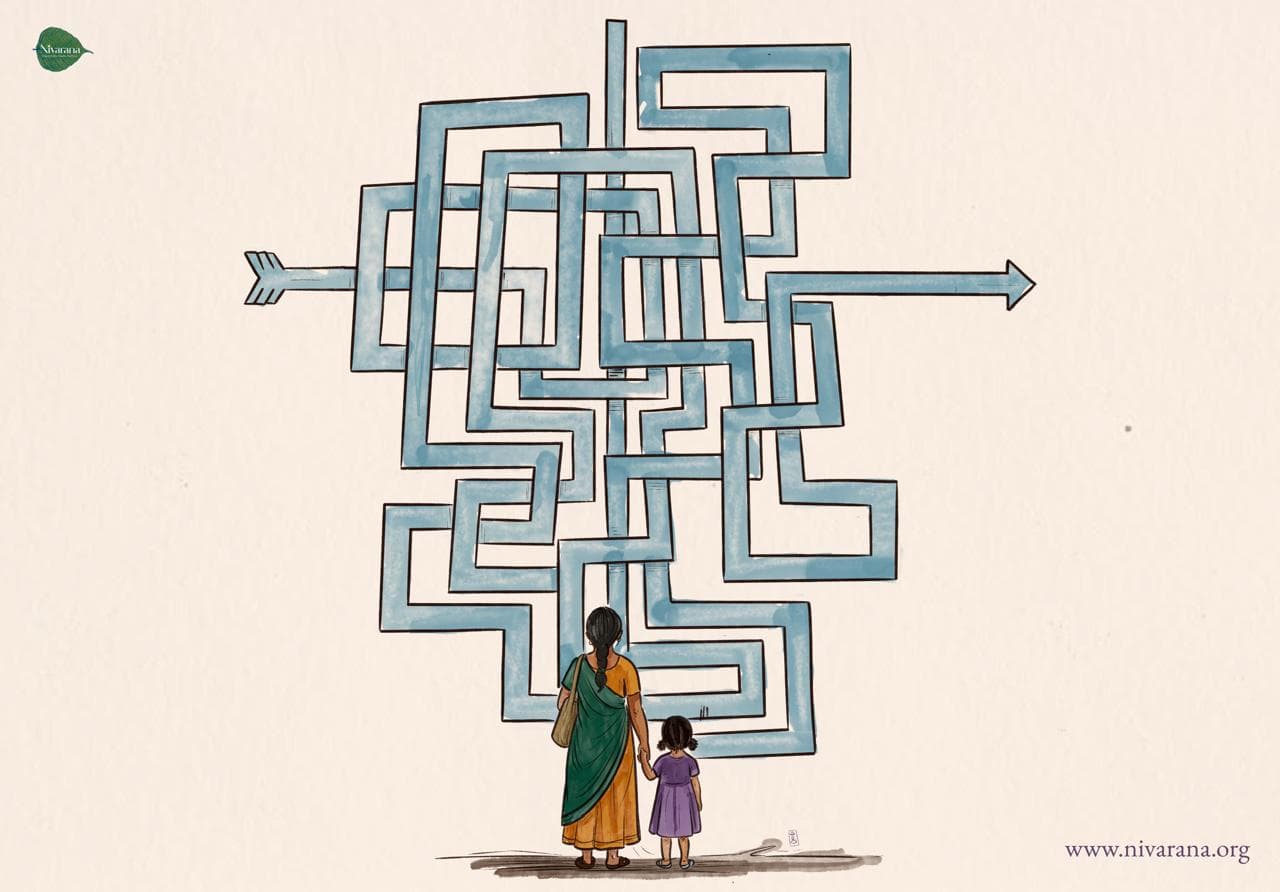
The diagnostic maze
Abha (name changed), who is affected by GNE myopathy—the rare disease we work with—had to live with misdiagnosis for eight years. How she finally got the correct diagnosis through her own efforts is representative of the experience of many rare disease patients.
Abha noticed her first symptoms of muscle weakness in 2006. She had difficulty rising from the floor and was not walking steadily at 26. As this happened soon after childbirth, and her EMG and spine MRI were normal, the neurologist attributed it to general weakness and advised calcium and vitamin D.
When the weakness increased, she visited a second neurologist at Gangaram Hospital, New Delhi. An abnormal EMG led the doctor to suspect Myasthenia Gravis, an autoimmune condition affecting neurotransmission. Medication produced no improvement. Being from a science background, Abha read about MG and felt that her symptoms did not match.
At AIIMS, New Delhi, a muscle biopsy showed atrophic muscle fibres. The doctor correctly concluded that her condition was related to muscle rather than nerve, but could only provide a tentative diagnosis of sarcoglycanopathy, a type of limb girdle muscular dystrophy.
In 2008, another renowned neurologist confirmed that she had a myopathy but believed it to be dysferlinopathy, another genetic disease under the LGMD umbrella. Abha remained dissatisfied because no genetic testing had been done for a confirmatory diagnosis. She searched the internet, found a US-based foundation working on dysferlinopathy and sent them her serum sample for DNA testing. The result was negative.
Her disease continued to progress, leaving her increasingly dependent on others for daily activities. Yet she remained ignorant about the medical name of her condition. Most frustratingly, she had never met another person with the same disease, and no doctor could connect her to such patients.
In 2014, during another internet search, she found a US-based company, Ultragenyx, developing a drug for a rare muscle disorder called GNE myopathy. Scientists and clinicians primarily working at Newcastle University, UK, were building a worldwide patient registry. Abha contacted them and shared her reports. They agreed to perform a DNA test.
It came back positive for GNE myopathy.
She had never heard of the disease, but finally had a diagnosis—entirely through her own efforts. For the first time she could put a name to her condition and understand its science. Soon afterwards, she found other Indian patients online and a network began to form.
The doctors cannot really be faulted for this: they hardly see rare disease patients, and these diseases do not figure prominently in medical curricula. Since 95% of rare diseases have no treatment, even after diagnosis the doctor often has little to offer, leaving patients and caregivers rudderless. It is only after several failed attempts that a persistent patient may find the rare Indian doctor who knows their disease and can guide them on available standards of care.
A new research era
The vast majority of rare diseases remain obscure to scientists even outside India. Yet historically, rare diseases have pushed basic science forward. Sickle cell disease helped establish how a single amino acid change could alter haemoglobin structure and how a nucleotide change in a gene could produce that alteration. Phenylketonuria and other inborn errors of metabolism helped develop concepts of metabolic pathways and the relationship between genes and proteins.
Understanding disease mechanisms leads to treatments. The use of steroids as a standard treatment for Duchenne muscular dystrophy, for example, followed pioneering basic research.
Globally, rare disease research is now gaining momentum. DNA sequencing is making genetic diagnosis increasingly accurate and affordable. Gene and mRNA delivery, gene editing and oligonucleotide technologies are reaching the clinic. Patient-derived pluripotent stem cells can be developed into disease models to study pathology and test treatments. Cell-based therapeutics are being developed for blood disorders, regenerative medicine and tissue grafting. AI is being used in drug screening and design, clinical trial planning, data analysis and diagnosis.
This technological convergence is creating a more favourable environment for governments, private donors and pharmaceutical companies to fund rare disease research. The benefits for patients will take time, but the trend is encouraging. India has some catching up to do.
The Indian Scenario
Global developments have benefited India, although the pace and scale remain limited. DNA sequencing facilities have multiplied in the private sector, making accurate diagnosis possible within a reasonable time. A typical test costs Rs. 12,000 to 18,000—affordable for many middle-class families, but still expensive for low-income households.
Abha's first symptoms appeared in 2006 and her diagnosis came only in 2014. Jennifer and Swati, a decade younger, benefited from increased awareness. Jennifer's symptoms began in 2017 and she was diagnosed with GNE myopathy in 2019 through DNA testing; Swati had a similar timeline.
Two developments helped. Although the first doctors Jennifer and Swati consulted could not diagnose the disease themselves, they knew specialist neurologists familiar with rare conditions and referred to them appropriately. These specialists could recognise the disease clinically. Secondly, genetic testing became more accessible through select tertiary government hospitals such as AIIMS and private providers such as Medgenome.
Unfortunately, access to these diagnostic tests, as well as advanced biochemical and imaging tests, remains concentrated in metropolitan centres, leaving much of the population in small towns and rural areas untouched by these advances.
Treatment is an even greater problem. Funding and policy support for innovation remain inadequate, and only a few top Indian scientific laboratories work on cutting-edge rare disease treatments. Drugs developed abroad may be unavailable in India or prohibitively expensive. Thus, most Indian rare disease patients, irrespective of class or privilege, remain untreated.
The Indian gap
After receiving a diagnosis of a fatal or crippling rare disease, patients and caregivers naturally seek information and, at the very least, other people living with the same condition. Their treating doctors, often unfamiliar with the disease, can offer little help. Many patients eventually give up, turn to quackery and unproven remedies, and disappear from the formal healthcare system.
This happened to Jennifer and Swati. Although both received timely diagnoses, the absence of treatment left their doctors with little further to offer.
Jennifer, from Chennai, was married with two small children when she was diagnosed. The knowledge that she had a progressive disease that would eventually cause severe disability had a profound psychological impact, compounded by the reaction of her in-laws. They cursed their son's luck, blamed her for ruining his life and stopped communicating with her. She wondered: if people who knew her and shared a strong family bond could treat her like an untouchable, what could she expect from strangers?
As her foot drop made her walking increasingly awkward, Jennifer became acutely conscious of strangers' stares and acquaintances' pity. Her solution was to withdraw from the world and stay home. Seven years later, with support from her husband and children, she has come to terms with her condition but remains in self-imposed house arrest.
Swati's trajectory was different. From Suryapet district in Telangana, she grew up in a financially struggling family. Her young, unlettered widowed mother worked as a house help to raise Swati and her sister. Determined to secure a better future, her mother supported Swati's education. After college, Swati found a job and seemed on course for financial independence.
Barely a year later, she developed symptoms of GNE myopathy. Her disease progressed faster than average. She rapidly lost the ability to walk without support and began falling frequently. Unable to use public transport and unable to afford private help, she lost her job. Her dream of financial independence had to be abandoned.
But Swati could not accept that her disease had no treatment. She came across a reputed doctor offering stem cell “therapy” as a possible treatment. Desperate for anything that might restore her strength, she fell for the promise. Such treatment could not correct the genetic mutation underlying her disease, and the supposed therapy actually worsened her condition.
The rare disease space is full of patients like Jennifer and Swati. But there is also a resilient minority of patients and caregivers who turn to the internet, learn about their condition and connect with the global community of patients. Some of these international patient groups have raised awareness, funded research and pushed governments towards developing treatments.
Over the last fifteen years, strong patient advocacy groups have consequently emerged in India. They have become repositories of information about global developments and sources of awareness and hope for other patients. Collectively, these groups have influenced public policy through litigation and sustained engagement with health administrators. One major outcome has been the formulation of India's rare disease policy.
The policy gap
The National Policy for Rare Diseases (NPRD) in 2021 was formulated to address major concerns including delayed diagnosis, lack of treatment and the high cost of drugs developed abroad.
However, the policy is limited in scope. It excludes rare diseases for which no treatment is available, effectively leaving out 95% of rare diseases. For the remaining conditions, the government has committed upto Rs. 50 lakh per patient towards treatment.
This may be sufficient for some rare diseases, including certain metabolic disorders treatable through dietary interventions. For others, such as lysosomal storage disorders and Duchenne muscular dystrophy, treatment costs can run into crores of rupees, with Rs. 50 lakh potentially covering less than a year's supply of a lifelong treatment.
The NPRD recognises the need to boost indigenous research, but implementation remains inadequate.
Research and coordination
India has a large pool of qualified scientists and clinicians, the world's largest population of rare disease patients and a flourishing pharmaceutical industry. Yet we continue to look to the West for innovative drugs. Perhaps what we lack most is coordination.
Rare disease research requires multiple fields to work together: disease models that reproduce human disease, patient registries to understand natural history, AI tools for drug discovery and screening, and platform technologies for DNA and RNA delivery, gene editing and cell-based therapies. Preclinical drug discovery must be supported and linked to industry partners for clinical testing and commercialisation. Government policy and regulatory support can further accelerate research and approval of experimental treatments.
This may seem wishful in today's Indian rare disease landscape, but it is achievable—and essential—if we are to develop affordable treatments for Indian patients.
The way forward
The NPRD 2021 has provided an imperfect framework on which a stronger system can be built. Since knowledge in rare disease research is advancing rapidly, the policy must be treated as a work in progress and regularly updated.
For example, a disease without treatment in 2021 may now have an approved therapy. Such treatments should be rapidly incorporated into the NPRD list so patients can access the Rs. 50 lakh provision.
Trofinetide, the first disease-specific treatment for Rett syndrome, illustrates the problem. After rigorous clinical trials, it received USFDA clearance in March 2023. Yet Rett syndrome has not appeared on the NPRD list, leaving the drug inaccessible to Indian patients. Rett syndrome is a severe neurodevelopmental disorder, typically affecting females and causing seizures, loss of verbal abilities, difficulty swallowing and other complications. Without treatment, families may eventually give up on affected children. Denying access to a drug that could improve quality of life compounds that abandonment.
Time is critical for rare disease patients. Without treatment, progressive disease can lead to severe disability or death that timely treatment might prevent.
Second, policymakers and those implementing decisions need stronger connections with patients' realities. The Centres of Excellence designated under the NPRD to procure drugs are reportedly unable to fully utilise their annual budgets, while patients wait for their next doses. Administrative delays can cost lives. Communication between Centres of Excellence and patients is poor, while fourteen centres for a country of India's size are insufficient and overburdened.
Third, the government must develop mechanisms to meet extremely high drug costs, including insurance coverage or bulk procurement from pharmaceutical companies at negotiated rates. Rs. 50 lakh is of little help against a gene therapy costing Rs. 20 crore.
Fourth, the Indian pharmaceutical industry must look beyond generics for high-volume drugs and invest in rare diseases. Supportive legislation, modelled on incentives such as the US orphan-drug framework, could encourage companies to enter a low-volume market.
Finally, sustained government funding in mission mode is needed to build indigenous R&D for rare disease drug development. Ultimately, this may be the only enduring route to affordable treatments for India's rare disease patients.
It would be a shame if India failed to take advantage of the technological advances now transforming rare disease research. As Prof. Carlos Moraes of the University of Miami, who works on gene therapies, puts it: “We are living in an inflection point for the treatment of genetic diseases. Gene therapy is actually happening right now and it will expand in the next few years. We should not take our feet off the pedal.”