
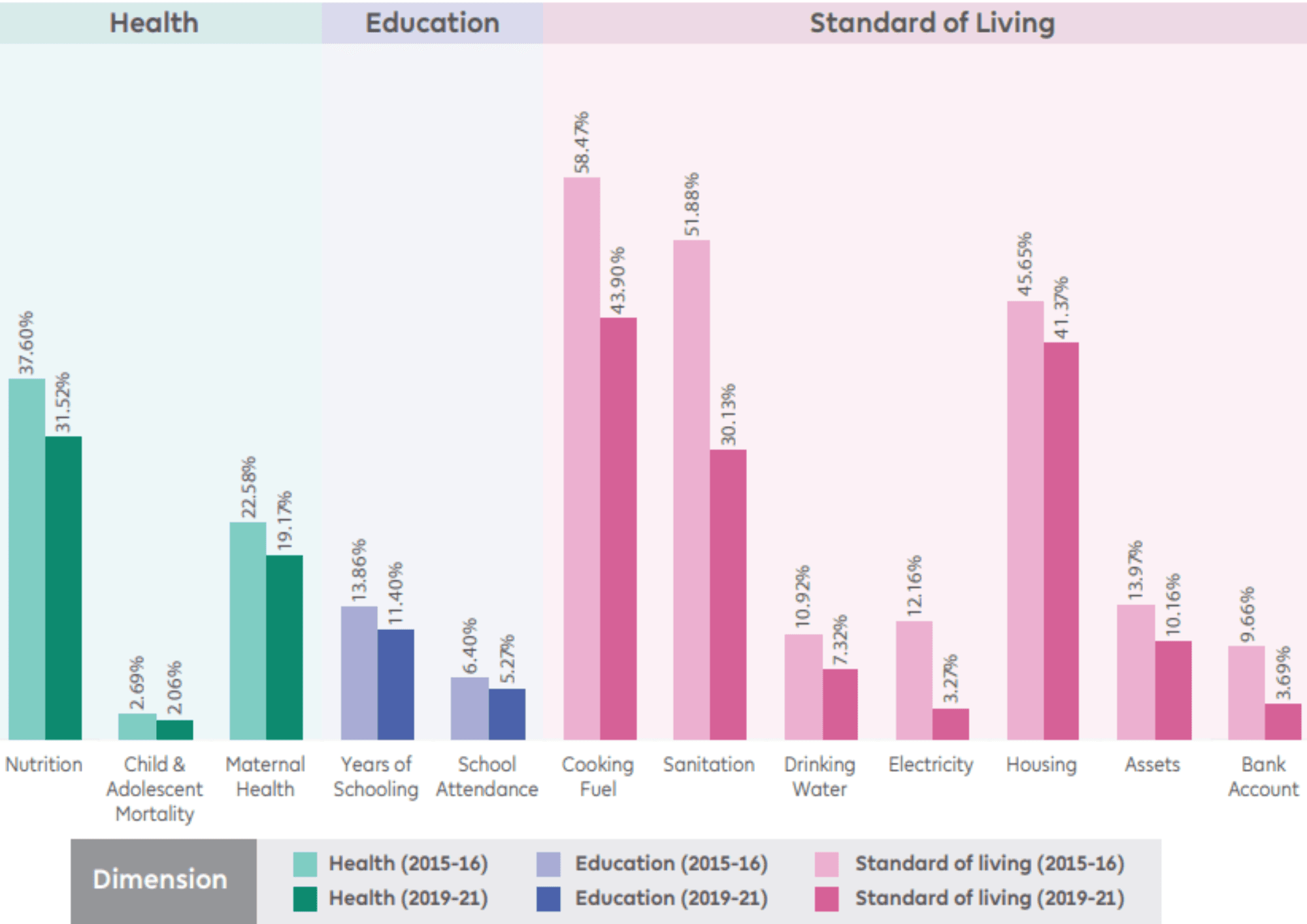
The reported decline in multidimensional poverty has been driven largely by gains in “standard of living” indicators, i.e., access to clean cooking fuel, sanitation, electricity, and bank accounts. These improvements, however, do not necessarily translate into higher purchasing power or greater economic security for households, since each of these gains has been enabled by targeted public policy interventions rather than sustained income growth.
While such policies deserve recognition, it is crucial to remember that these estimates are drawn from the pre-COVID period. Post-pandemic poverty levels remain contested, a debate that can only be resolved through the release of credible and up-to-date data.
Against this backdrop, insights from those working closely with poor communities provide a necessary corrective, one that raises serious questions about how poverty has evolved over the past decade in India. This suggests the need not to abandon multidimensional measures.
The MPI is a valuable step beyond income-based measures, but framing it within Amartya Sen’s Capability Approach can deepen its impact. Sen argues that poverty is fundamentally a lack of capability, i.e., the real freedoms to lead a life one values. Dimensions like health, nutrition, and education are not just indicators; they are essential for building these capabilities.
While income can help access these, structural barriers, such as lack of agency to claim rights or systemic biases based on caste, race, or gender, often prevent people from converting resources into capabilities. Therefore, poverty measurement and policy should address both material deprivations and the social and institutional constraints that limit capability expansion. While the MPI remains valuable for capturing macro-level shifts associated with policy interventions, its interpretation requires caution, particularly in contexts marked by deep structural inequities.
Ultimately, the ease with which such tools can be manipulated forces a deeper question about intent: is the objective to genuinely reduce poverty, or merely to erase it from official view?
(The authors would like to thank Dr Suranjeen Pallipamula for his constructive inputs.)
Edited by Christianez Ratna Kiruba