The People Behind the Waste: Three Sketches of Health and Hope
Through three sketches, this article explores how Bengaluru’s waste pickers navigate healthcare, lost wages, everyday vulnerabilities, and hopes for a healthier future for their children.
We are undertaking a qualitative study under the Centre for Health Systems at the Institute of Public Health, Bengaluru, in collaboration with Hasiru Dala to understand how waste pickers in urban Bengaluru navigate the healthcare system.
Hasiru Dala is a not-for-profit working to advance social justice for the waste picker community. Waste-picking communities are marginalized in many ways. Their exploitation lies at the intersection of caste, class, gender, and the informality of the work. Historically, communities such as the Dalit community have undertaken such work, which is linked to social exclusion.
These sketches are inspired by the observations and insights received during the interviews conducted as a part of this study, and they highlight the struggles of this community when they need health care.
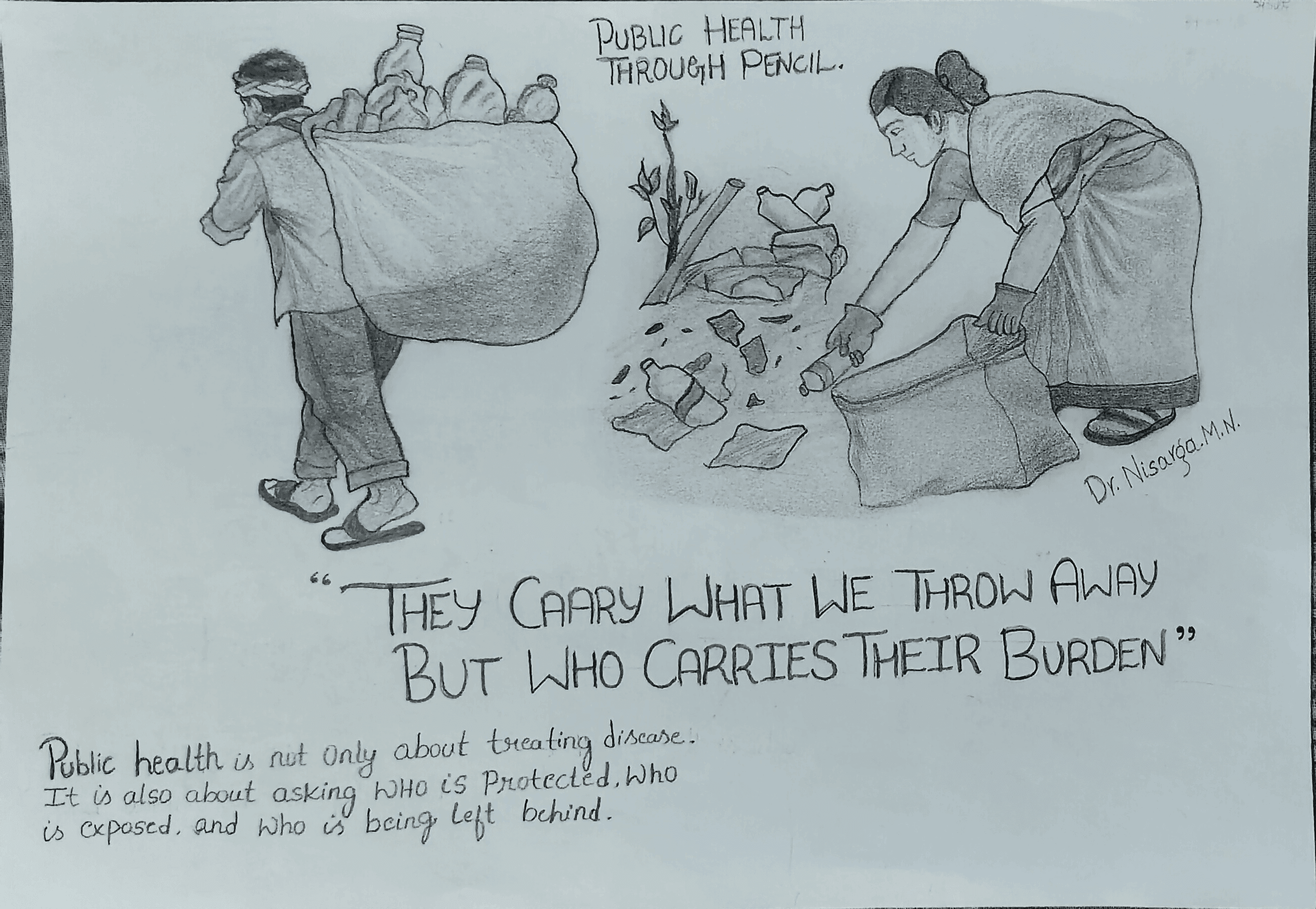
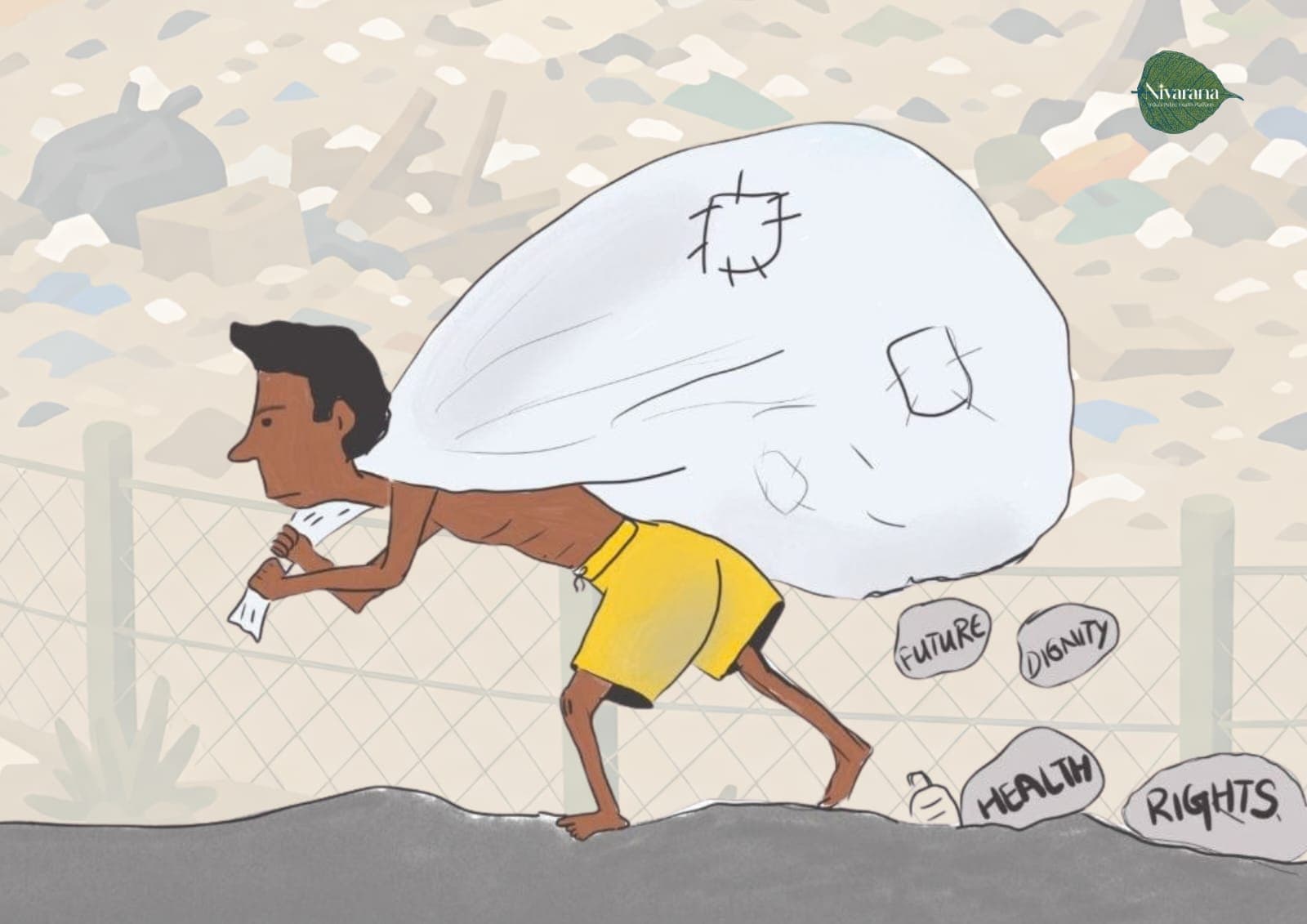
The invisible burden
The waste pickers carry what we throw away on a daily basis, yet their own struggles for receiving dignified and timely care often remain unseen. This sketch looks beyond the waste they collect and sees the people behind the work—their health, safety, dignity, and everyday challenges in receiving health care.
One of the participants who had visited a government hospital multiple times shared their struggles with navigating the healthcare system to receive dignified care: “If we go there (government hospital), they send us there, send us here, they make us run around. Go there, go here and get it done, it can't be done here, go to Vani Vilas, go there. There is nobody to guide us.”
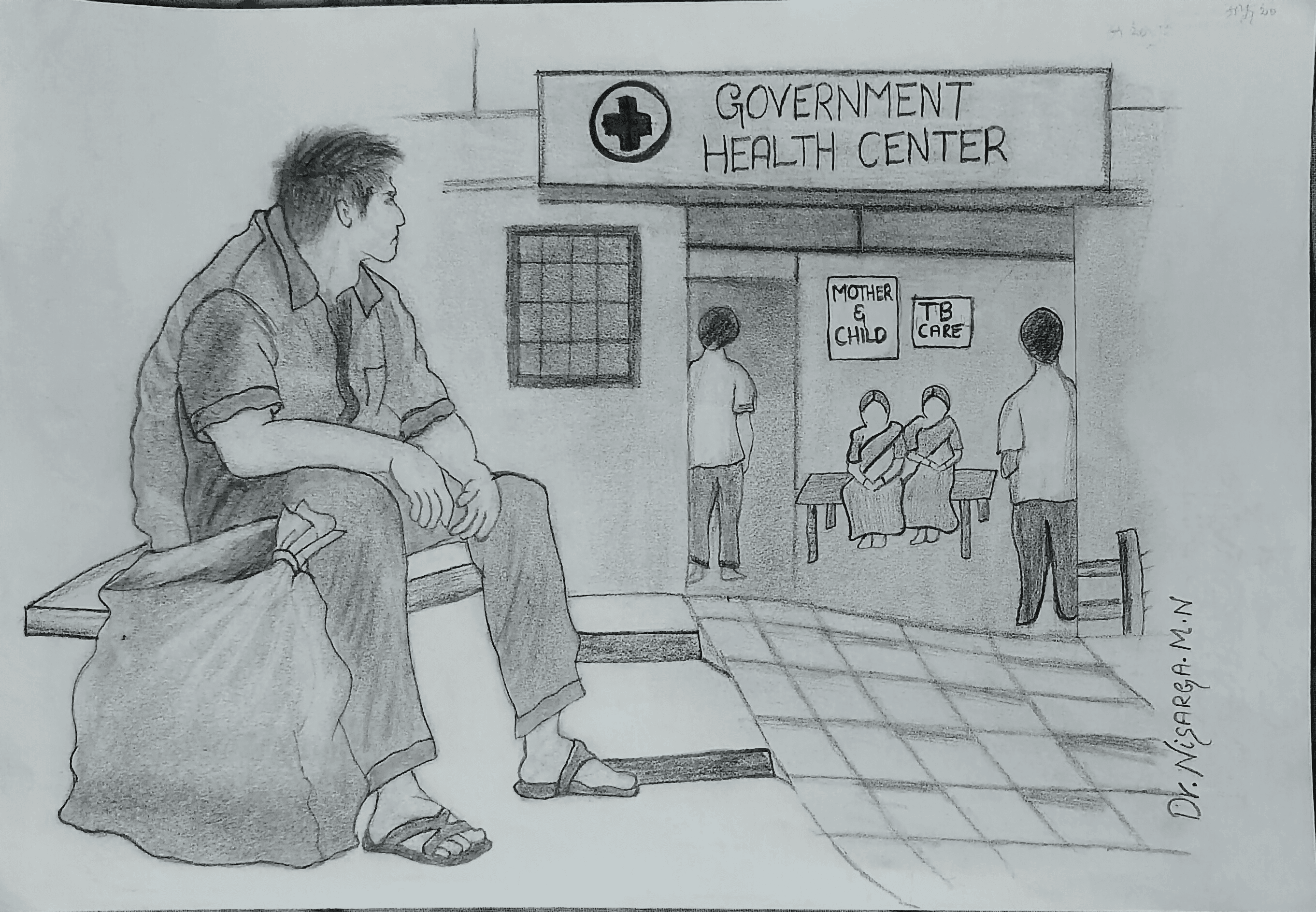
When waiting for care can cost a day’s wage
For many waste pickers, seeking healthcare can become a choice between waiting to receive care and losing a day’s wage. During our study, some community members spoke about long waiting times, moving between different rooms and undergoing multiple tests at government facilities.
A woman we interviewed explained the repercussions of the long time she had to spend at the government hospital, “₹500–600 rupees is getting spent, one day's work is also gone, this (illness) doesn't get cured either, whole day ‘go to this ward, go to that ward,’ they say.”
Given these realities, usually they prefer visiting nearby private facilities or pharmacies for health issues which they feel do not warrant admission. This saves time, although it is more expensive, but still saves them from losing a day’s wages.
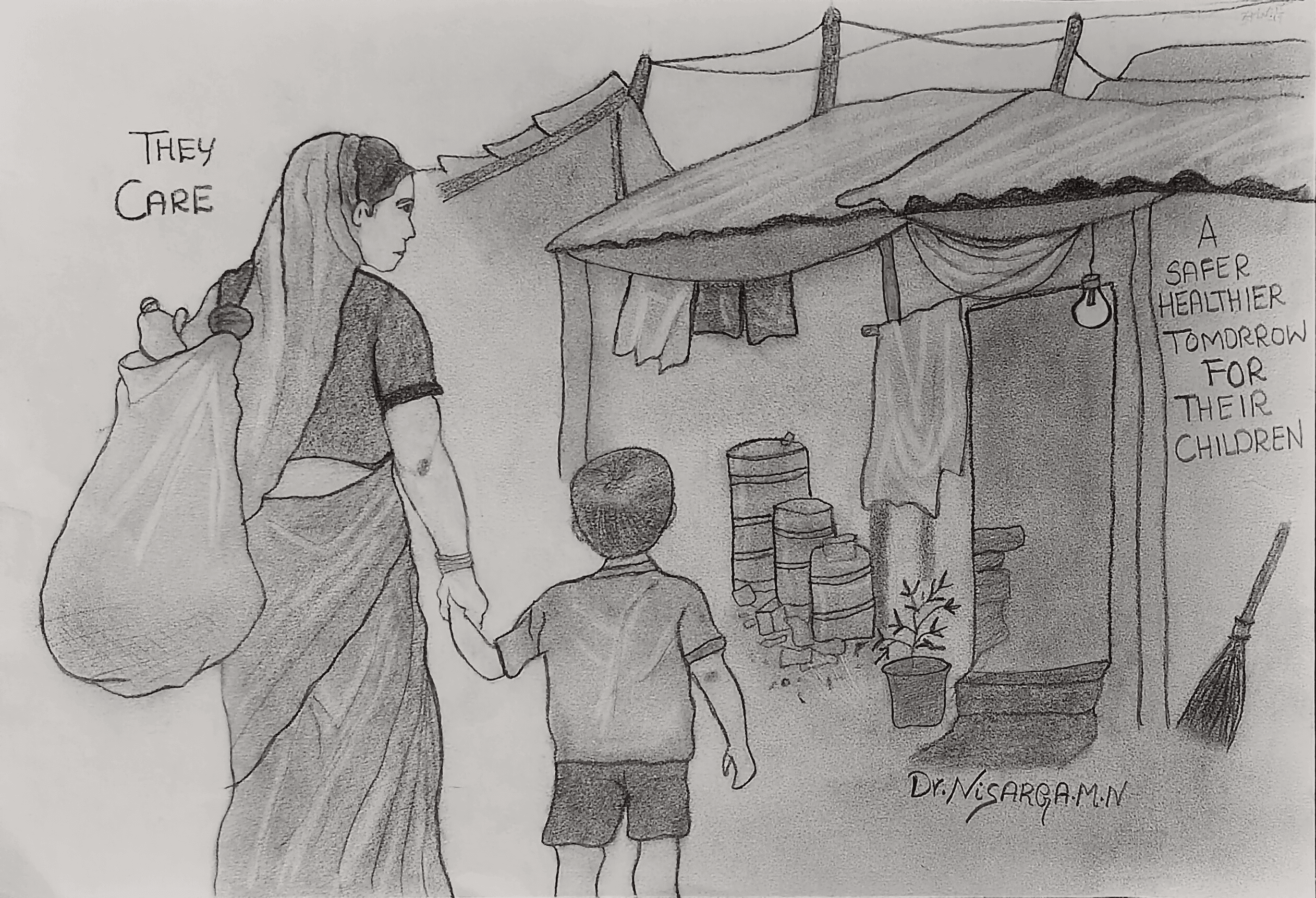
A different future for their children
During the field visits, we saw how families engaged in waste picking work hope for a different future for their children. Some parents spoke about aspirations for their children to receive education and have opportunities beyond the sanitation work they themselves have had to depend on.
For many parents, the hope is for their children to not inherit the livelihood and the associated health issues that their parents had to struggle with. They want their children to have the freedom to study, explore opportunities, and choose their own future.
This sketch reflects that hope—a mother holding her child's hand as she looks towards a safer and healthier future for her child.
Acknowledgements:
We acknowledge Dr. Upendra Bhojani for his support for this work and the Hasiru Dala (Ms. Akshatha, Ms. Anupriya, Ms. Gayathri) team for their collaboration and support as part of the study.
Edited by Parth Sharma
Image by Janvi Bokoliya