I always love gazing at things around me and studying their shapes, colours, and subtleties. This same curiosity fuels my profound love for art; I always introduce myself to others as an artist first. But being an artist with a progressive rare disease has been something immensely challenging and different.
I am 27 years old and live with Spinal Muscular Atrophy (SMA). SMA is a rare genetic disease that affects the motor neurons, resulting in the gradual weakening of muscles. In 2017, I underwent a tracheotomy, and since then, my life has felt like a turbulent rollercoaster. But on the positive side, it was then that I started expressing myself more through my paintings and writings, even while my strength had been severely declining.
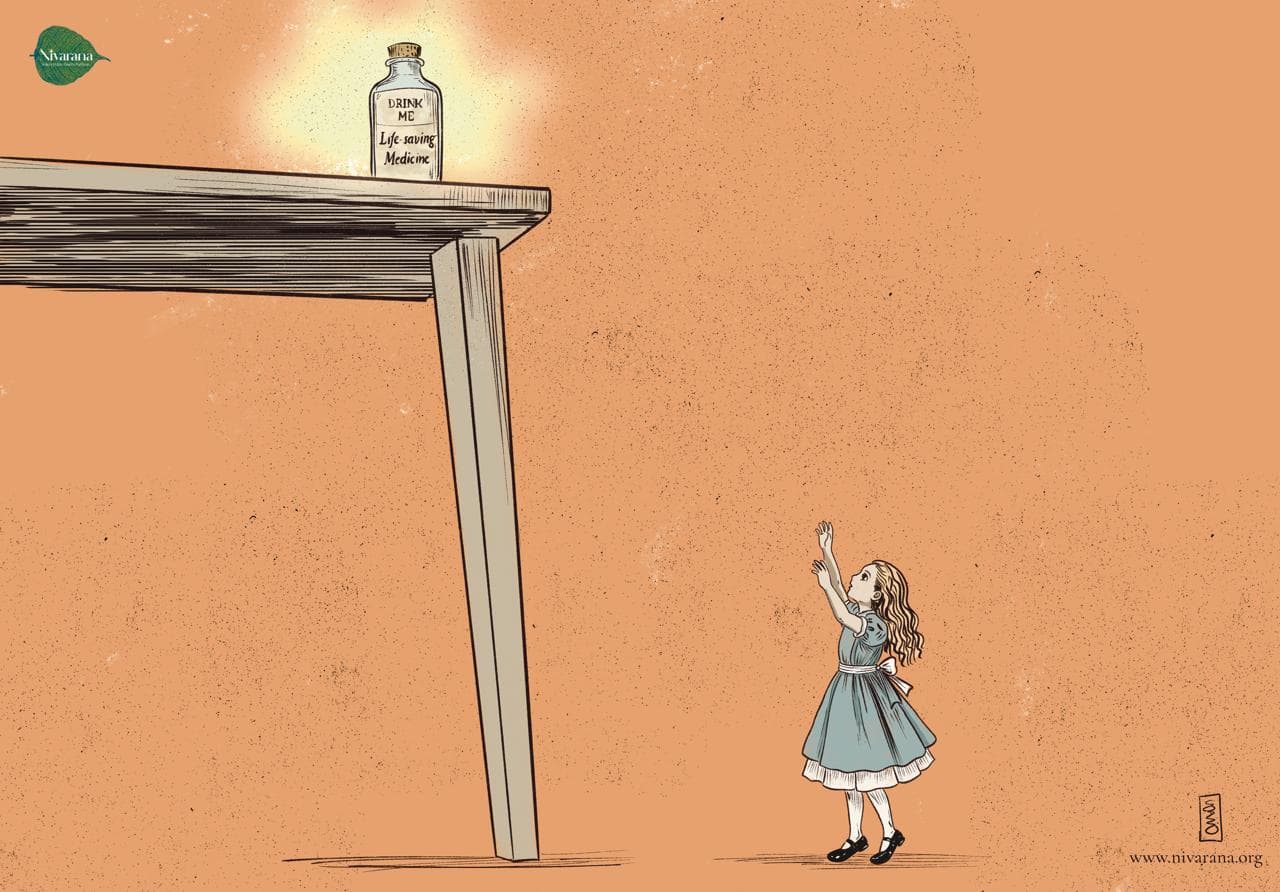
Thriving with a rare disease in a society lacking affordable treatment access is unfathomably challenging. Although there are over 70 million people with such diseases in India, as per estimates, we still lag in awareness and prevention. Only about 5% of rare diseases globally have approved treatments, most of which are prohibitively expensive.
Accessing rare disease treatments in our country often involves a maze of bureaucratic delays, limited or no financial assistance, biased or inequitable criteria or protocols, and a crowdfunding culture that demands to showcase parents and patients in their vulnerable situations and that rewards the most visible patients while quietly leaving others behind. One who awes at how quickly the science of developing new treatments in the world keeps moving must also notice how the system that is meant to deliver the science trundles far behind, not just in India but also in several other low and middle-income countries.
After petitioning the court in 2023, I started receiving a medicine named risdiplam from 2024, initially through the government's financial assistance and later through the drug manufacturers’ patient support programs.
Risdiplam is currently the only oral SMA drug and requires daily dosing. The Maximum Retail Price (MRP) of the originator version of the drug is about ₹5.4 lakhs per bottle. Under the National Policy for Rare Diseases (NPRD), each person living with a rare disease can receive a one-time financial assistance of ₹50 lakh for treatment at designated Centres of Excellence (CoEs). But the current limit on the assistance can help purchase the originator drug only for about 10 months for an adult patient, even after deducting discounts.
In October 2025, an Indian company launched a generic version of risdiplam in the country, following a Delhi High Court ruling that cleared the way for its release. Priced at ₹15,900 per bottle, it marks a massive 97% reduction in the medicine's MRP. The availability of generic risdiplam in India offers significant hope to the SMA community, drastically improving treatment accessibility.
However, affording the medicine remains a challenge for most families, as individuals with SMA require regular spending on multidisciplinary care and supportive therapies. A patient weighing above 20 kg requires 2.5 bottles of risdiplam per month. This underscores the urgent need for the government to step in, bulk-procure generic risdiplam, and provide it to all clinically eligible patients.
Moreover, procuring generic risdiplam via the government’s ₹50 lakh grant could sustain each patient for more than 10 years, as the generic version reduces the annual cost of treating each patient to below ₹5 lakh, compared to approximately ₹60 lakh for the originator drug. Recently published sources reveal that the originator company is selling risdiplam to the State Government of Kerala at less than ₹1 lakh per bottle, which is still unsustainable when compared to generic pricing.
To aid patients unable to travel, the government must establish more CoEs beyond the current 15 and utilize district hospitals for local medicine distribution. The government must maximize the utilization of funds allocated for treating rare diseases and remove the cap on the financial assistance under the NPRD to make sure of lifelong access to medicines like risdiplam.
SMA is a progressive condition. Ensuring timely access to treatments for progressive diseases can prevent or limit avoidable disabilities, improving the quality of life. And every individual deserves to live, and to live with dignity.
India has been proudly known as ‘the pharmacy of the world’, supplying affordable, quality-assured medicines worldwide. We must adopt more sustained and systematic approaches in treating rare diseases like SMA: one that funds research, makes treatments geographically accessible, strictly mandates affordable pricing for orphan drugs, and ensures that the survival of an individual with a rare disease does not depend on their family's financial status or their ability to crowdfund a miracle.
As an artist, I have learnt that everything we see before us holds subtleties and relevance. The struggles of persons with rare diseases must not go unseen by our policymakers. Art teaches us that every subject deserves to be seen fully, not selectively. Likewise, in order to guarantee a truly just health system in our country, the government must take care to protect and support the most vulnerable citizens.
Here is a copy of the letter I had written to Shri Narendra Modi requesting access to this drug.
To,
Shri Narendra Modi
Hon’ble Prime Minister of India
Government of India
28 April 2026
Subject: Urgent Request to Ensure Access to Risdiplam for All Persons with Spinal Muscular Atrophy (SMA) Through NPRD
Respected Modiji,
We, the undersigned persons living with Spinal Muscular Atrophy (SMA) and concerned parents of minor persons living with SMA, write to request your urgent support in ensuring nationwide access to generic Risdiplam for persons living with Spinal Muscular Atrophy (SMA) through the National Policy for Rare Diseases (NPRD).
As you know, SMA is a genetic, progressive, and life-limiting neuromuscular condition. Access to treatment is time-sensitive, and delays cause irreversible deterioration. While India has taken notable steps in rare-disease care through NPRD, thousands of SMA patients still remain untreated due to the prohibitive cost of the innovator medicine. The MRP of the innovator drug is ₹5,44,473 per bottle. The one-time assistance of ₹50 lakhs under NPRD lasts hardly 10 months for an adult patient (2.5 to 3 bottles per month), even after the procurement of each bottle at a heavy discount.
The recent availability of Indian-manufactured generic Risdiplam offers a practical and affordable pathway. The generic version of Risdiplam is priced at an MRP of ₹15,900 per bottle and is currently available for approximately ₹12,790 per bottle. This represents a 97% price reduction based on the MRP alone. It is significantly less expensive, clinically effective, and already helping several people who have accessed it privately. However, even at this price, the majority of persons living with SMA cannot afford to buy this medicine in a sustainable way. This requires an urgent intervention of the Ministry of Health and Family Welfare, which is in charge of the implementation of NPRD.
Further, most of the Centres of Excellence designated under NPRD have not started prescribing the generic version of Risdiplam, citing various technical reasons and denying treatment for adult patients. It is important to note that the ₹50 lakhs under NPRD can now be able to treat an adult patient for more than 10 years. If the government starts centrally procuring the generic version of Risdiplam, then the procurement price would be more than 40% lower than the MRP. This would ensure uninterrupted access of Risdiplam to all people living with SMA.
Against this background, we request you to:
● Immediately direct all Centres of Excellence to start prescribing the generic Risdiplam to all clinically eligible SMA patients, irrespective of their age and type of SMA.
● Initiate the centralized procurement of Risdiplam and supply it to all Centres of Excellence and district hospitals, ensuring that all persons living with SMA can receive treatment free of cost without the need for long-distance travel.
India now has the opportunity to make SMA treatment widely accessible through affordable generics. We remain hopeful that your leadership will help secure timely and equitable treatment for all SMA patients across the country.
We urge you to act swiftly.
With respect and hope,
Signatories
Organisations: Families of Spinal Muscular Atrophy, I M POSSIBLE and SMAART, Mobility in Dystrophy (MIND) Trust, Kerala
Individuals: Aastha Patel, Abhishek, Abhishek Kumar Srivastava, Adarsh kj, Agesh Kumar Sharma, Ainaz shazane, Aishwarya Kudesia, Akshay Bhalotia, Ameer Suhail, Amit Kumar Singh, Amola Sinha, Anamika. V, Ankit gupta, Anshika Verma, Aranshi Tanwer, Arun Prakash Verma, Ashish Verma, Ashwani Kumar Prajapati, Athira. S, Aysha Afrin, Ayshath Nousheen B M, B. Sanoosi, Balganesh Krishnamurthy, Chayanika Bhuyan, Deepak Arya, Deepak Kumar Sharma, Deepak Singh, Devesh malkani, Girish Chandra Yadav, Gurvinder singh, Hardik Mewada, Harshit Prabhat, Hima Manukumar, Ibrahim Siddiqui, Ishal Maryam, Jayalakshmi BB, K S Asna Sherin, Kapil Das, Karan Sunil Shah, Kareem Karassery, Kasim, Keya Hatkar, Krishnakumar, Ku.Manvi Sahu, Laba Kumar Basumatary, Lalrinmawii Hmar, Liya baby, Mamta Singh, Manish Rawat, Manju ms, Manoj Kumar, Manoj Mohan C, Mariya Farooq, Meira Anna Haridasan, Mohammed Aslam M S, Mohit Singh, Muhammed Fatheen K.P, Mylavarapu Manikanta, Nazriya Ashraf, Nirmal Das (FATHER), Nishana N, Nishil Kumar P. P., Nitin, Pavithran T.V., Poonam Rose Abraham, Pradeep Kumar, Pranjali Udanshiv, Prashant, Pratinav Mishra, Priyank Saxena, Priyanka Nadkarni, Priyanshu Kumar, Purva Mittal, Qadeer Quadri, Rachel Roman, Rahil Khan, Raj Kumar Saini, Raj Mistry, Rajiv, Ranjeet Kumar, Rashmirekha Bhuyan, Rekha Garg, Ridha. C, Ridhay Avinash Boliyar, Rishipriya D, Ritesh Patel, S. Ashish, Saifullah Khalidi, Sajitha P H, Sajna P S, Sameera, Sana Fathima K S, Santhosh Kumar T, Saravanan K, Sarmistha Pritam Baruah, Satyendra Mishra, Satyendra Sahai, Seba P A, Shahina, Shalini Pandey, Shankar Lal Choudhary, Sharwan Kumar, Shibina, Shivam Charaya, Shivani Singh, Siya Fathima, Soumya Joy, Sripad Joshi, Subhash Dhiman, Subin Kurian, Suhel Khan, Swapnil Bandu Jadhav, Swati Singh, Umme Kulsoom, Vanika Chopra, Vihaan Anurag Agrawal, Vikash Singh, Vineesha O, Vishnu C Nair, Vishnukumar B, Yasser
Cc
1. Shri Jagat Prakash Nadda
Hon’ble Union Minister
Ministry of Health & Family Welfare
Government of India
2. Secretary, Department of Health and Family Welfare
Edited by Christianez Ratna Kiruba
Image by Gayatri