Trans Act 2026 Dangerously Departs from Evidence-Based, Community Centred Policymaking in India
Ignoring established global guidelines, expert medical consensus and sustained community protests, the law signals a departure of policymaking from evidence and expertise to ideology and administrative control.
“These politicians are making laws for us when they don’t even have basic concepts of gender, sex, and sexuality. This new bill criminalizes us and disrespects our right to exist.”- Akkai Padmashali, a transgender woman and a Gender and sexuality rights activist from Karnataka and a current member of the Supreme Court Advisory Committee on Transgender persons.
A Bill Passed Without Thinking or Listening
On 13 March 2026, the Ministry of Social Justice and Empowerment, Government of India, introduced a new bill in the Indian Parliament concerning transgender, gender diverse, and intersex persons’ rights (hereinafter referred to as TGDI). Despite widespread appeals from the TGDI communities, civil society, public health, and legal experts, and Parliamentarians urging broader consultation, the bill was passed in the Lok Sabha on 24th March 2026 and the Rajya Sabha on 25th March 2026, with an overwhelming majority, after opposition members of Parliament walked out of the session.
On 30th March, the President of India gave her assent to the Bill and the Government of India notified the amended legislation in the Gazette of India on March 31, 2026, the International Transgender Day of Visibility, ironically.
This rapid legislative procedure, deliberately ignoring sustained requests from the National Council of Transgender Persons, and diverse persons inside and outside Parliament for deliberation and inclusion of TGDI voices, raises serious concerns about the policymaking processes in India.
Mostly, it points to a specific issue - that people in power have limited to no knowledge of the current scientific information regarding this issue and are unwilling to listen to experts before they pass bills.
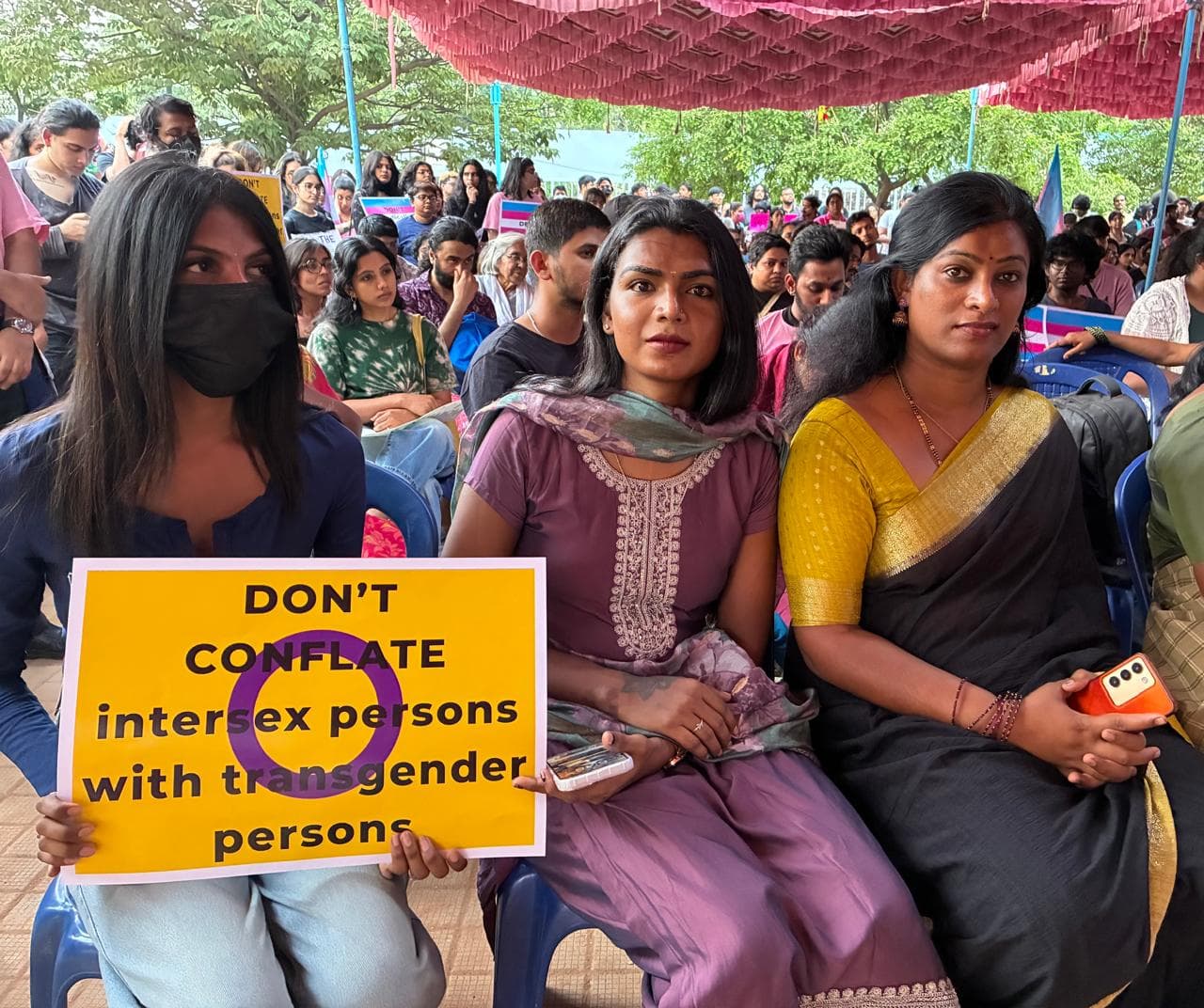
(Anti Trans Bill Protest 2026, Picture Credits: Ritash)
Knowledge Gaps and Poor Understanding
In Indian policy language, there has always been a persistent conflation of intersex variations with transgender identities and a broader misunderstanding that collapses gender identity, biological sex, and sexuality into a single category. Such conceptual inaccuracies are not uncommon in public discourse, but when they form the basis of law, they risk institutionalising ignorance rather than addressing it.
At its core, the Act claims to expand protections by strengthening punitive provisions against harm directed at transgender and gender diverse individuals. However, a closer examination reveals a deeply exclusionary framework that can harm the very people it claims to protect.
The bill narrows the definition of transgender identity, conflates gender identity with biological sex, and uses ambiguous language that could criminalise diverse gender expressions. It also reinforces a long-standing misconception by treating intersex variations and transgender identities as interchangeable, despite clear distinctions recognised in medical science and human rights frameworks. This risks obscuring the specific needs of both groups and could lead to inappropriate and harmful policy responses.
Emerging evidence suggests that policies restricting gender recognition and enforcing medical or bureaucratic verification are not only exclusionary but also scientifically unsound. Contemporary research in public health, psychology and human rights consistently demonstrates that gender identity is an internal, self-determined experience and that attempts to externally verify or regulate it lack empirical validity and are associated with worsened mental health outcomes, reduced healthcare access and increased stigma among transgender and gender diverse populations.
To understand the gravity of this shift, it is essential to revisit the foundations of gender identity as understood in contemporary science and human rights discourse. Gender identity is a deeply felt internal experience of one’s gender, which may or may not align with sex assigned at birth. This is distinct from biological sex, which itself is not strictly binary but exists along a spectrum influenced by chromosomal, hormonal and anatomical variations. Intersex individuals, for instance, are born with sex characteristics that do not fit typical binary definitions and their experiences are distinct from those of transgender and gender diverse individuals whose gender identity differs from their assigned sex.
The broader framework of Sexual Orientation, Gender Identity and Expression and Sex Characteristics (SOGIESC) recognises this diversity and emphasises the importance of self-identification as a cornerstone of dignity and autonomy. Global health and human rights bodies, including the World Health Organization, have affirmed that gender diversity is a natural variation of human experience and not a pathology.
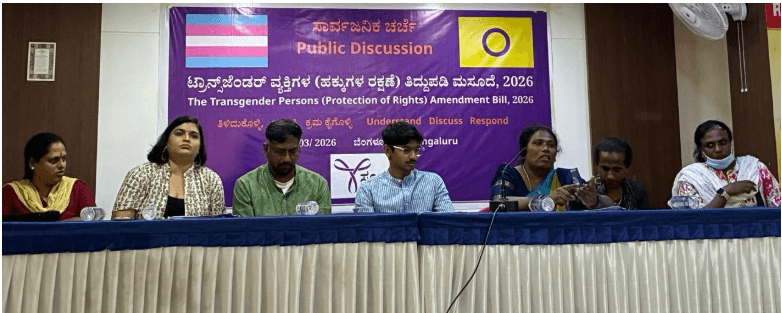
(Panel Discussion on Response to Trans Bill 2026, Picture Credits: Ritash)
Unwillingness to Listen to Experts
The bill was passed despite widespread and visible protests led by the TGDI community starting 14 March 2026. These efforts drew significant local, national, and international attention, including media coverage, public consultations, expert statements, and coordinated appeals from community groups, civil society organisations, and public health professionals.
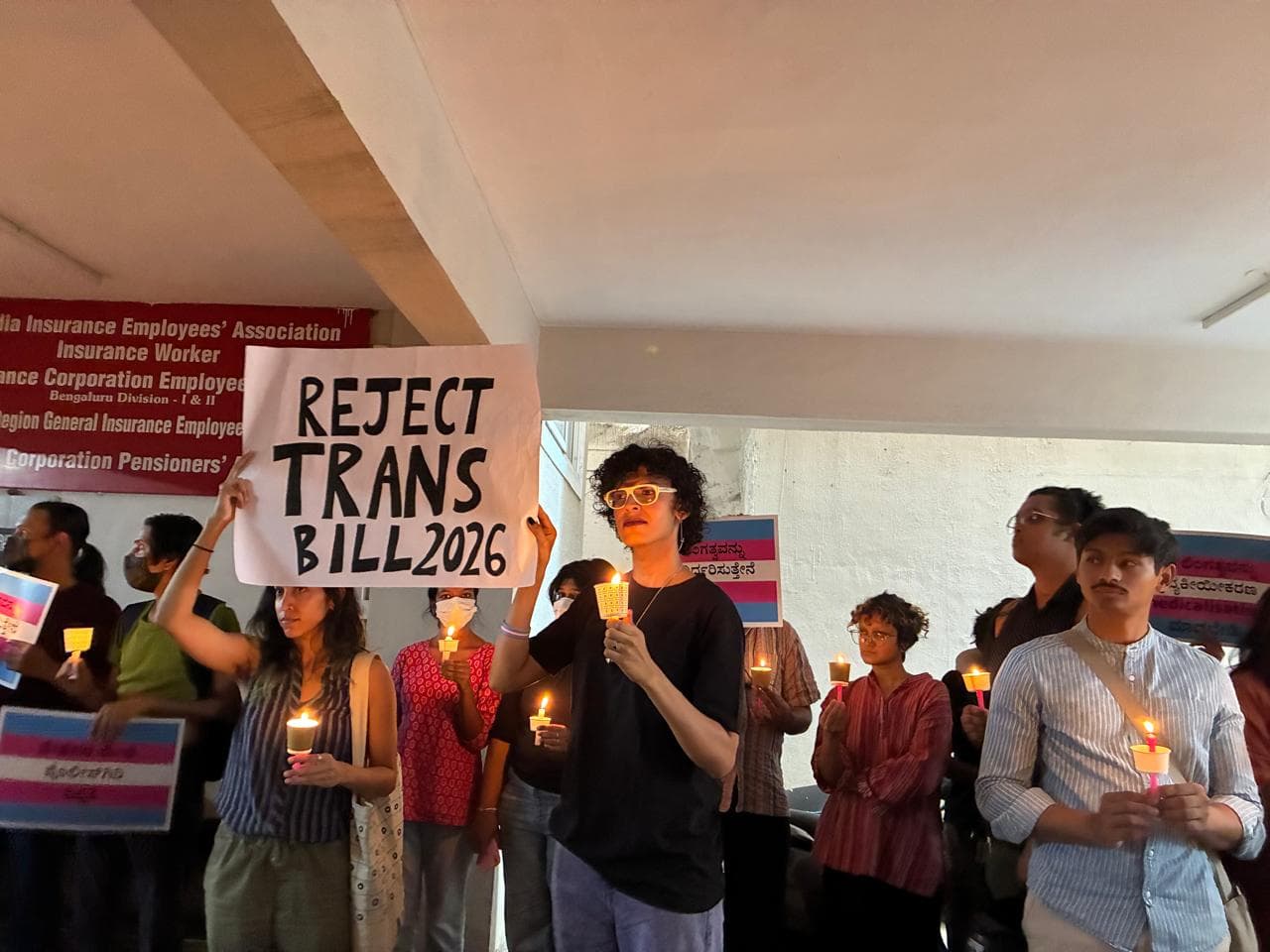
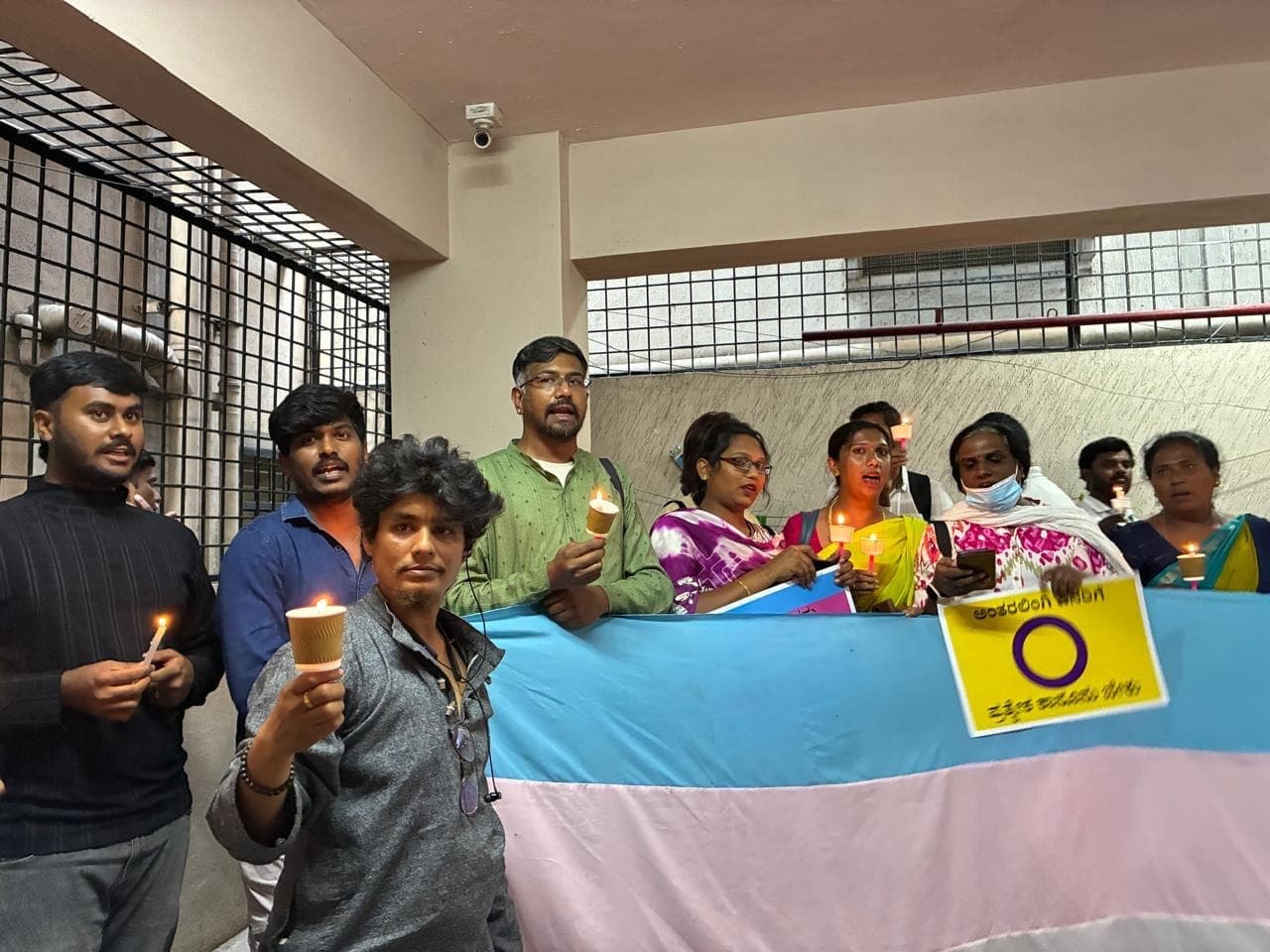
From multilingual memoranda to heavily policed demonstrations and candlelight vigils, the community organised sustained efforts to engage policymakers. While these voices were widely acknowledged, their concerns were not meaningfully incorporated by the Government of India—highlighting a gap between representation and real participation.
Furthermore, there are many international guidelines that promote allowing self-identification as best practice for transgender health which has been ignored by the policymakers.
Along with statements from various public health groups, there was also a letter written to the President of India by Association of Aesthetic Plastic Surgeons, stating that, “The proposed Bill redefines “transgender” in a manner that appears to diverge from contemporary scientific understanding, including the WHO ICD-11 guidelines and the World Professional Association for Transgender Health (WPATH) Standards of Care (SOC8). This raises concerns regarding its potential impact on patient rights, clinical protocols, and continuity of care.”
This reveals that experts have both understood and tried to communicate to policymakers that this Act diverges from science and evidence based medicine.
(Anti Trans Bill Protest 2026, Picture Credits: Ritash)
Public Health Impact
From a public health perspective, the implications are profound. TGDI individuals already face significant barriers to healthcare access, including discrimination, lack of provider sensitivity and structural exclusion. Policies that increase scrutiny and restrict self-identification can exacerbate mental health challenges, discourage healthcare-seeking behaviour and deepen existing health inequities. Evidence consistently shows that affirming environments, including legal recognition of self-determined gender identity, are associated with better mental health outcomes and reduced risk of depression, anxiety, self-harm and suicide among TGDI populations.
The implications extend directly to access to gender-affirming care within public health systems. Heightened requirements for legal and medical verification are likely to delay or obstruct access to services such as hormone therapy, mental health support and surgical care, particularly in government institutions where administrative processes remain closely tied to legal documentation.
This, in turn, creates a precarious medico-legal landscape for clinicians, where providing care outside narrowly defined legal categories may expose them to litigation, professional scrutiny and family-initiated disputes, ultimately deterring providers and further constraining access to essential services. These barriers are likely to prolong already complex care pathways while simultaneously increasing out-of-pocket expenditure, pushing many individuals towards unregulated or unsafe alternatives.
These challenges will likely be uneven across states. While states such as Tamil Nadu, Keralam Karnataka, West Bengal and Telangana have historically demonstrated relatively more progressive frameworks and service availability, many other regions may see significant barriers in implementation, further deepening regional inequities in access to care.
The introduction of stringent criminal provisions within the Act raises additional concerns from a public health standpoint. While ostensibly framed as protective, such provisions may emerge from attempts to regulate identity and expression under the guise of preventing misuse or harm. In practice, however, criminalisation has consistently been shown to deter individuals from seeking care, increase mistrust in institutions and exacerbate stigma. Rather than improving safety, it risks driving already vulnerable populations further away from healthcare systems and social support.
Furthermore, the implicit exclusion or delegitimisation of diverse gender identities may discourage individuals experiencing gender dysphoria or related distress from seeking timely psychological or medical support. Unless states actively safeguard identity recognition, reduce bureaucratic barriers and ensure affordable, affirming care, these policy shifts may result in worsening mental health outcomes and widening health disparities. In this context, legal recognition is not merely symbolic, it is a critical determinant of access, equity and health outcomes.
Beyond policy and public health, this is a deeply human issue.
For many within the TGDI community, identity is not a theoretical construct but a lived reality shaped by resilience, struggle and the pursuit of autonomy and dignity. “We are not seeking special rights and have accepted the TG Act 2019, despite its limitations. We are asking to exist without being questioned or forced to prove who we are”, remarked Kiran Nayak, a national award winning trans and disability community leader and working class, Lambani (Adivasi), transman with disabilities, during a media interaction organised in Hyderabad on March 17, 2026. Another TGDI person shared, “Every time the law changes without us, it feels like our lives are being decided in rooms we are not allowed to enter.”
At a public discussion on the Bill, held in Bangalore on 23rd March 2026, Kavya, an intersex person from Karnataka, said that the 2026 Amendment Bill conflates trans and intersex persons. Kavya sought separate legal and policy provisions to safeguard the rights of intersex persons and address their specific needs.
These voices reflect a broader truth: legislation that affects marginalised communities must be shaped with their participation, not imposed upon them by the state.
No Evidence to Prove Misuse of Self-Identification
India itself has been a global leader in recognising these principles. The landmark NALSA vs Union of India 2014 Supreme Court judgement affirmed that transgender and gender-diverse persons have the fundamental right to self-identify their gender and are entitled to equal protection under the Constitution. This progressive stance informed the Transgender Persons (Protection of Rights) Act, 2019, which, despite its limitations, established a legal recognition of transgender and gender-diverse identities and protections against discrimination.
The move away from self-identification appears driven by concerns over misuse of benefits. However, this approach disproportionately burdens already marginalised individuals while failing to address structural inequities, shifting control over identity from individuals to medical and bureaucratic institutions.
Furthermore, there is no credible evidence in the academic or policy literature to support claims that individuals falsely identify as transgender to access state benefits; on the contrary, transgender and gender diverse communities continue to face significant barriers, stigma and under-utilisation of even the limited entitlements available, with disclosure of identity often carrying social, economic and legal risks.
At the same time, the narrowing of definitions enables the selective allocation of rights and benefits to a limited subset of individuals who are able to meet these verification criteria. This risks creating hierarchies within transgender communities themselves, where those who conform to medicalised or state-recognised categories may gain access, while others, particularly non-binary, gender non-conforming and socio-economically marginalised persons, are excluded.
Moreover, the bill lacks an intersectional lens. TGDI individuals often face layered vulnerabilities based on caste, class, disability, age, geography and other axes of identity. A framework that fails to account for these intersections risks further marginalisation and recriminalisation, rather than empowerment.
From IPC Section 377 to Today: Are We Reversing Course?
The passage of this bill marks a critical moment. It challenges India’s commitment to constitutional values of equality, dignity, and justice. It calls into question the country’s alignment with global human rights standards, its own progressive judicial precedents, and its commitment to evidence and science-based policymaking.
This moment cannot be viewed in isolation. It signals a broader and more troubling trajectory - one where hard-won rights may no longer be secure and risks being overshadowed by majoritarian and moralistic anxieties. Where science and evidence will not matter when decisions are made about people’s bodies.
To now witness policies that brazenly reintroduce state control over identity, bodily autonomy, and expression raises a deeply unsettling question: are we witnessing the early stages of a broader rollback?
From a public health and human rights perspective, the consequences of such regression are profound. Societies that restrict identity and expression do not eliminate diversity- they only push individuals into invisibility, vulnerability, and harm. Fear replaces trust. Silence replaces care-seeking. Marginalisation deepens.
Will this be remembered as an isolated misstep or as the beginning of a broader retreat from inclusivity, justice, and replicating the regression towards biological essentialism propagated by the USA, UK, and the IOC?
The answer will depend on whether institutions, civil society, public health professionals, and citizens choose to remain silent or to speak — to insist that dignity is non-negotiable, that identity cannot be legislated into conformity, and that progress, once achieved, must not be surrendered.
Because rights which actually must be available and guaranteed from birth onwards to us as living beings, once eroded, are far harder to reclaim than they were to win.