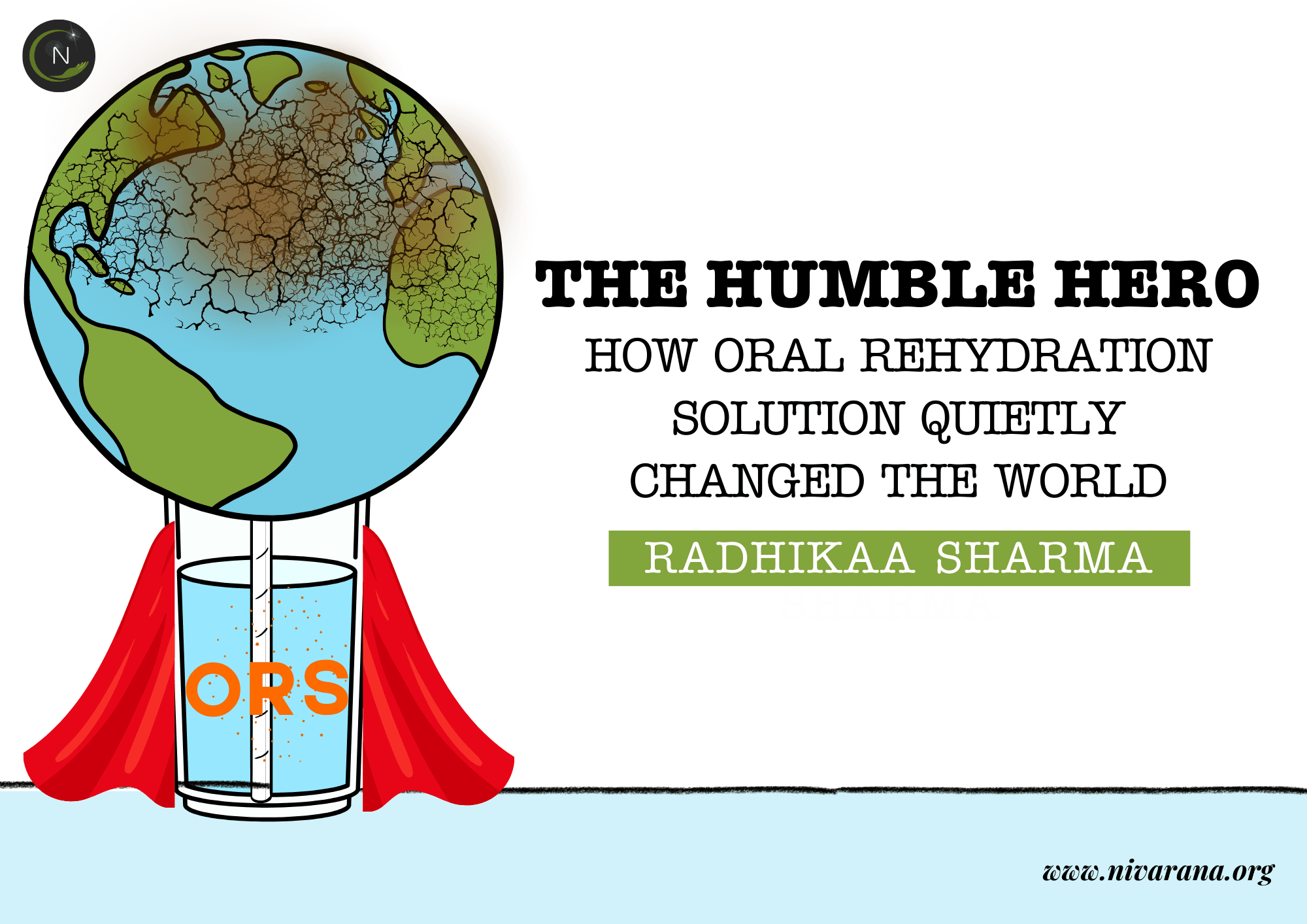
A village recently experienced a food poisoning outbreak. It began in the usual way - with a festive gathering and unsanitary food handling. Within a day of the event, scores of people started showing symptoms, most significantly, diarrhea. Children and older people were affected most severely, with some requiring hospitalization. However, health workers gave most of the patients who came to the local sub-center small sachets of a powder, directions on how to mix it in water, and sent them home.
Half a century ago, a similar situation would have brought about panic, dismay, and hopelessness within the community. One of the most feared causes of death, over five million children succumbed to diarrhoea each year. Despite ongoing research, the only known treatment, intravenous (IV) rehydration, was available only in selected centers worldwide. This modality was neither accessible nor feasible in developing countries, especially during community outbreaks of transmissible gut infections. People tested several oral therapies — carrot soup, carob flour, dehydrated bananas, even " starvation periods" — without substantive success.
The most feared of these infections was "blue death," or cholera. A very rapidly developing and highly infectious disease, cholera decimated entire populations within days. All this must have been in Dr. Dilip Mahalanabis's mind as he set up a field hospital along the India-Bangladesh border in the aftermath of the 1971 war. Refugee camps had no access to clean water or sanitation and were soon struck by cholera.
Soon, the field hospitals ran out of supplies for IV saline treatment. With a shortage of equipment and trained personnel, Dr. Mahalanabis chose an unconventional route. His team created bags of salt-glucose mixtures and recruited healthy family members to formulate an oral solution, which they distributed among the patients. They also shared the composition with other camps plagued by the same disease. This mass treatment yielded near-miraculous results—the death rate from cholera dropped from 30% to 3.6% when compared to IV therapy.
The proof is in the pudding. Dr. Mahalanabis decision to start oral treatment for severe dehydration breathed new life into existing bodies of work. Although trials in controlled settings with limited patients existed, the impact made along the India-Bangladesh border resonated worldwide. Spurred on by the, oral rehydration solution — better known as ORS — became the backbone of the WHO's Control of Diarrhoeal Disease (CDD) program in 1978. Today, UNICEF distributes annually.