Bhopal’s Urban Poor Battle Extreme Heat Due to Bad City Planning
As rapid urbanization transforms Bhopal, residents of its informal settlements are left to fend for themselves against intensifying heat waves, without basic infrastructure, water, or state support.
A 43-year-old female social worker, Nilofar (name changed), who lives in a slum settlement of Bhopal, has consistently faced hardship every summer for the last 16 years. The temperature increases yearly, and her home is not built to withstand it. The impact of this heat on her life is severe.
"I experience a lot of anxiety during the rising heat," says Nilofar, "I need to sleep on the terrace because the inside of our house gets suffocating. A few years back, sprinkling water on the terrace used to cool down the house enough to sleep, but that has stopped working. The terrace has its issues, like mosquitoes and insects," she sighs.
Nilofar feels that her productivity decreases significantly during summer and worries that it may cost her her job. "I sometimes miss out on my work due to the heat. My work involves a lot of travel, and doing that after not having rested the night before is terrible. I develop headaches, which worsen when I travel some of the longer routes."
Another 43-year-old vegetable vendor, Raj (name changed), describes how he copes with the extreme heat: "There's just a small window in my shop for airflow, and with such limited space, it gets tough. I cover my head with a handkerchief to manage the heat, and on the tin roof, I spread old jute sacks and sprinkle water over them to try and cool down the inside of the shop."
These experiences from Bhopal reflect a broader pattern seen across urban poor settlements in India. Despite being situated in the middle of the capital city of Madhya Pradesh, the condition of these settlements is still subpar. No regular water supply, inadequate waste management practices, and rising temperatures in these areas cause health impacts, which translate into socioeconomic burdens and deleterious health effects.
Heat vulnerability framework
In the context of climate change, vulnerability refers to how likely a population or system is to be negatively affected by environmental stressors. This concept, widely used across public health, climate science, and disaster studies, is shaped by resource limitations and socioeconomic disadvantages.
As such, it is a well-known fact that rising heat disproportionately affects marginalized populations with socioeconomic disadvantages. But there is a need to clearly define the problem and study the main components that increase a population's vulnerability to heat. This will then allow us to identify the populations at risk and devise tactics to mitigate them.
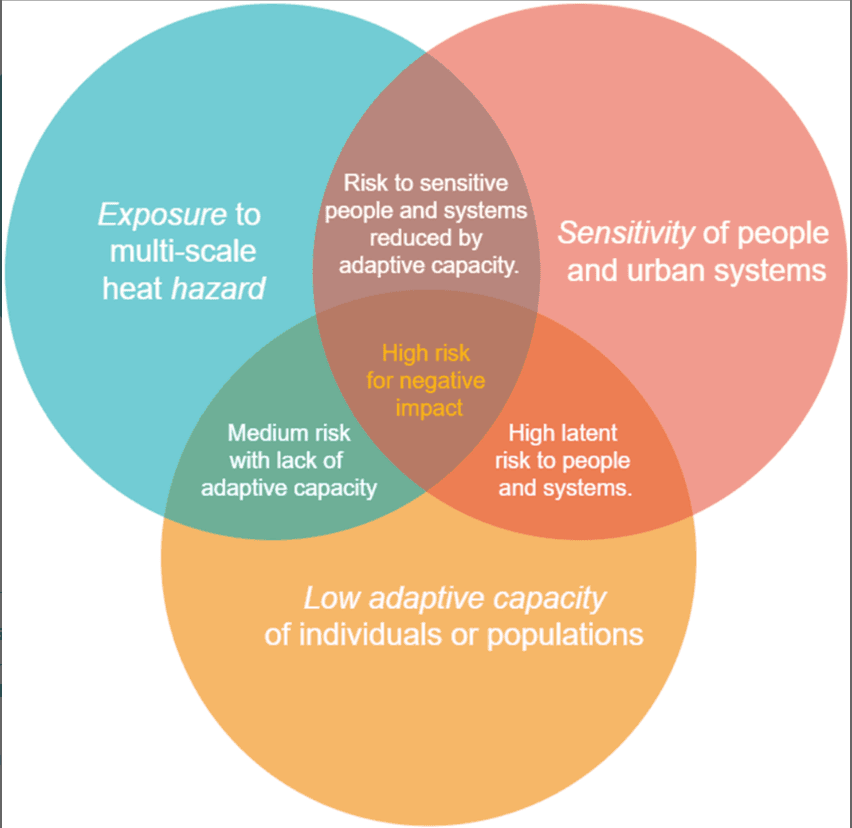
The 'Heat Vulnerability Framework' is a concept that helps in this analysis. It comprises three elements: Exposure, Sensitivity, and Adaptive Capacity. Exposure is the degree of physical contact with heat amplified by poor urban infrastructure, like tin roofs and a lack of ventilation.
Sensitivity refers to the degree to which a person or a population may be adversely or beneficially affected when exposed to climate variability or change. We refer to this when we talk about distinct workers, such as gig workers, migrant laborers, and women who work indoors in poorly ventilated homes, who are more likely to develop health effects than others.
Adaptive Capacity is considered the most critical of the three. It refers to the ability of systems, institutions, and organisms to adjust to potential damage, take advantage of opportunities, or respond to climate or weather events. This also includes the ability of individuals and communities to anticipate, prepare for, and cope with the effects of shocks and stresses without compromising their long-term well-being.
For a population to respond positively to the rising temperature, exposure and sensitivity must decrease, and adaptive capacity needs to rise exponentially.
(Risk framework for urban overheating impacts on people and urban systems adapted from Foden et al. (2013))
Urban poor face the heat in Bhopal
To assess the issues faced by people living in Arjun ward, situated near Gandhi Nagar as an urban slum of Bhopal, and observe where they fall on the scale of heat exposure, sensitivity, and adaptive capacity, the author designed a qualitative study and interviewed 25 people. The author organized semi-structured interviews and a focus group discussion for the respondents and used non-participant observation to capture more profound insights.
The analysis revealed some shocking insights: The populations living in the urban slums of Bhopal were highly vulnerable to heat-related illnesses, mainly due to the lack of infrastructure and prior planning on the part of the State to adapt.
Most of the communities occupying these urban slums in Bhopal were working-class communities, such as migrant laborers and gig workers who needed to perform their duties in the beating sun or women who did domestic work in their poorly ventilated homes, thereby increasing their sensitivity.
Exposure to heat has increased exponentially over the past few years as India has begun to have longer and hotter heat waves. On April 6th, Bhopal recorded the highest temperature of the season, 41 degrees Celsius. Their poor living conditions further amplify this.
However, amidst this rising exposure and sensitivity, attempts to improve the adaptive capacity of urban slums have strictly been from the individual's side, with inadequate support from the government.
Many respondents reported that their area's water supply is often limited throughout the year because of inefficient water connections and broken pipelines. This forces them to await water tankers, who provide water only on alternate days. Even when these tankers came, sometimes the water was smelly and unfit for consumption, forcing households to store water in advance and use multiple containers to meet their daily needs.
However, during the summer, water usage increases with the extreme heat. Still, there is no proportionate increase in the provision of water from the State, which leaves the slum dwellers scrambling to conserve the water they have stored in their homes.
In addition to water scarcity, frequent power cuts during extreme heat worsen the situation exponentially.
A respondent shared that the transformers in the area often burn out due to the excessive demand for electricity during summer months, as more households rely on fans and coolers to cope with the rising temperatures. The aging infrastructure and overload on the power system lead to frequent breakdowns and maintenance work, especially during peak summer.
These disruptions leave residents without essential cooling options when they need them the most, increasing their vulnerability to heat stress. Women and children, who often work from home, are disproportionately affected by these outages, which last from an hour to five hours daily. This issue also forces community members to sit outside their homes for fresh air, disrupting their sleep patterns.
While these issues occur each summer, the residents do not feel that the government has made any plans before the beginning of summer to counteract them.
Loss of health and loss of wages
One of the main themes that emerged during the conversation was the socio-economic impact of heat.
Daily wage laborers, who rely on physical work for their income, often reduce their working hours during summer to avoid heat-related illnesses. The sleep disruptions and fatigue that arise with heat, along with the inability to cool off due to water and electricity scarcity, also make many workers unable to perform their jobs adequately.
Furthermore, many slum dwellers report difficulty accessing care for heat-related illnesses from public health facilities. This leads them to seek care from private providers, which results in out-of-pocket health expenditures.
Individual solutions for a systemic problem
An important theme that emerged was community members' coping strategies. There was a significant shift in dietary patterns during the summer months.
Respondents have reported consuming bland food and increasing the intake of cooling foods such as rice, curd, and vegetables with minimal oil. They also focused more on traditional recipes that require minimal cost and help keep the body hydrated. Respondents also emphasized carrying water bottles, sometimes with glucose or lemon, to maintain energy levels.
Many respondents, especially women, have altered their daily schedules to avoid peak heat. They reported waking up earlier during the summer to complete household chores and prepare meals in the cooler morning hours so that they could prevent heat exposure by the afternoon.
However, the positive impact of these individual measures is limited by the deleterious effects of the larger systemic factors at play, such as the government's apathy in providing amenities and the population's poverty, which prevent individuals from accessing better housing or cooling options.
With the rapid pace of urbanization, the State often overlooks the living conditions of slum dwellers and their access to essential resources, which are critical in coping with extreme heat, which is neglected, such as electricity, water, and proper waste management.
This situation underscores an important reality: no matter how much effort individuals put into adapting to rising temperatures, their coping mechanisms will not remain sustainable in the long run unless the State ensures systemic support and infrastructural improvements.
The risk of heat-related illnesses and deaths is escalating with rising temperatures. Between March and May 2024, India reported 56 confirmed heat-related deaths and nearly 25,000 suspected heat stroke cases, with Madhya Pradesh recording the highest number of fatalities; however, currently, Madhya Pradesh lacks a finalized state-level Heat Action Plan, leading to poor coordination between departments. Although the state government has declared heatwaves a natural disaster effective from the summer of 2025, a comprehensive plan to tackle heatwaves is still pending approval from relevant departments.
Due to rising temperatures in Bhopal, the district administration has issued advisories on heat stroke prevention and treatment. These advisories suggest citizens avoid sun exposure between 12 PM and 4 PM, stay hydrated, and wear light clothing, effectively transferring responsibility back to individual shoulders.
The government has instructed all public healthcare facilities and private hospitals to remain on alert and reserve beds for heatstroke patients with heat-related symptoms; however, these are also in the advisory stage and have not been implemented yet.
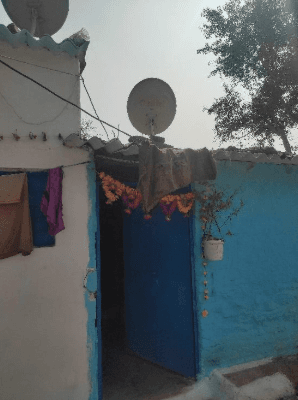
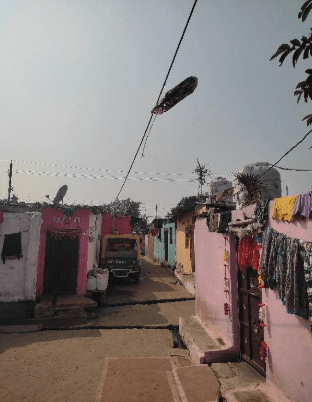
(Images from the field displaying slum settlement and housing structure)
Solutions and the way forward
With the challenges mentioned above, which are only set to accelerate yearly with the rising heat, vulnerable populations, especially in informal settlements such as these slums in Bhopal, require good policies and targeted investment to increase their adaptive capacity and lower their sensitivity and exposure.
The consistent challenges these poor urban settlements face raise an essential question about centering climate change in urban planning - something that requires premeditation and preparation even before the summer months arrive.
Ensuring an uninterrupted water supply, improving community water storage systems, regularising water tanker schedules, and securing functional pipelines must be secured well in advance. Strengthening electricity infrastructure and reinforcing power grids is vital to prevent blackouts during peak demand.
Public healthcare facilities must also be well-equipped to manage heat-related illnesses in advance. There must be a stock of supplies for hydration, refrigerators, and appropriate medicines, along with good capacity building in frontline health workers, especially in risk-prone areas.
Urban greening is also a good solution. This means planting trees and creating green spaces within a city to counteract the effects of heat, and it is considered one of the most effective tools in town planning for dealing with climate change.
Several studies have examined how increasing city greenery can help reduce the urban heat island (UHI) effect. This effect refers to the phenomenon where urban areas experience significantly higher temperatures than their surrounding regions due to overcrowding, poor ventilation, and poor urban design.
Many of the people interviewed echoed this need for trees and greenery, not only in the well-to-do areas of the city but also in and around informal settlements.
There is also a need to provide heat shelters, which are strategically placed in areas that can provide outdoor workers with a cool space to rest and are fitted with provisions such as cold water and ORS to drink. A similar example exists in India, where the Net Zero Cooling Centre in Jodhpur was introduced as the first heat shelter to provide cooling options for workers in the informal sector.
As heat waves scorch through many states this summer, the burden of adaptation has fallen entirely on individuals with the least means to cope. This is not just a failure of climate resilience but a failure of justice.
City planning that overlooks the most vulnerable must be urgently reimagined. Policymakers must invest in climate-resilient housing, uninterrupted access to water and power, and cooling infrastructure in slums. Heat action plans must prioritize informal workers and marginalized communities, not as an afterthought but as the starting point.
Edited by Christianez Ratna Kiruba Image by Christianez Ratna Kiruba