Why Community Medicine Education Needs to Move Beyond the Textbook
From outdated socioeconomic classifications and examination-driven learning to changing public health needs, India's Community Medicine curriculum must evolve to prepare doctors for the realities of the communities they serve.
The mid-morning sun beats down relentlessly on the narrow, unpaved lanes of a semi-urban settlement as a college bus idles by the main road. A cluster of nineteen-year-old medical students—instantly identifiable by their pristine white coats and lack of real-world experience—step out into the dust.
They are here for a home visit to learn how a patient's living conditions shape their health. Armed with clipboards, pens, and a rehearsed list of questions, they fan out, crossing the boundary between the predictable hospital ward and the chaotic reality of their patients' daily lives.
In one of these cramped, dimly lit homes, a student sits across from Sreelakshmi Amma.
As the interview begins, it is obvious the student grasps the family dynamic. Sreelakshmi is the true backbone of the household. She juggles cleaning two nearby homes with preparing snacks for a local tea stall. She is the one managing debts, buying groceries, and making every decision that keeps the family afloat. Her husband sits silently in the corner, having been out of steady work for years.
The conversation starts warmly. The student asks about their diet, the recent fever the youngest child suffered, and the ventilation in the kitchen. Sreelakshmi answers with the generous patience people often reserve for young trainees. But then the student flips to the socioeconomic section of her form, and the tone abruptly shifts.
First comes the question of income. "Exactly how much money does your family earn in a month?" the student asks, her pen hovering.
The warmth instantly leaves the room. Sreelakshmi hesitates, glancing nervously toward the doorway, suddenly on guard. It is an overly personal, prying question for a first meeting—one that instantly turns a friendly health visit into an awkward interrogation. Desperate for a hard number to complete her required scoring, the young student awkwardly presses on. Trapped by the silence, Sreelakshmi finally mutters a vague, lowered figure just to end the questioning.
Next comes occupation. The student looks down at her manual. Sreelakshmi’s relentless hard work across multiple jobs doesn't fit neatly into the categories on the sheet. On paper, she is classified as a mere informal laborer. With a slight grimace, the student checks the box labeled "Unskilled Worker"—a tick of a pen that disrespects a woman whose daily resourcefulness literally keeps her family alive.
Finally, the form asks for the "Head of Household." Despite everything she has just witnessed over the last forty minutes, the student, in neat blue ink, writes down the husband’s name.
It isn't that the student is blind to the woman sitting in front of her. She simply knows how medical exams work. In an oral examination, naming Sreelakshmi Amma as the head means picking a fight with an old-school examiner. Challenging the "unskilled" label risks losing precious marks for deviating from the prescribed rubric. Leaving the exact income blank results in an incomplete assignment. Writing down the husband and ticking the standard boxes guarantees full credit and zero arguments. It is not a failure to observe reality; it is a student strategically trying to pass a test.
This quiet surrender happens across medical colleges in India every year, betraying the core reason the subject was created in the first place.
The Vision of Community Medicine Education
Why are teenagers in white coats sent out into these communities at all? To understand this, we must travel back to 1943.
World War II was raging, the Quit India movement was challenging British rule, and a devastating man-made famine was starving millions in Bengal. Panicked by the total collapse of basic living conditions, the government commissioned a massive national health study.
To lead this monumental task, they appointed Sir Joseph William Bhore, a 65-year-old career civil servant. Bhore was a pragmatic administrator who understood how the system operated—and how completely it failed the poorest citizens. He assembled a brilliant committee of experts, including stalwarts such as Dr. B.C. Roy (later Chief Minister of West Bengal), Dr. A.L. Mudaliar, Dr. John B. Grant (a public health pioneer who helped establish the All India Institute of Hygiene and Public Health), and Dr. Hilda Lazarus (the first Indian director of Christian Medical College, Vellore).
The teams sent across the country uncovered horrific truths. Life expectancy stood at a mere 26 years. Malaria alone was claiming up to two million Indian lives every year. Meanwhile, 80 percent of the nation's doctors were concentrated in urban centers, leaving the rural majority virtually abandoned.
Faced with this staggering suffering, the Bhore Committee realized that constructing pristine city hospitals could not save a village dying from contaminated water and malnutrition. India didn't just need hospital specialists; it needed "social physicians."
They envisioned medical graduates who would step beyond hospital walls to understand the sanitation, wages, and home environments of the people they treated. To achieve this, they established the discipline of Preventive and Social Medicine (PSM).
Over the decades, policy reforms have periodically tried to keep this community vision alive.
In the 1970s, the Shrivastav Committee introduced the Re-orientation of Medical Education (ROME) scheme, urging medical colleges to adopt Rural Health Training Centres where students could work directly in village clinics.
More recently, the National Medical Commission (NMC) sought to revive this spirit through the Family Adoption Programme, assigning local families to medical students to follow and care for throughout their four-and-a-half-year degree. Over time, the academic department was also renamed Community Medicine, while increasing sub-specialization led many departments toward heavily research-focused roles.
The Modern Disconnect
Despite these structural updates, the reality on the ground has evolved dramatically. Today’s major health threats are no longer limited to maternal mortality and infectious diseases like cholera; the burden has shifted heavily toward chronic lifestyle conditions such as diabetes, cardiovascular disease, and mental health crises.
Furthermore, in our digital age, health data privacy has become a critical ethical imperative—making the demand for exact household income figures feel deeply invasive. Structural power dynamics also raise unanswered questions. While the Family Adoption Programme mandates that medical colleges adopt local families, whether those families actually wish to be "adopted" remains an unaddressed dilemma.
At the same time, the career path of a doctor has transformed. Sub-specialization has become the default norm, and it is now exceptionally rare for a young graduate to work long-term in a rural primary health centre. The need for generalist practioners still exist but adequate numbers may still not be available.
If most students will never become rural health officers, is Community Medicine still relevant? Absolutely. A future cardiac surgeon still needs to understand why a patient cannot afford life-saving medication. A future pediatrician must recognize how a mother’s stressful gig-economy job impacts her child's nutrition.
Community Medicine remains the vital bridge that grounds highly technical students in the social determinants of health and disease prevention. Moreover, it teaches research design and evidence-based medicine—essential tools for evaluating health guidance in an era of rampant health misinformation.
The Barriers to Overcome
Many faculty members across the country are acutely aware of this disconnect. Departments frequently conduct high-quality research and run innovative outreach initiatives. The primary bottleneck lies between what is practiced in the field and what is required in exams.
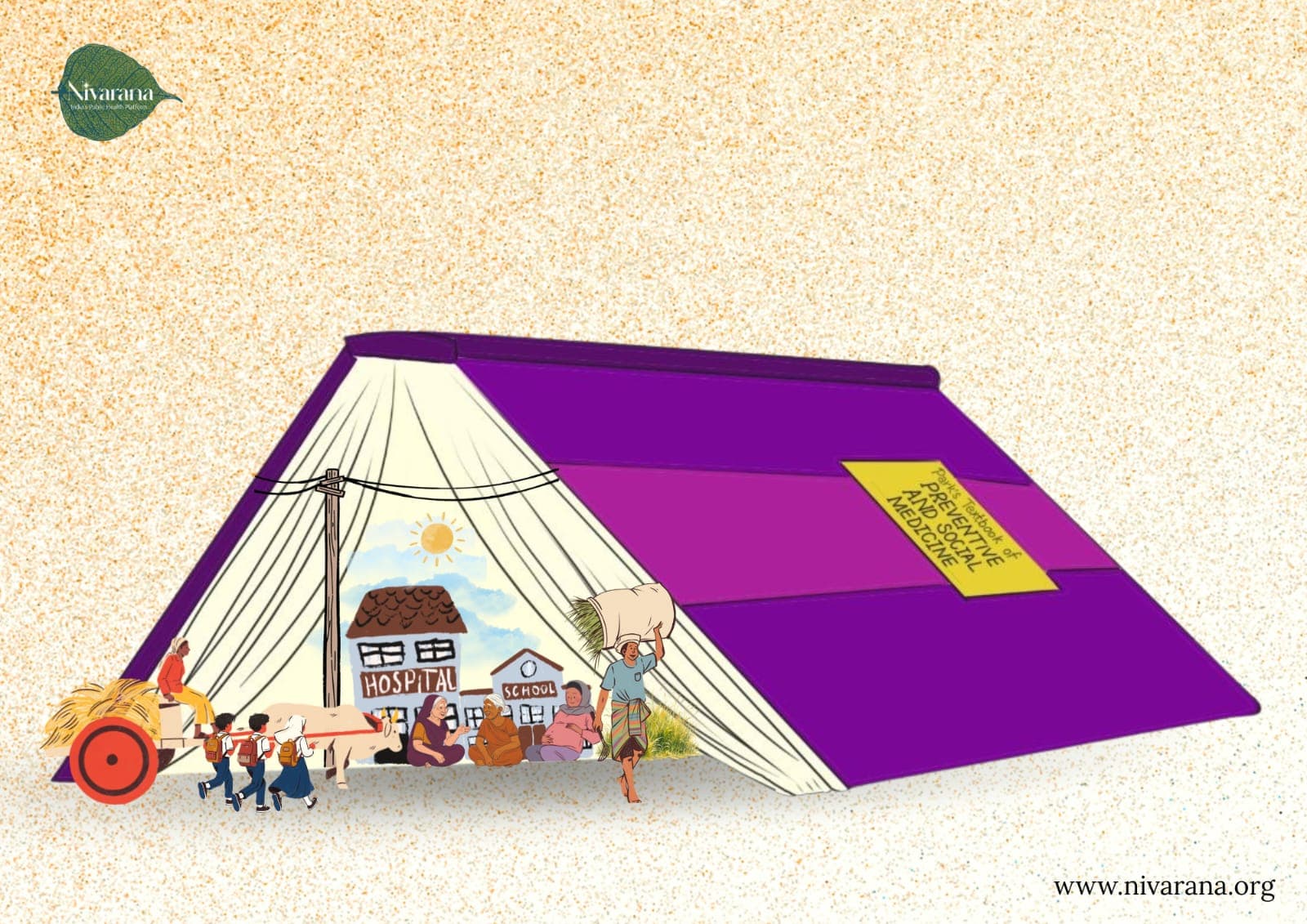
Faculty and students remain trapped in an examination ecosystem that revolves heavily around a single text: K. Park's Textbook of Preventive and Social Medicine. To an outsider, it may seem strange that a dynamic medical discipline in a nation of 1.4 billion people relies so singularly on one textbook. Historically, Park filled a critical void. When first published in 1970, it brilliantly codified India’s fragmented national health schemes and epidemiology into an accessible volume for generations who had previously relied on irrelevant Western texts. It introduced medical trainees to frameworks like the Kuppuswamy Scale, designed in the 1970s to measure socioeconomic status.
Over time, however, as universities sought to standardize grading across hundreds of affiliated colleges, Park subtly shifted from a helpful textbook to the unofficial constitution of university evaluation. Answer keys were drawn directly from its pages, and examiners treated its definitions as absolute truth. When deviating from a textbook risks failing a student, that text ceases to be a reference—it becomes an inflexible law dictating how public health must be answered in an exam.
Even as professional bodies like the Indian Association of Preventive and Social Medicine (IAPSM) publish updated, modern textbooks, shifting decades of ingrained tradition remains difficult. In many newer texts, rigid concepts like the single "Head of Household" or outdated job classifications are still treated as unquestionable rules.
Beyond the Classroom
These outdated socioeconomic tools are far more than academic relics—they actively distort how future doctors understand family dynamics, patient agency, and human dignity.
By forcing a rigid "Head of Household" label onto dynamic families, standard scales erase female breadwinners and ignore how decisions are actually negotiated or dictated by financial stress. This invisibility obscures key occupational risks facing women in informal labor, from severe physical strain to economic vulnerability. Worse, this classroom habit directly corrupts bedside ethics. Conditioning trainees to view a male relative as the default authority follows them into clinics, often leading doctors to seek consent from a husband rather than the woman during invasive procedure. This removes autonomous patients of their dignity and informed consent.
Similarly, dismissive labels like "unskilled worker" institutionalize stigma against informal labor. Classifying domestic workers, street vendors, or gig workers as "unskilled" ignores the complex resourcefulness required to survive. It teaches young doctors to view low-income patients through a lens of deficiency rather than resilience, reinforcing class hierarchies just when trainees should be learning structural empathy and real-world hazard assessment.
Solutions to bring about Change
The solutions to these challenges are already within reach. Clearly defining the core skills expected of an MBBS graduate in Community Medicine is a vital first step. This training should emphasize essential competencies such as screening guidelines, child and adult immunization, nutrition, and modern epidemiology. Epidemiological methods must be updated to incorporate practical digital tools that students can apply in real-world outbreak investigations and clinical research. Core skills such as writing and communicating in the sciences , writing for the press and writing for different education levels must be emphasized.
Equally crucial is embedding a privacy- and dignity-first approach into research training. Medical curricula must reconsider whether asking for sensitive details like household income is appropriate. When data collection is necessary, students must be trained in secure data handling and compliance with local privacy laws—an urgent priority in 2026, as digital data collection continues to outpace outdated syllabi.
We also need to modernize the frameworks and terminology taught in classrooms. Rather than relying on rigid concepts like "head of the household," curricula should adopt neutral terms widely used internationally, such as "reference person," "householder," or simply "person 1." Similarly, instead of vague or dismissive labels like "skilled" versus "unskilled" worker, medical education should adopt standardized global frameworks, such as the International Labour Organization's International Standard Classification of Occupations (ISCO-08).
Practicing community medicine without strong clinical skills is far from ideal. At a minimum, community physicians should be equipped to diagnose and manage common health conditions while recognizing the critical red-flag signs that demand immediate specialist referral. This can perhaps be limited to commonly seen conditions to begin with.
Ultimately, Community Health holds extraordinary potential to reshape public healthcare. Many dedicated faculty members are already modernizing their teaching methods to reflect contemporary realities. What remains is a clear, highly achievable mission: closing the gap between classroom theory and real-world clinical practice.
By aligning modern data ethics, modern tools, and strong clinical fundamentals, we can ensure that tomorrow's medical graduates are empathetic and have job ready skills for the challenges they will face in Public Health. Perhaps then we can start beginning to achieve the grand plans that Joseph Bhore and the founding fathers of Public Health in India imagined.