How to Hold on to Hope When Doing Right is Criminalised
The arrest of Dr. Randall Sequeira has left many health professionals working with marginalised communities shaken, afraid and questioning their role.
Drawing on liberation psychology, Freire and Ambedkar, community psychiatrist Dr. Nilesh Mohite argues that this distress is a response to structural injustice, not an individual weakness to be managed.
The arrest of Dr. Randall Sequeira, reportedly detained after raising questions and participating in a movement concerning Adivasi land and the consequences of bauxite mining, has left many colleagues shocked and deeply unsettled. The concerns surrounding mining extend beyond industrial development to questions of displacement, environmental degradation, livelihoods and the health of communities. When a medical professional involved in such a movement is arrested, the incident raises difficult questions about the relationship between professional responsibility, social justice and the freedom to speak.
For young doctors and public health professionals working in remote and underserved regions of India, the news can be particularly disturbing. Many have spent years working with communities that experience poverty, discrimination and inadequate access to healthcare. They have witnessed how illness is shaped not only by biology but also by social conditions, economic inequalities and decisions made far beyond the reach of the people affected. When a colleague faces arrest in this context, it can shake the very values that brought them into this work. Should we restrict ourselves to treating illness, or should we also question the circumstances that produce it? What is the meaning of years of service when preventable suffering continues? Is silence a reasonable way to protect ourselves, or does it gradually distance us from the values we claim to uphold?
Alongside fear and helplessness, there may be guilt. Some may wonder whether they should have done more to support their colleague. Others may feel frightened about their own future or question whether their work can make any difference. These feelings should not automatically be understood as individual weakness. They may reflect the psychological burden of working in environments where professional values come into conflict with unequal power and institutional limitations.
Liberation psychology offers a way to understand this distress without reducing it to a problem of individual coping.
Developed most prominently through the work of Salvadoran psychologist Ignacio Martín-Baró, liberation psychology argues that human suffering must be understood within its historical, political and social context. It challenges psychology to look beyond the individual and examine the conditions shaping people's lives. The objective is not merely to help people adjust to difficult circumstances, but to help them understand those circumstances and recover their capacity for meaningful action.
This distinction matters. When a public health professional feels distressed after witnessing the arrest of a colleague, the immediate response might be to recommend mindfulness, stress management or counselling. These can be useful, and professional psychological support should never be dismissed. But if our entire response focuses on helping people cope, we risk treating a structural problem as an individual failure. We may unintentionally communicate that the responsibility lies with professionals to become comfortable with circumstances that deserve critical examination.
Liberation psychology invites us to ask a broader question: “What is happening around us, why is it producing this distress, and what can we do together?”
This does not mean accepting every claim without scrutiny. Facts surrounding an arrest must be verified, legal processes examined carefully, and concerns about mining evaluated through credible evidence.
Critical reflection requires both solidarity with affected communities and intellectual honesty. It asks us to resist simplistic narratives, including those that portray individuals as powerless or suggest that nothing can change.
One of the most damaging consequences of such incidents is the gradual internalisation of helplessness. When people repeatedly encounter institutions that appear indifferent to their concerns, they may begin to anticipate punishment before taking any action. A young researcher may hesitate to document environmental health risks. A community worker may withdraw from difficult conversations. A public health professional may conclude that it is safer to remain within the narrow boundaries of their formal role.
Fear can be protective when it encourages careful judgment. But when fear becomes the only factor guiding our decisions, it can shrink our sense of possibility and isolate us from others. The challenge is not to eliminate fear or glorify risk-taking. It is to ensure that fear does not prevent us from thinking critically, seeking support and considering responsible ways to act.
Paulo Freire's ideas of critical consciousness and praxis offer another useful perspective. Freire emphasised the relationship between reflection and action: we examine reality, act on our understanding, and learn from the consequences. For colleagues unsettled by Randall's arrest, this process could begin with honest conversations about what the incident has brought to the surface.
A colleague may feel angry, another frightened, and someone else guilty or exhausted. These feelings need space without immediate advice, judgment or pressure to take a particular position. When experiences are shared, people may recognise that their distress is connected not only to one incident but also to years of professional isolation, inadequate institutional support and the accumulated experience of witnessing preventable suffering.
Recognising shared distress does not automatically resolve it. Reflection must create room for collective agency. Some colleagues may contribute through professional associations, legal support, research, documentation or carefully verified public statements. Others may strengthen community partnerships, provide practical support to affected families or continue their work through teaching and clinical services.
These contributions need not look identical. Not everyone has the same resources, responsibilities or exposure to risk. Solidarity should not become another source of guilt, with people judged according to how publicly or dramatically they participate. A sustainable collective effort distributes responsibility rather than expecting a few individuals to carry the entire burden.
This is particularly important in public health, where the causes of illness often extend beyond the clinic. Displacement can disrupt access to healthcare, housing, livelihoods and social support. Environmental contamination, where it occurs, can create serious health risks. The consequences of mining proposals must be investigated rather than assumed, and affected Adivasi communities must remain central to decisions concerning their land and future. Public health professionals can contribute evidence and expertise, but they should not presume to speak on behalf of communities without listening to them. Solidarity must strengthen people's agency, not replace it.
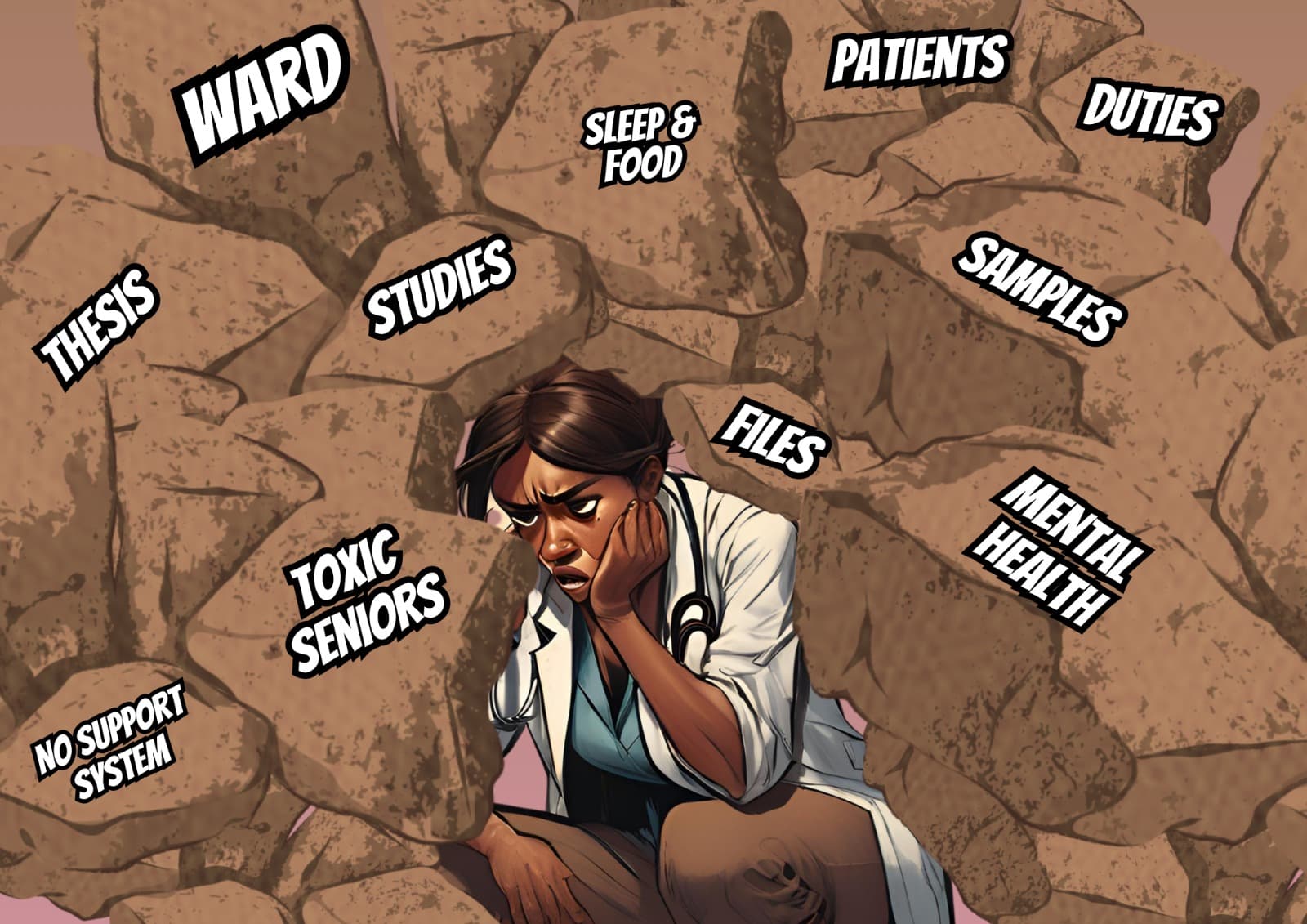
There is also a danger that socially committed professionals begin to treat sacrifice as a measure of their moral worth. Rest may feel selfish, fear may feel shameful, and time spent with family or friends may seem like a distraction from the work. Gradually, commitment can become entangled with guilt and exhaustion. But liberation cannot depend on the permanent depletion of those who pursue it. We cannot build a culture of dignity while treating our own humanity as expendable. Rest, friendship, humour, family life and interests beyond work are not rewards to be earned after injustice disappears. They are part of what makes sustained commitment possible.
We must also recognise the limits of individual responsibility. A professional may work for years without being able to eliminate the conditions producing illness. A community organisation may build trust without preventing every displacement. Colleagues may support an arrested person without controlling the outcome of a legal process. These limitations are real. Acknowledging them is not surrender; it is a necessary step towards sharing responsibility and choosing realistic actions.
What, then, can we practically do when an incident like this leaves us feeling helpless?
First, create a small, dependable peer-support space. Bring together colleagues who can listen without immediately offering solutions. Allow people to name their fear, anger, grief or uncertainty. The aim is not to force optimism but to prevent people from carrying their distress alone.
Second, separate verified information from rumours and imagined worst-case scenarios. Seek appropriate legal advice where necessary, protect confidential communications and assess risks before deciding on public or professional action. Courage and caution are not opposites.
Third, choose one or two manageable collective actions instead of feeling responsible for solving the entire problem. This might mean checking what practical support the affected colleague and family need, contacting relevant professional networks, documenting health concerns rigorously or arranging a discussion on the relationship between environmental change and public health.
Fourth, establish regular check-ins. A brief weekly conversation among trusted colleagues can help identify accumulating stress, practical needs and opportunities for cooperation. Where distress persists or substantially affects sleep, relationships or functioning, professional mental health support may also be important.
Finally, protect the right to participate differently. Some colleagues may be ready to speak publicly; others may contribute privately or need time to process the event. No one should be pressured into action that they consider unsafe. The purpose of solidarity is to expand people's capacity to act, not to impose another obligation upon them.
These practices may appear modest beside the scale of structural injustice. Yet they help create something essential: a community in which people can think together, share responsibility and remain capable of responding rather than retreating into isolation.
In the Indian context, this conversation also resonates with Dr. B. R. Ambedkar's emphasis on dignity, equality and the transformation of social relations. Liberation cannot mean merely becoming psychologically stronger while leaving unequal power untouched. It requires us to ask whose suffering is recognised, whose knowledge is respected, who participates in decisions and whose freedom is treated as expendable.
The arrest of Randall Sequeira has raised difficult questions about the relationship between professional responsibility, public health and social justice. We should not rush to resolve these questions with easy slogans. Instead, we can allow the incident to deepen our understanding of the conditions in which colleagues work and the institutional support they need to continue responsibly.
Perhaps the most important shift is to stop asking how every individual can become strong enough to endure everything alone. We should ask how to build relationships and institutions that make such isolation less likely. How can professionals remain ethically engaged without being reckless, protect themselves without becoming indifferent, and support affected communities without taking control of their struggles?
Hope, in this sense, is not the certainty that things will improve. It is the decision to preserve our capacity to think critically, maintain relationships and take meaningful action despite uncertainty. We may not control every institution or prevent every injustice, but we can choose not to let helplessness become our only response.
We do not have to be invulnerable to continue, nor do we have to be certain of victory to act meaningfully. We need to build communities in which no one has to carry the psychological burden of standing for human dignity alone.
Perhaps that is where liberation psychology becomes more than a theory of coping. It becomes a practice of solidarity: the collective effort to protect not only the dignity of the communities we serve, but also thehumanity of those who work alongside them.