For as long as I can remember, I have dedicated my life to working with people with disabilities. I graduated as a physiotherapist, driven by the conviction that every child deserves the opportunity to thrive. My journey led me through a Master’s in Disability Rehabilitation and Administration, and later, a PhD in Disability Studies. It wasn’t just academics; it was a mission.
I worked in the interiors of Manipur as a United Nations Volunteer, walking miles to reach children with developmental delays. Later, at the Tata Institute of Social Sciences and as a national institute under the Ministry of Social Justice and Empowerment, I contributed to policy development, training, and systems strengthening.
My work with international NGOs and the World Health Organization allowed me to engage globally, shaping disability inclusion programs across borders.
Everywhere I went, I taught families how to identify early signs of disability. I trained community workers, guided caregivers, and built models of inclusive education and early intervention. I believed I understood both the science and the soul of this work.
Then, everything I had learned was put to the test.
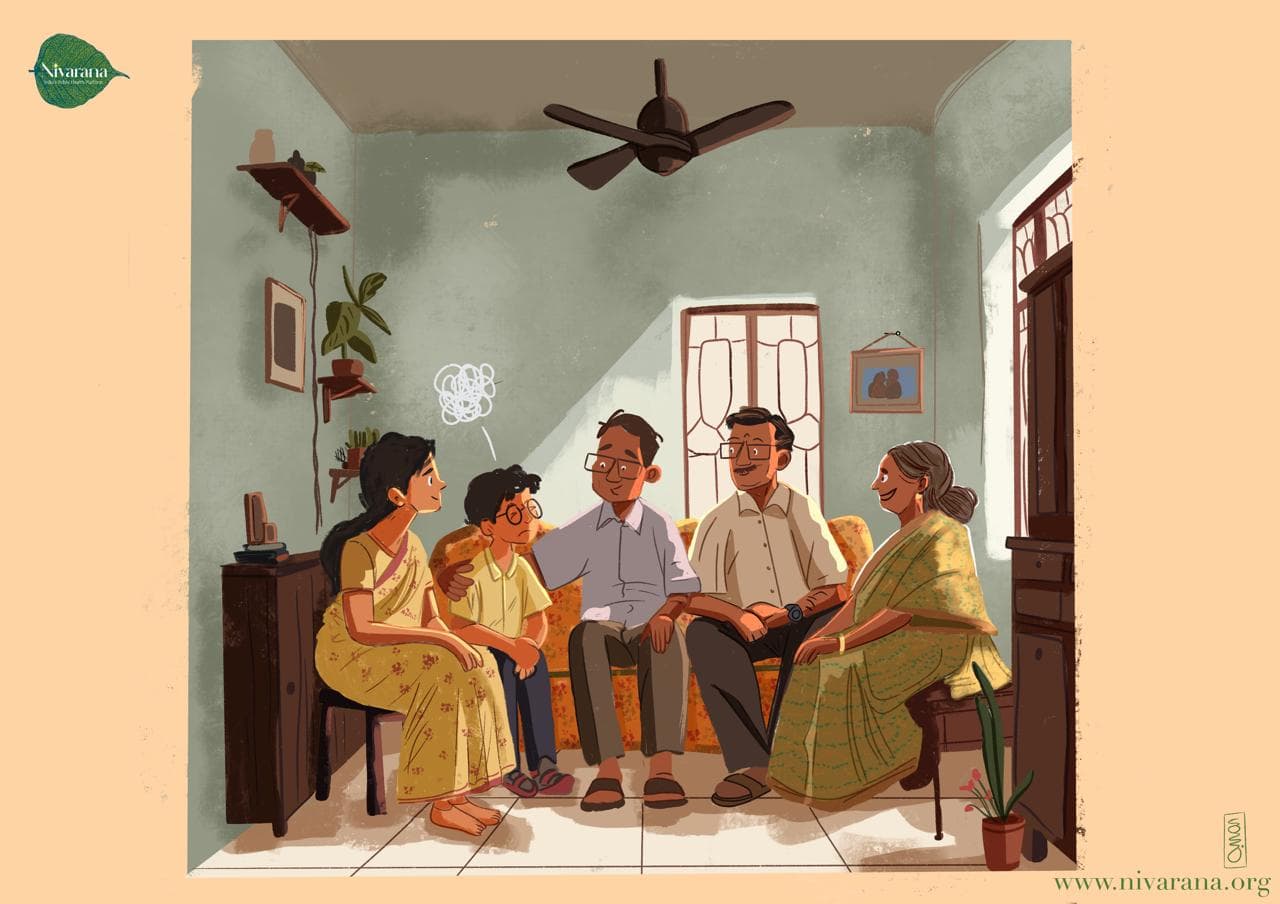
When my own son turned three, I noticed the signs that his speech had regressed, his eye contact had decreased, and his responses had become less frequent. I knew what this could mean. And still, I denied it.
‘This can’t be happening to my child, ' I kept telling myself.
I felt ashamed of even having that thought, but it was a genuine concern. I had spent years advocating for early diagnosis, and yet I was now paralysed by the same fear and stigma I thought I had overcome. How could I, with all my experience and knowledge, miss this? Or worse, avoid facing it?
For a time, I was in denial. Not because I didn’t see the signs, but because I didn’t want them to be real. I felt like I had failed not just as a professional, but as a father.
But eventually, love replaced fear. Acceptance replaced shame. And with that came a renewed purpose.
I began working with my son patiently, day by day. I applied every principle I knew, but now through the lens of a father’s heart. Every small milestone became a triumph. I began to connect with parents not as an expert, but as someone who truly understood the emotional and personal journey they were on.
Today, I continue my work with greater honesty, humility, and strength. My son's journey has not only made me a better parent but also a more grounded and empathetic professional.
I now believe that the most powerful stories are not the ones we tell others but the ones we live through ourselves.
It's something I’ve had to confront not just academically or professionally, but personally as a father.
After my son's signs began to emerge, I was asked more than once, ‘But you’re a rehabilitation professional, how could you not see this earlier?’ or ‘Did you miss the risk factors?’ These questions were hard to face, not because they were unjustified, but because they echoed the guilt and confusion I was already feeling.