The Transformative Power of Art as Care for People with Disabilities
Unlock the inspiring journey of how art and creativity are empowering people with disabilities at a rural Indian center—where transformation happens one stroke at a time!
Nestled in the serene borderlands of the forests of Tamil Nadu and Karnataka, the Gudalur Adivasi Hospital is more than just a hospital. It is a haven of hope for indigenous communities. Within this institution lies a small, relatively new unit. This unit, the Differently Abled Center, has been quietly transforming lives. My journey as a travel fellow doctor there introduced me to a world of possibilities. It also showed me the challenges and the profound impact of art therapy.
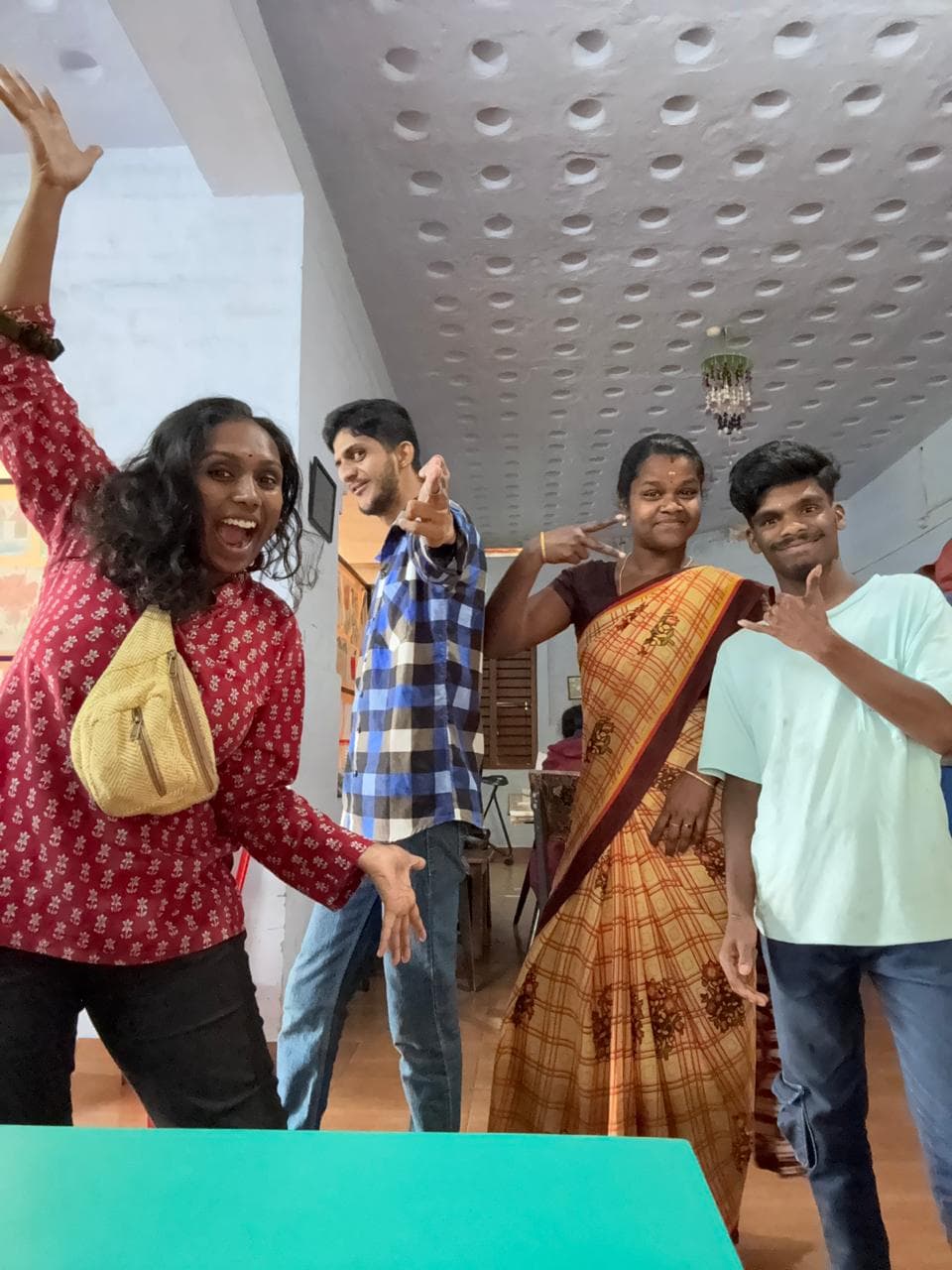
I first walked into the center with no preconceived notions. I was only curious to understand how the young adults there spent their days. The center had four differently-abled young adults. Each of them had unique challenges. The spirited caretaker in charge of the center was Priya, a 27-year-old tribal woman. She had been working there for over two years.
Priya’s dedication was evident. Despite the challenges of limited formal training and resources, she displayed remarkable creativity. She made the most of what was available to introduce activities and teach new skills.
She relied heavily on skills imparted by short-term visitors. For example, someone had taught the young adults how to weave wire baskets. This had become their daily routine. Every day, they would come and weave baskets. Afterward, they would take a tea break, weave some more, have lunch, and then close the windows. Finally, they would wait for their auto ride back home.
Yet, I could sense their enthusiasm. They showed a willingness to explore more. This was where I hoped to make a difference.
Introducing zentangle art: a journey of focus and creative exploration
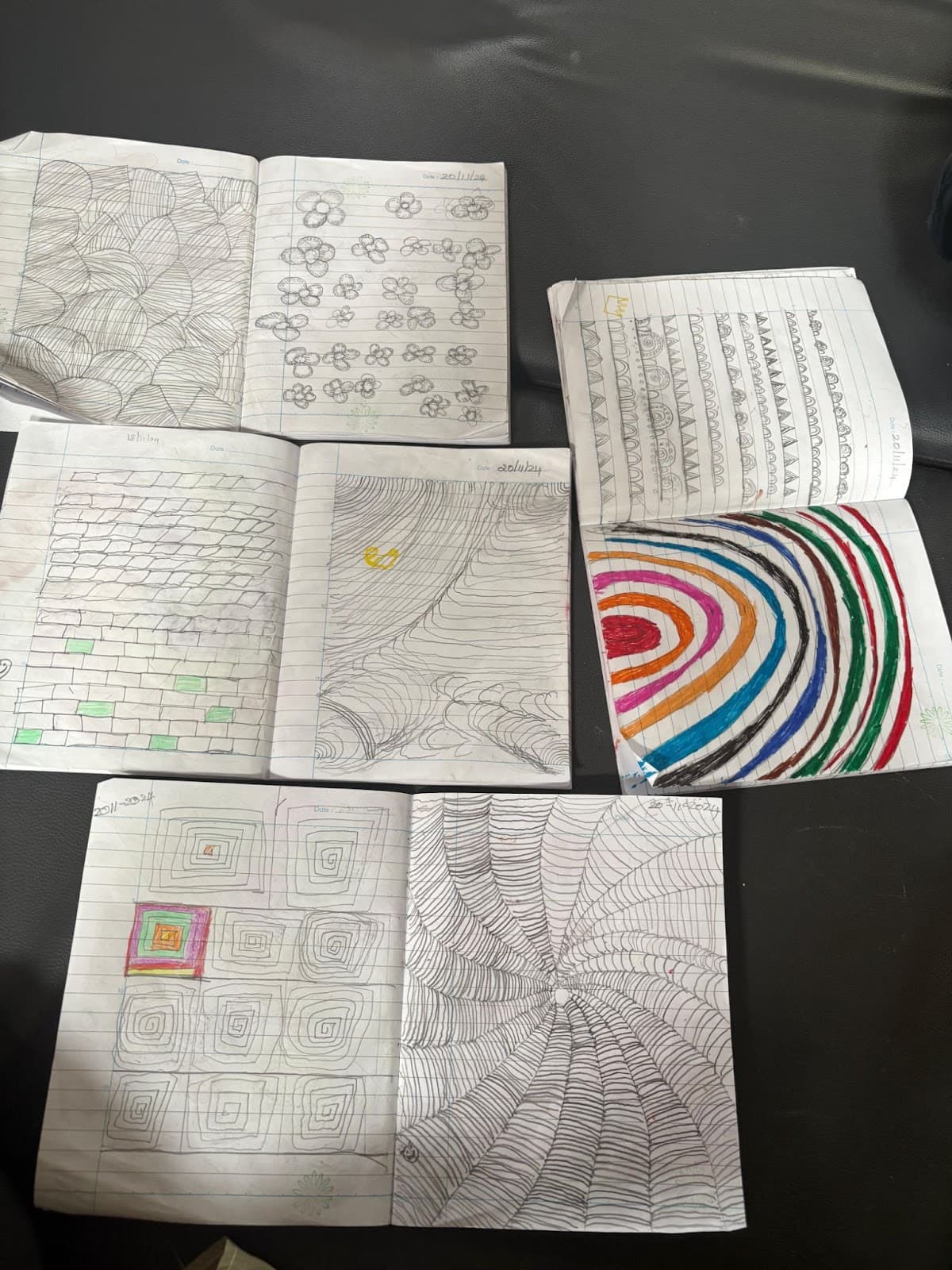
One of my earliest contributions was introducing the Zentangle Method. It is an easy-to-learn, relaxing, and therapeutic way to create beautiful images using structured patterns. These patterns, called tangles, are made with combinations of dots, lines, curves, and orbs. They form elemental strokes. Zentangle art is non-representational and unplanned. This allows the artist to focus on each stroke without worrying about the result.
The method opened a whole new, colorful world for the young adults. It piqued their curiosity.
With notebooks, pencils, and crayons in hand, I began by drawing simple patterns for them to replicate. The response was as varied as their personalities:
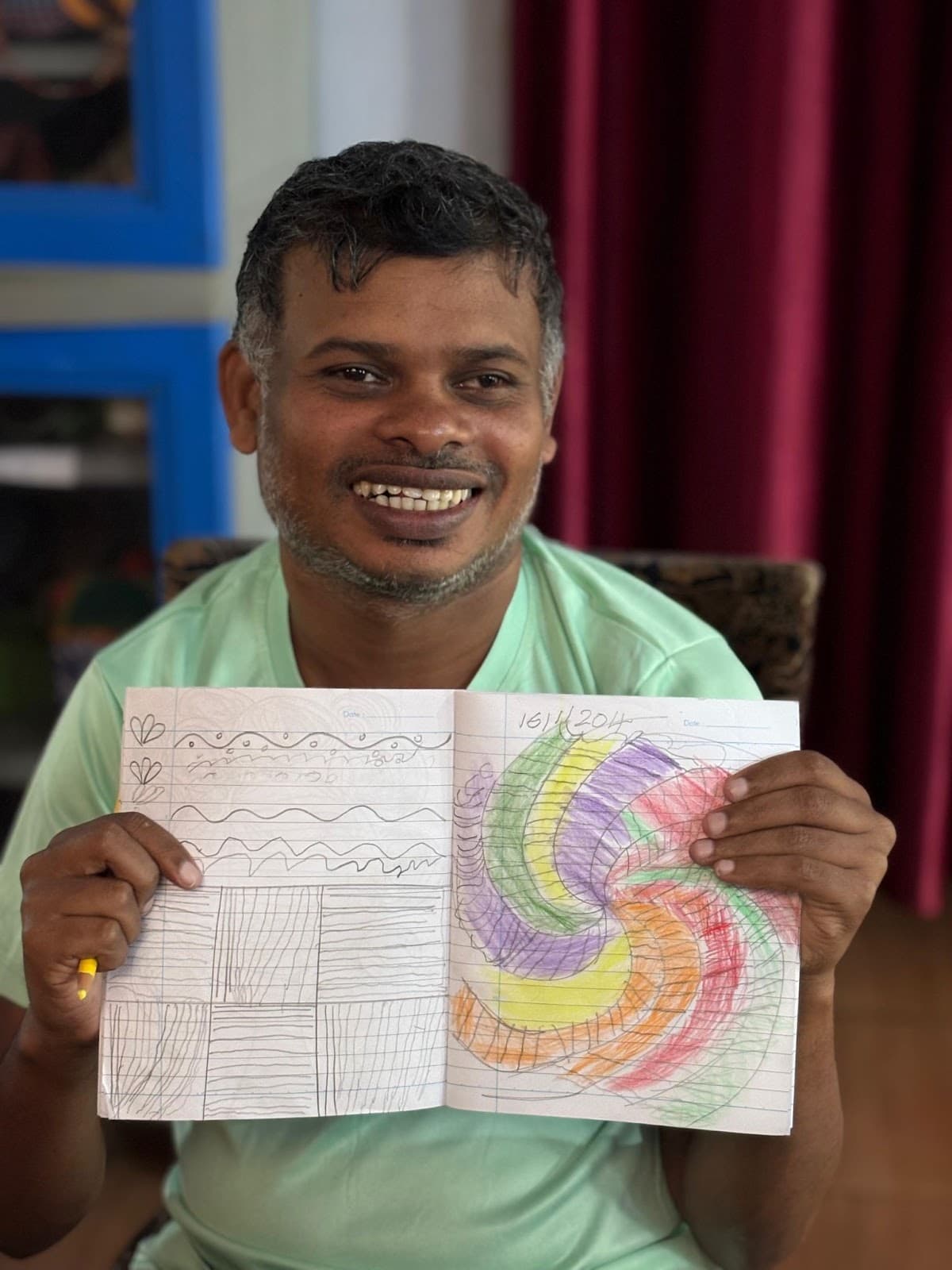
Akim (37): He was initially reluctant and struggled to hold the pencil. Over time, he gradually found joy in the process and often preferred adding colors to his work.
Bindu (23): She was hesitant at first but slowly warmed up to the patterns. She always gave her best effort.
Sudeesh (27): He was enthusiastic and eager. He worked quickly but without much precision, thoroughly enjoying the freedom of creation.
Anish (17): He was meticulous and slow. He focused on perfecting each stroke and took immense pride in his precision.
Over time, Zentangle became more than just an activity—it became a therapeutic habit. Small rewards like stickers and high-fives fostered a sense of achievement. Each young adult began to take ownership of their work. They identified with their notebooks and created something uniquely their own from a single stroke. They would proudly show off their art to visitors.
Zentangle’s structured creativity provided a sense of calm, mindfulness, and focus. These were previously untapped. However, focus often disappeared during wild elephant visits to the hospital campus! We would abandon our art sessions to watch the majestic creatures from the balcony. Sudeesh would excitedly point and exclaim, “Aanai, aanai!”
One unique aspect of my time there was the form of communication. Verbal communication was seldom used among the group. Most interactions happened through hand gestures. Priya, who had developed her repertoire of gestures over the years, taught me a few essential ones. These ensured effective interaction. Over time, I intuitively understood their needs, preferences, and emotions through these non-verbal cues.
This silent yet meaningful communication fostered a deeper connection with them, enriching the overall experience.
Zentangle art made by the people in the Ashwini Differently Abled Centre, Gudalur
New colourful perspectives
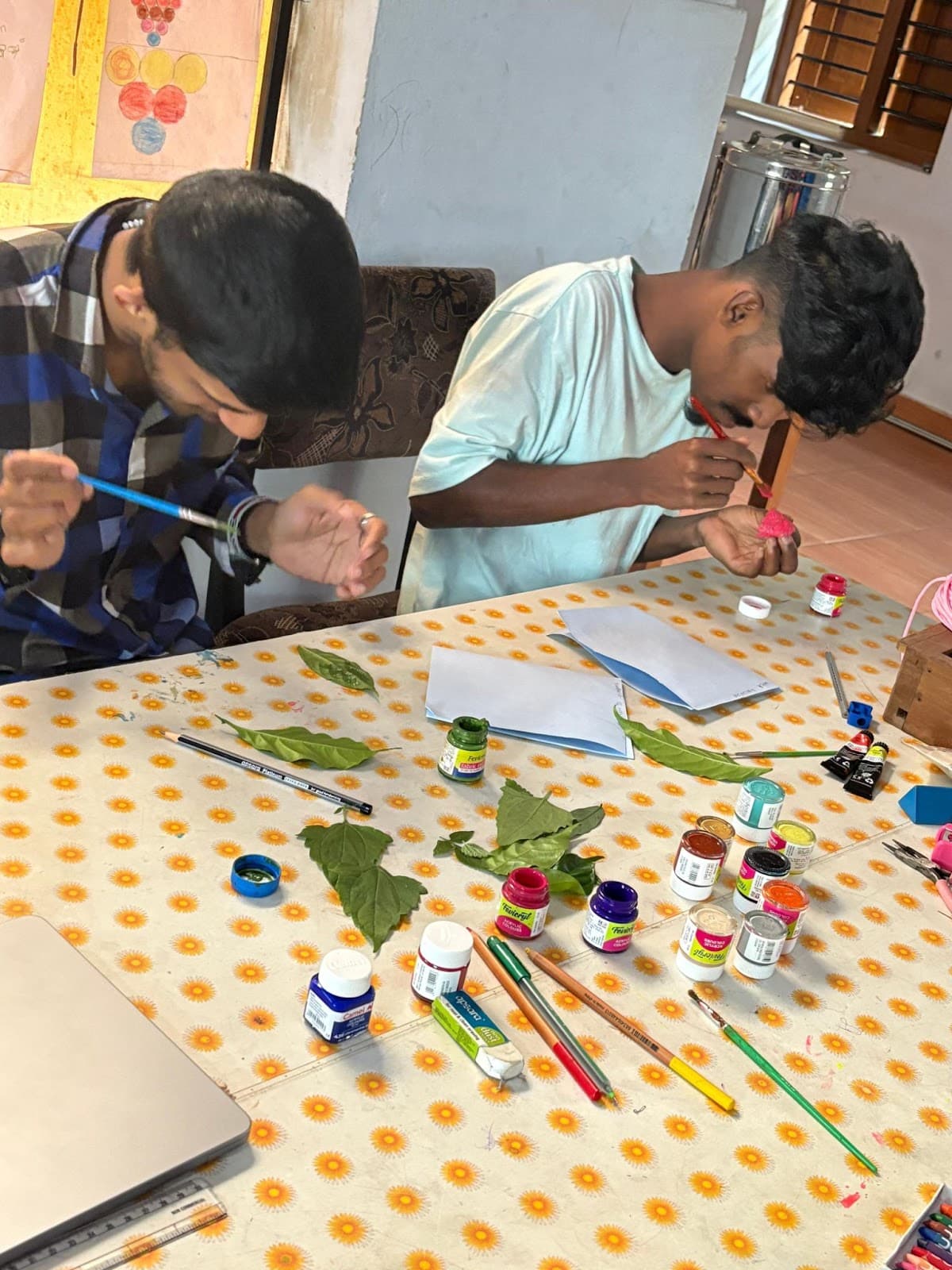
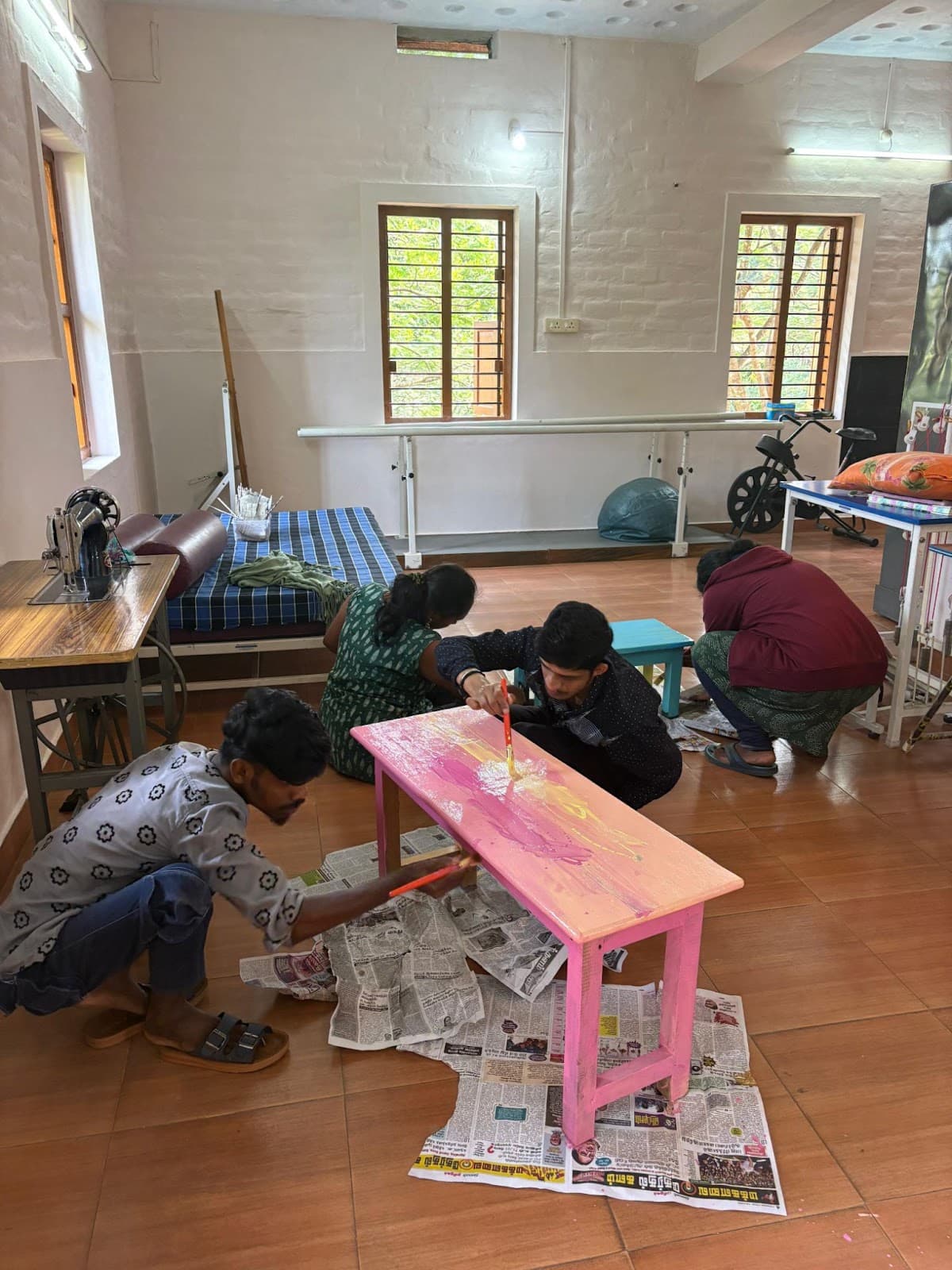
As days turned into weeks, I introduced new forms of art. I added more vibrant colors and let them decide which colors to create with. Eventually, leftover paint from wall-painting sessions became the medium for a vibrant project. We transformed old benches and tables into colorful canvases.
Everyone had the liberty to paint freely. Some even used leaves to imprint patterns. The pride they felt in their painted benches was palpable. These weren’t just benches anymore—they were masterpieces. They became a contribution to the center’s identity.
The walls were painted black so it could double as a new blackboard. They enjoyed tracing and drawing with chalk on the wall.
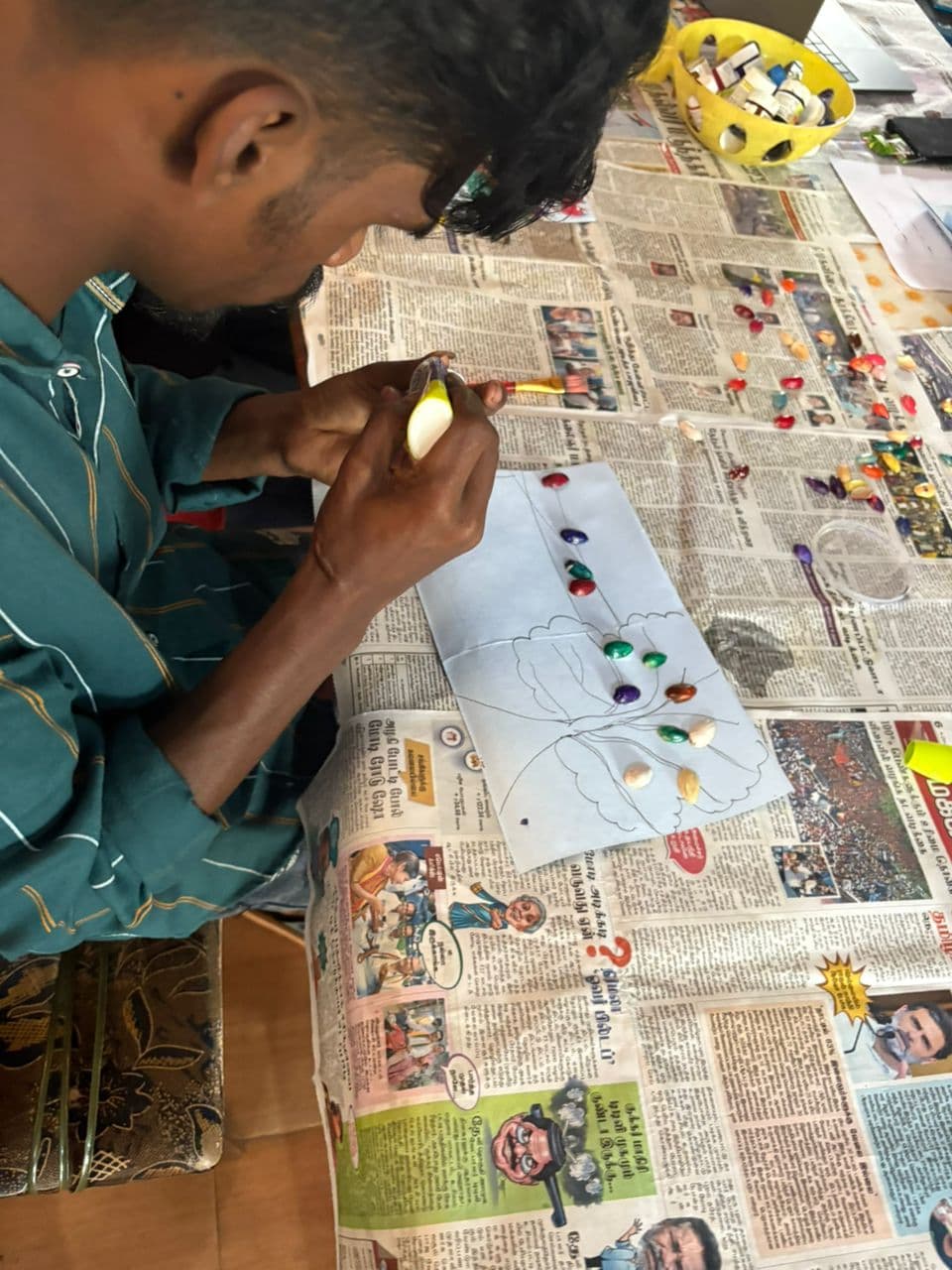
Nature elements like pebbles, leaves, and seeds often found their way into their art. This brought them closer to their roots.
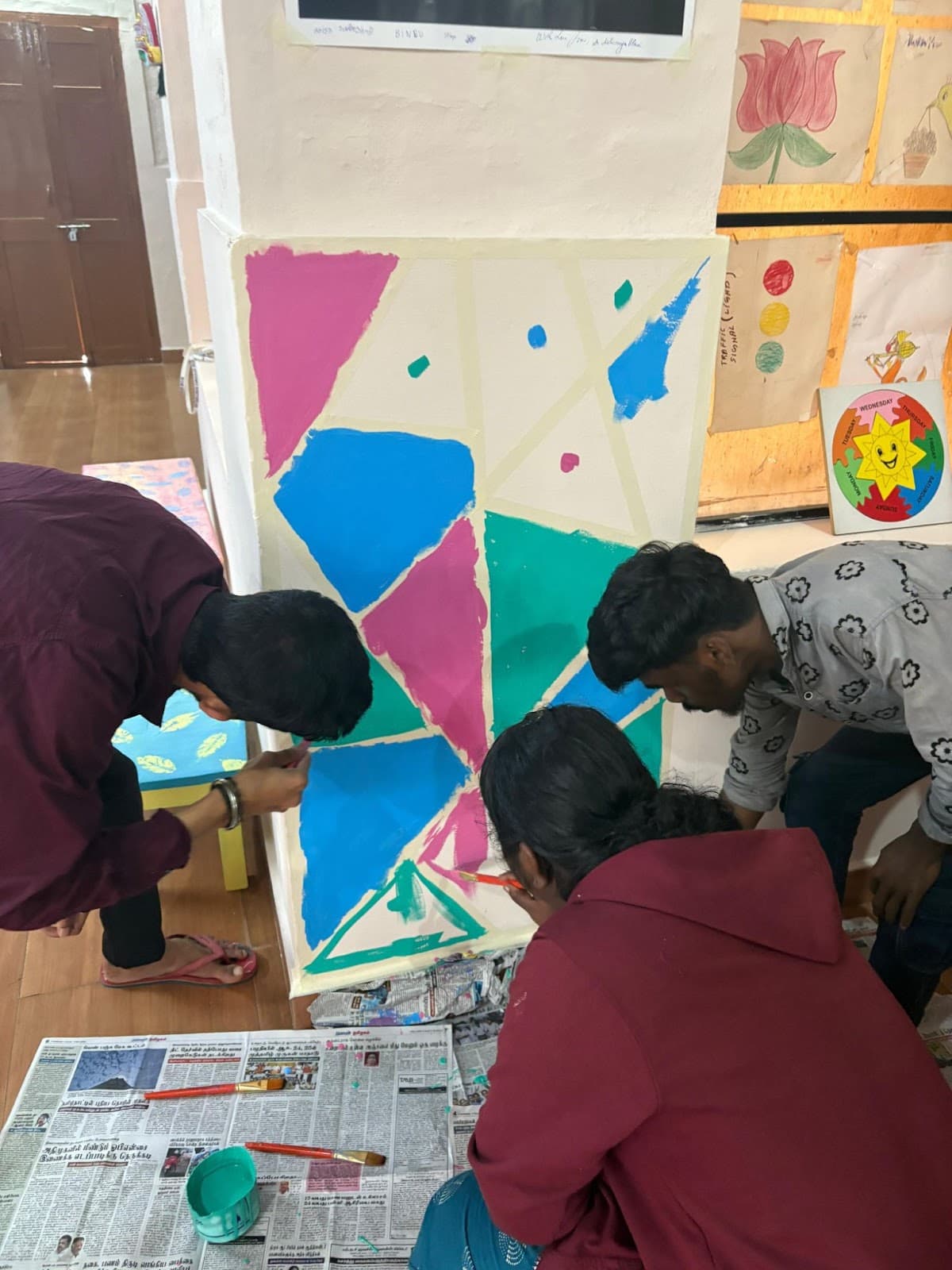
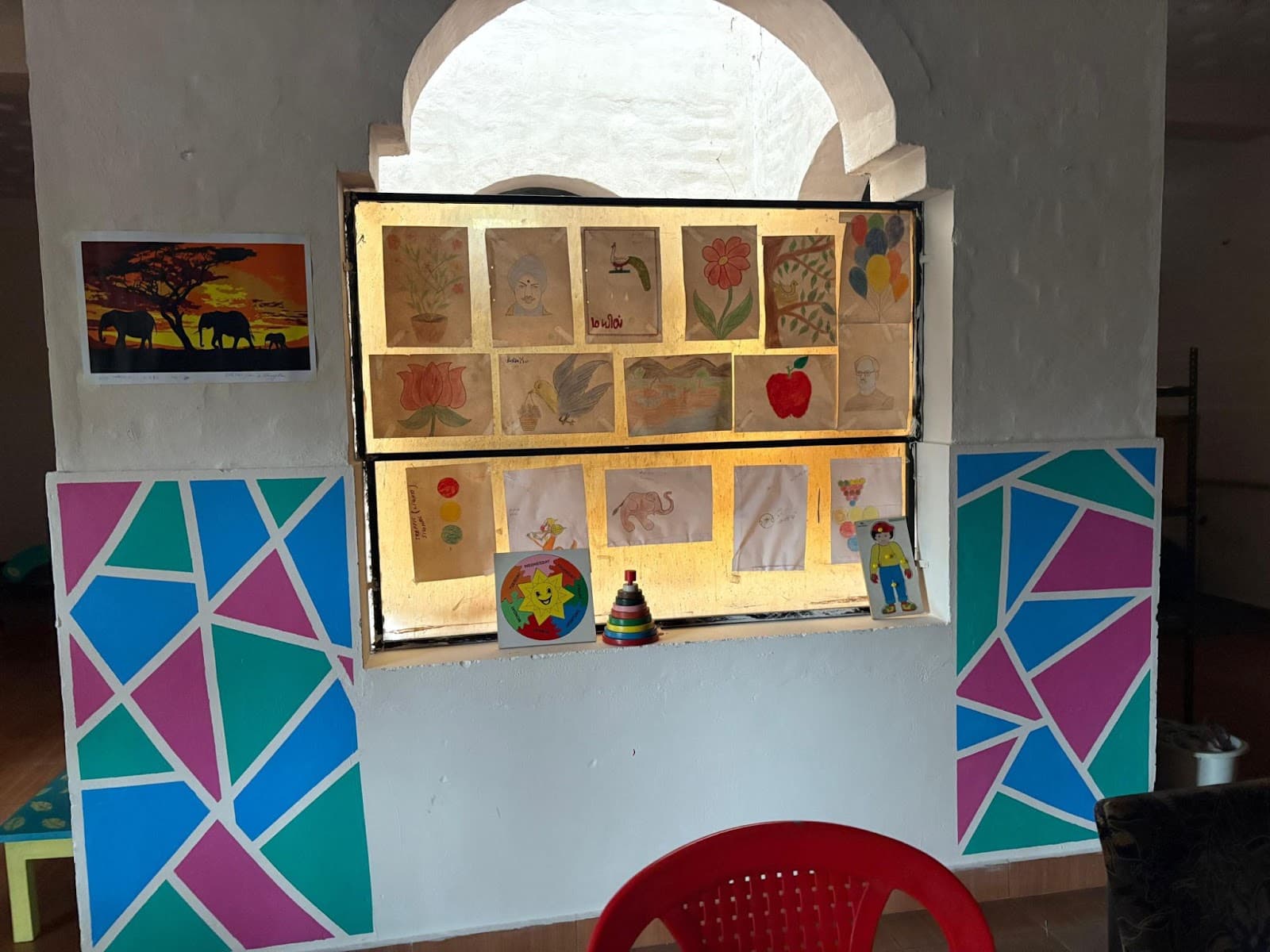
Another highlight was a wall-painting activity. We used masking tape to create triangular patterns. After painting the shapes, we removed the tape to reveal a stunning mosaic. The joy on their faces as they unveiled the final piece was unforgettable.
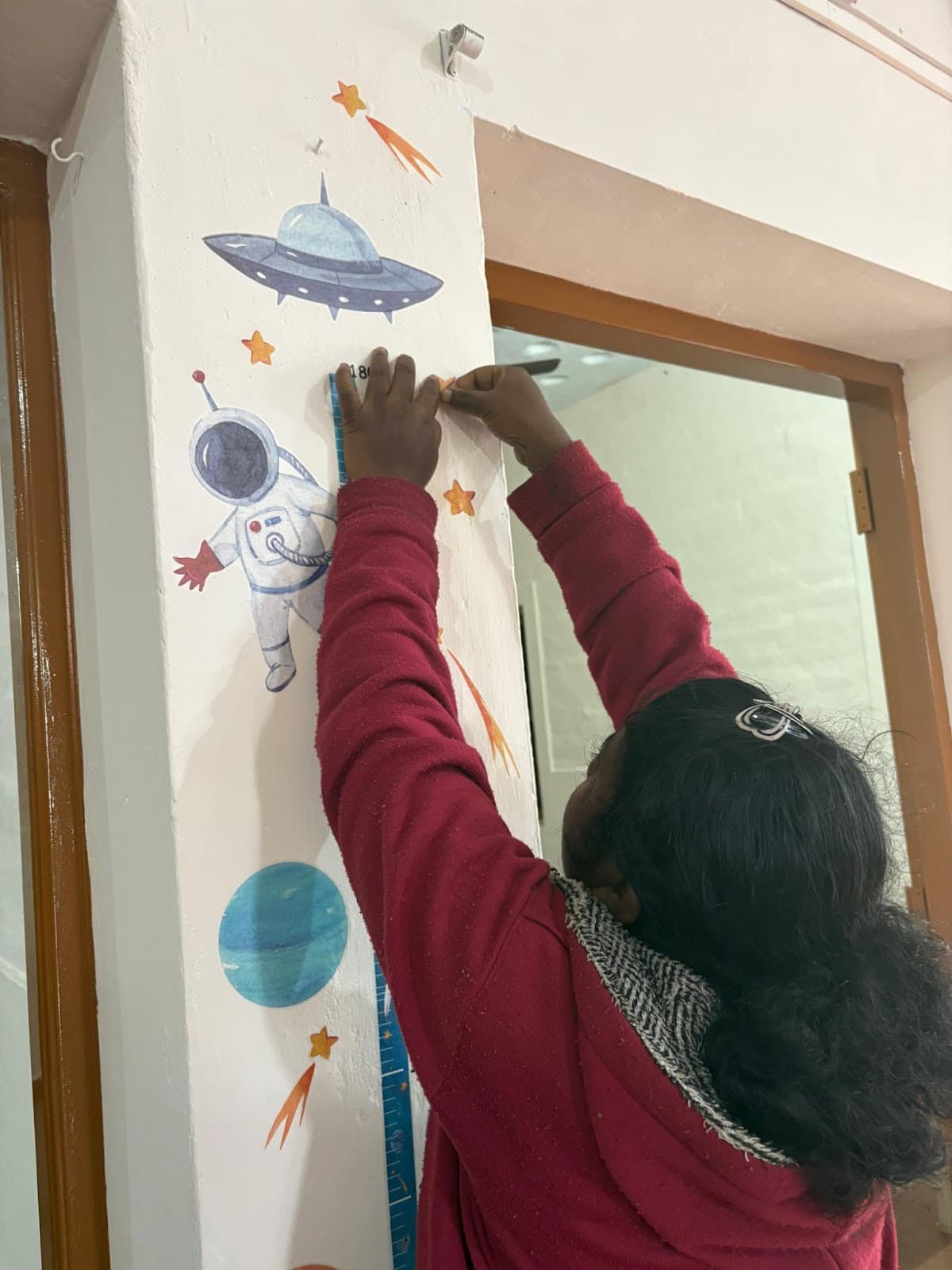
Bindu putting up a height scale wall sticker
Wall art with masking tape: By Sudeesh, Anish and Bindu
Upcycling fabric into functional art
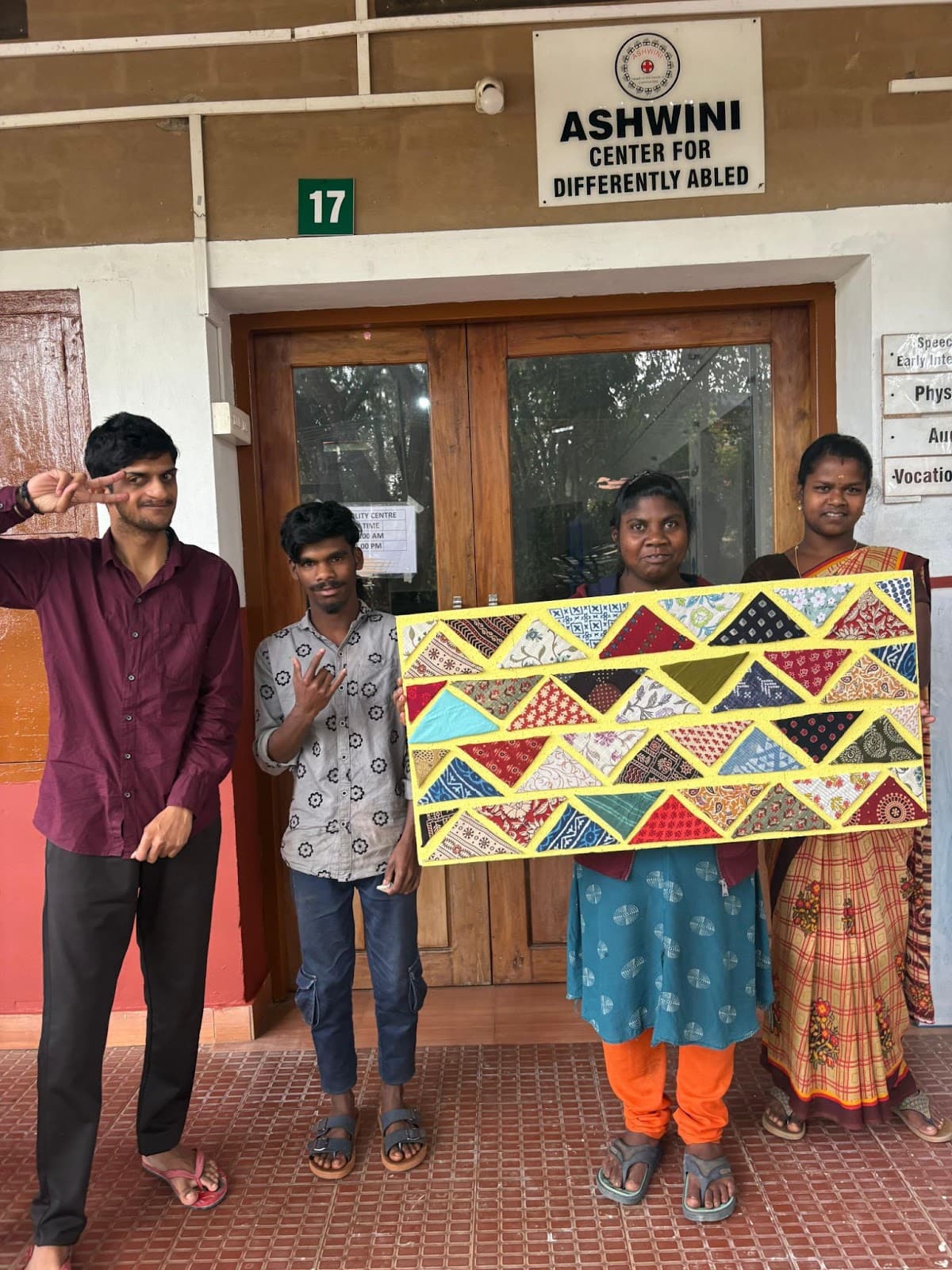
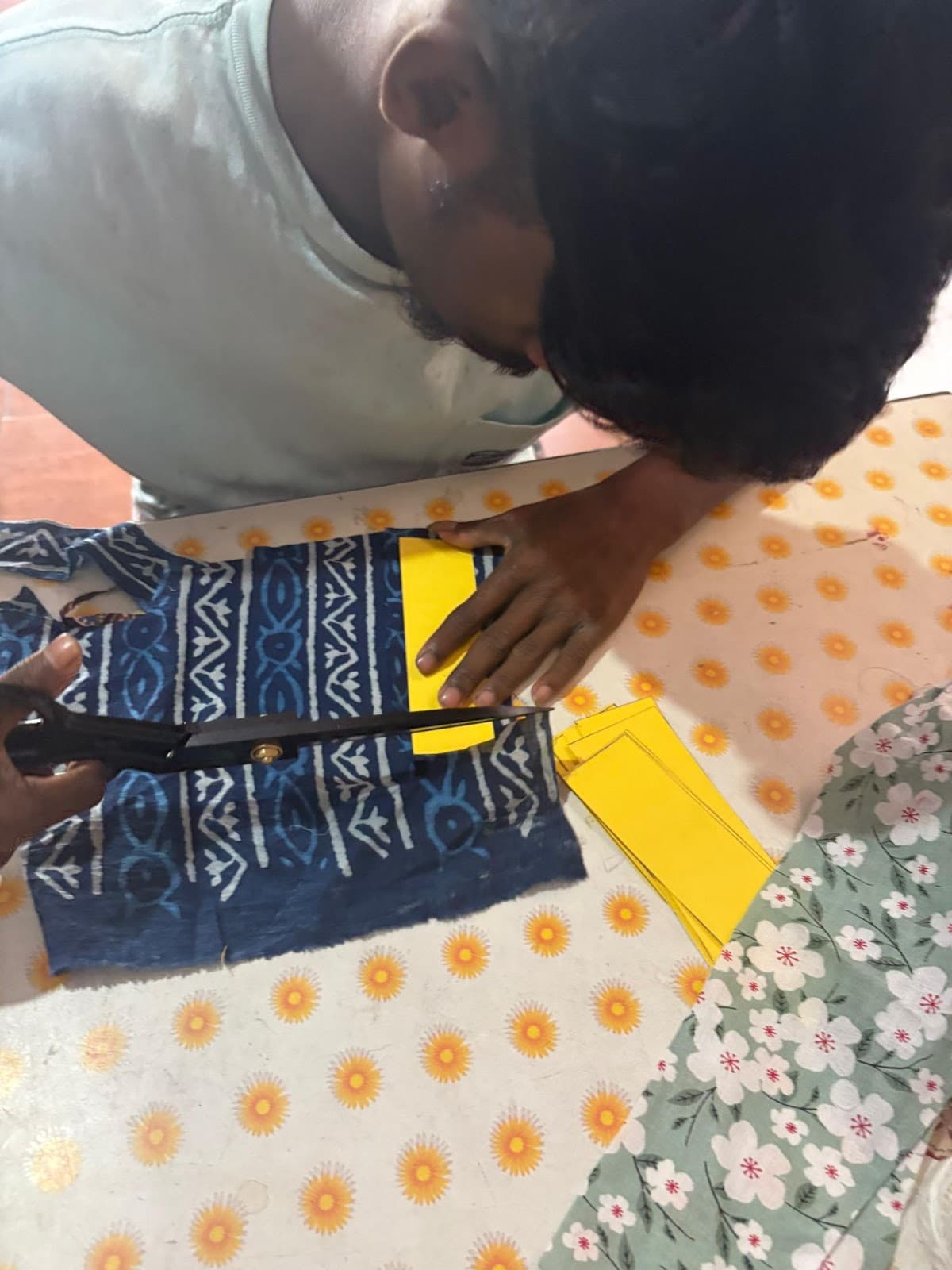
Through Urumala, a fabric unit under the same foundation, we sourced fabric waste to introduce upcycling projects. The young adults combined waste fabric and cardboard to create an art installation. It featured fabric-covered triangles mounted on the wall.
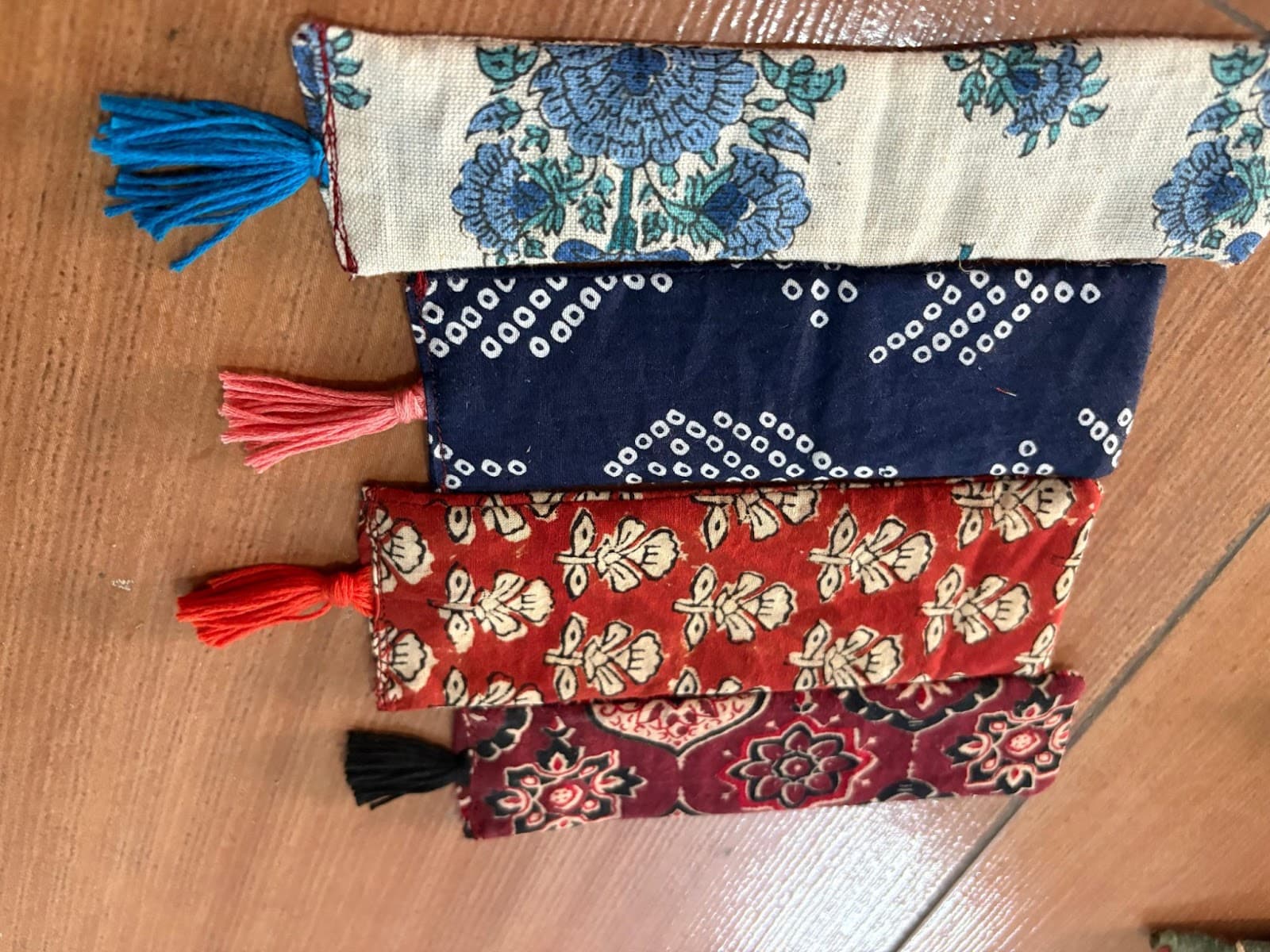
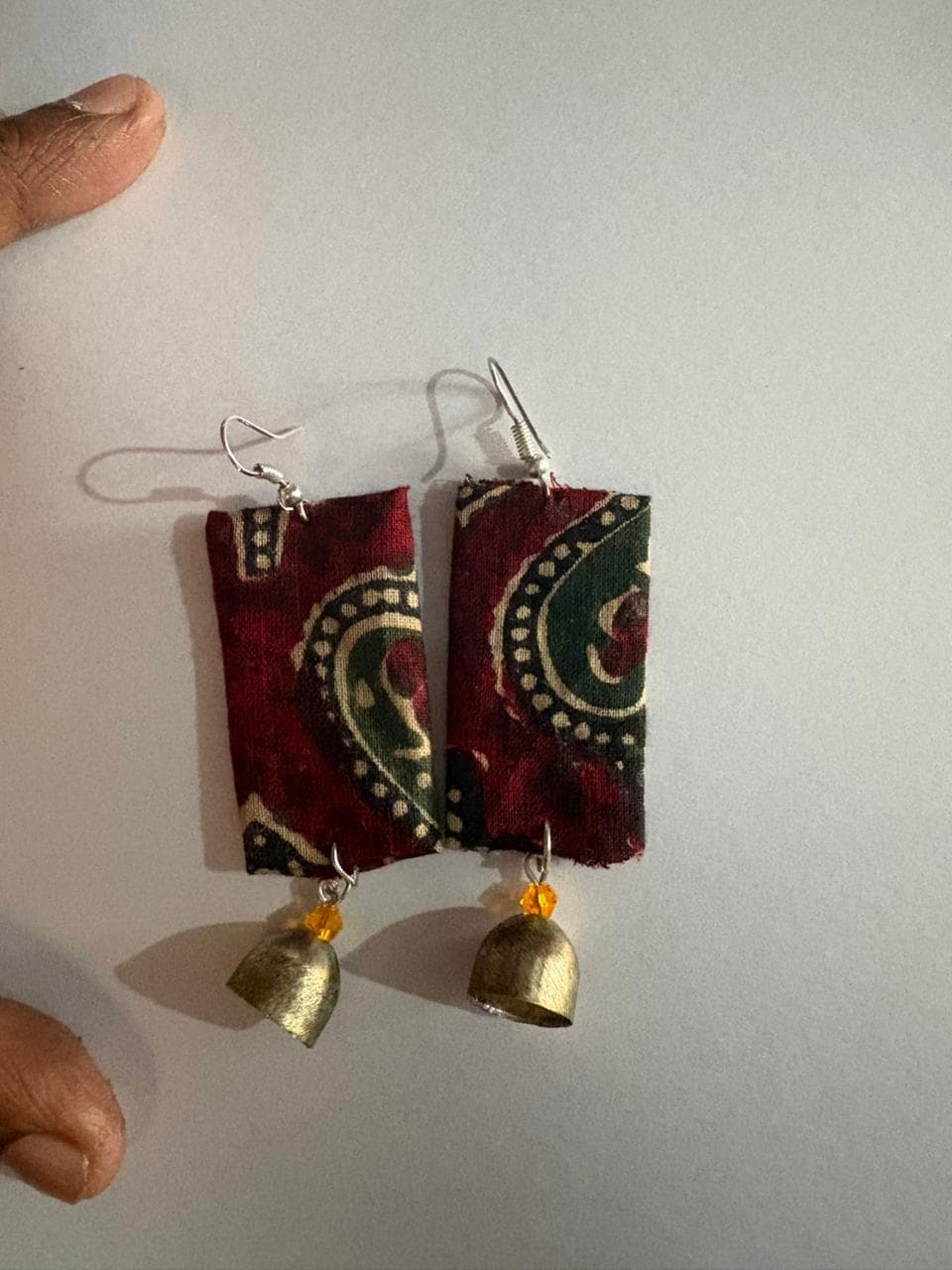
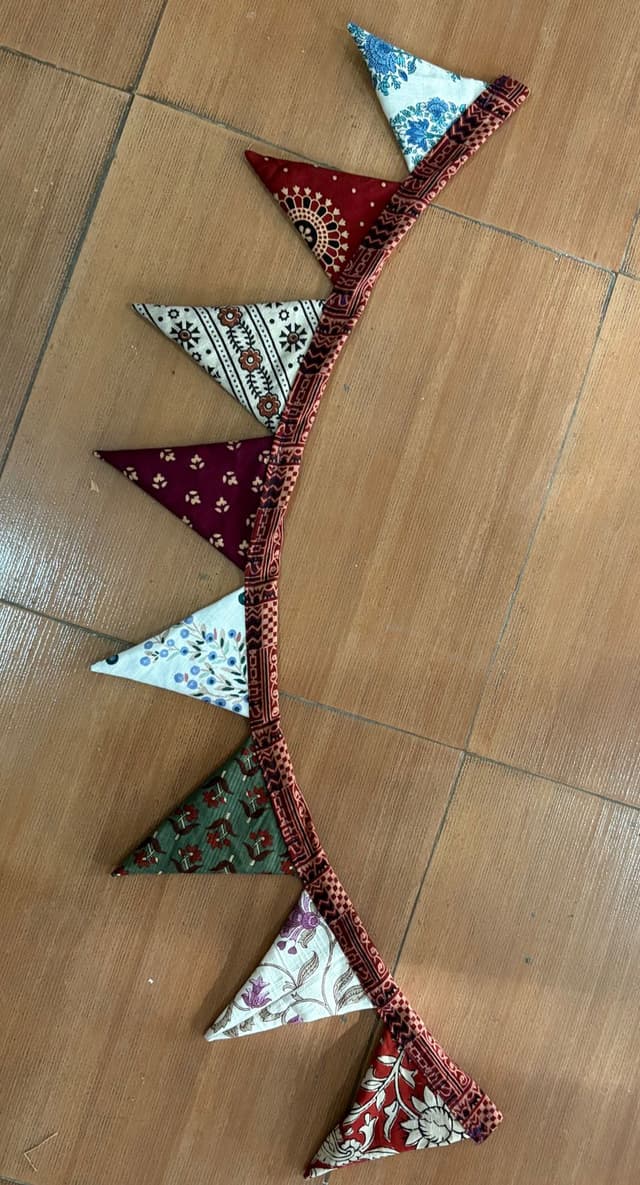
We also explored functional art. They made earrings, colorful bookmarks, and buntings with tassels from fabric scraps. Tasks were divided based on each individual’s gross and fine motor skills. Priya handled the stitching.
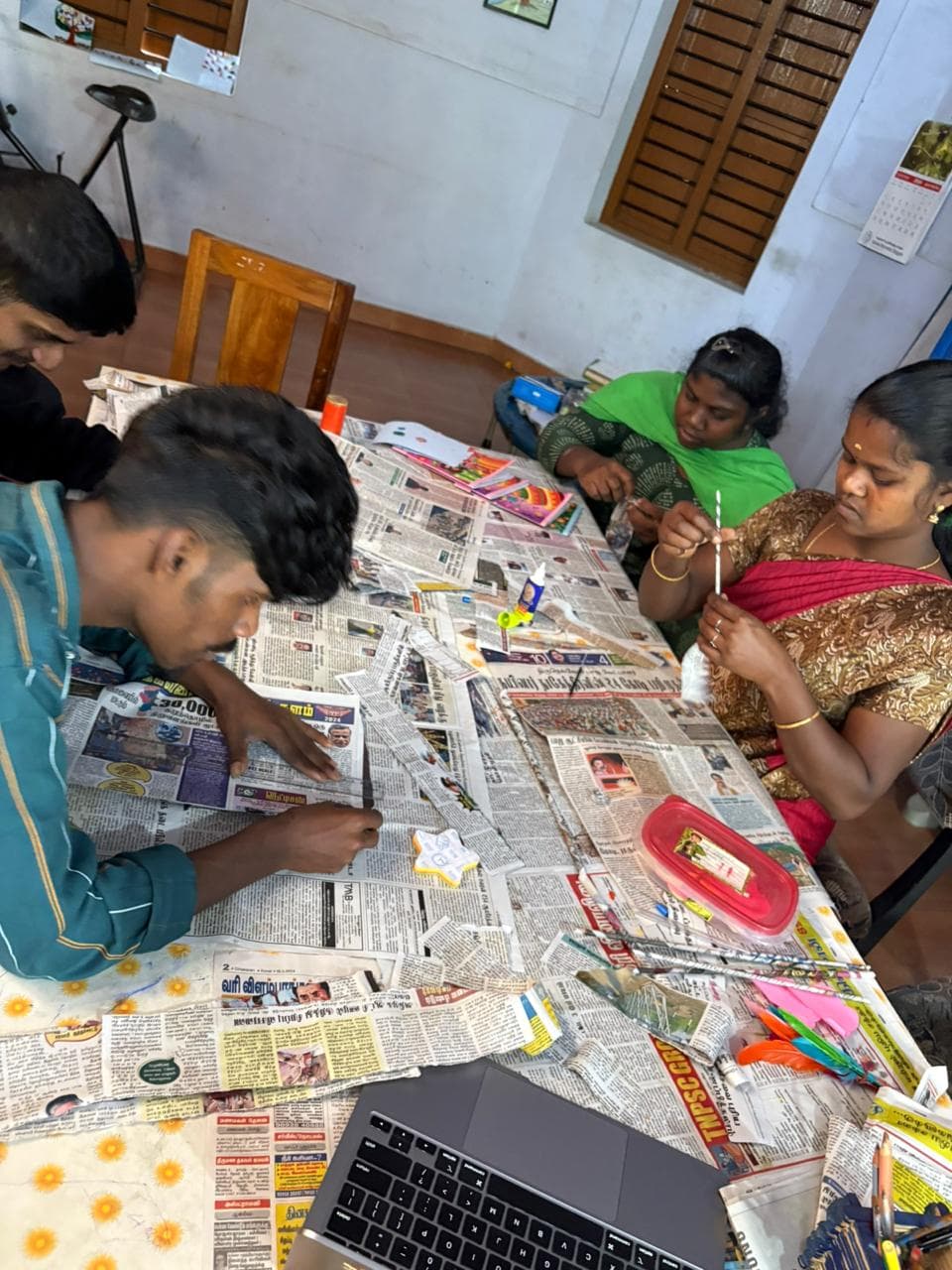
The process was a symphony of collaboration. The results were remarkable. When Priya sold five bookmarks, the pride in her voice was unmistakable. The young adults’ joy reaffirmed the power of purpose and creativity.
Upcycled fabric wall installation at the Center for Differently Abled, Ashwini
Handmade bookmarks by Sudeesh, Anish, Bindu and Priya
Handmade fabric earrings by Anish and Priya
Upcycled Fabric bunting made by the team.
The ripple effect of inclusivity
One moment that deeply resonated with me was meeting Prabhu, a 12-year-old boy with cerebral palsy. He couldn’t attend school because it lacked inclusivity. His mother brought him to a medical camp, where I suggested enrolling him in the centre.
Today, Prabhu attends regularly, and the centre has expanded its operations to five days a week. Priya was thrilled to have a new member on board, however, it has been a challenge to work with a child with cerebral palsy.
This experience highlighted a pressing issue in rural healthcare and education: the lack of trained personnel to work with people with disabilities. Many, like Priya, have dedication and enthusiasm. However, they lack formal training and skills to fully support these young minds.
Simple, community-based training programs could change this narrative. Imagine the impact if more people from the marginalised community were empowered with basic training to work with people with disabilities.
Can this model transform care for people with disabilities?
My time at the centre taught me that art therapy isn’t just about creating. It’s about transforming lives. Zentangle, painting, and upcycling gave young adults a sense of purpose and small exposure to the world of colours and creativity . It improved their mood, focus and fostered mindfulness.
Beyond art, we introduced a daily schedule that included yoga, life skills, and vocational training. This structure brought noticeable changes. It helped the young adults build better habits and routines. It also helped develop a sense of discipline and independence.
Priya began adding practical lessons on topics like time, money, dates, and days. These life skills proved to be incredibly valuable for their growth, also in preparing them for the outside world.
The Ashwini Differently Abled Centre’s success demonstrates its potential as a model for other initiatives. Training local caregivers, like Priya, with the right skills can make a significant impact by ensuring the work continues and remains effective.
Utilizing community resources, such as leftover fabric or other materials, not only reduces costs but also fosters greater involvement from the local community. Expanding inclusivity by reaching out to families of people with disabilities can help bring in more remarkable people, like Prabhu, and widen the centre’s reach. Incorporating art therapy programs, such as Zentangle and painting, sparks creativity, improves focus, and instills pride in young adults. Additionally, integrating physiotherapy into the daily routine, as facilitated by Kasthuri, helps combine physical care with creativity, making the experience more holistic and impactful.
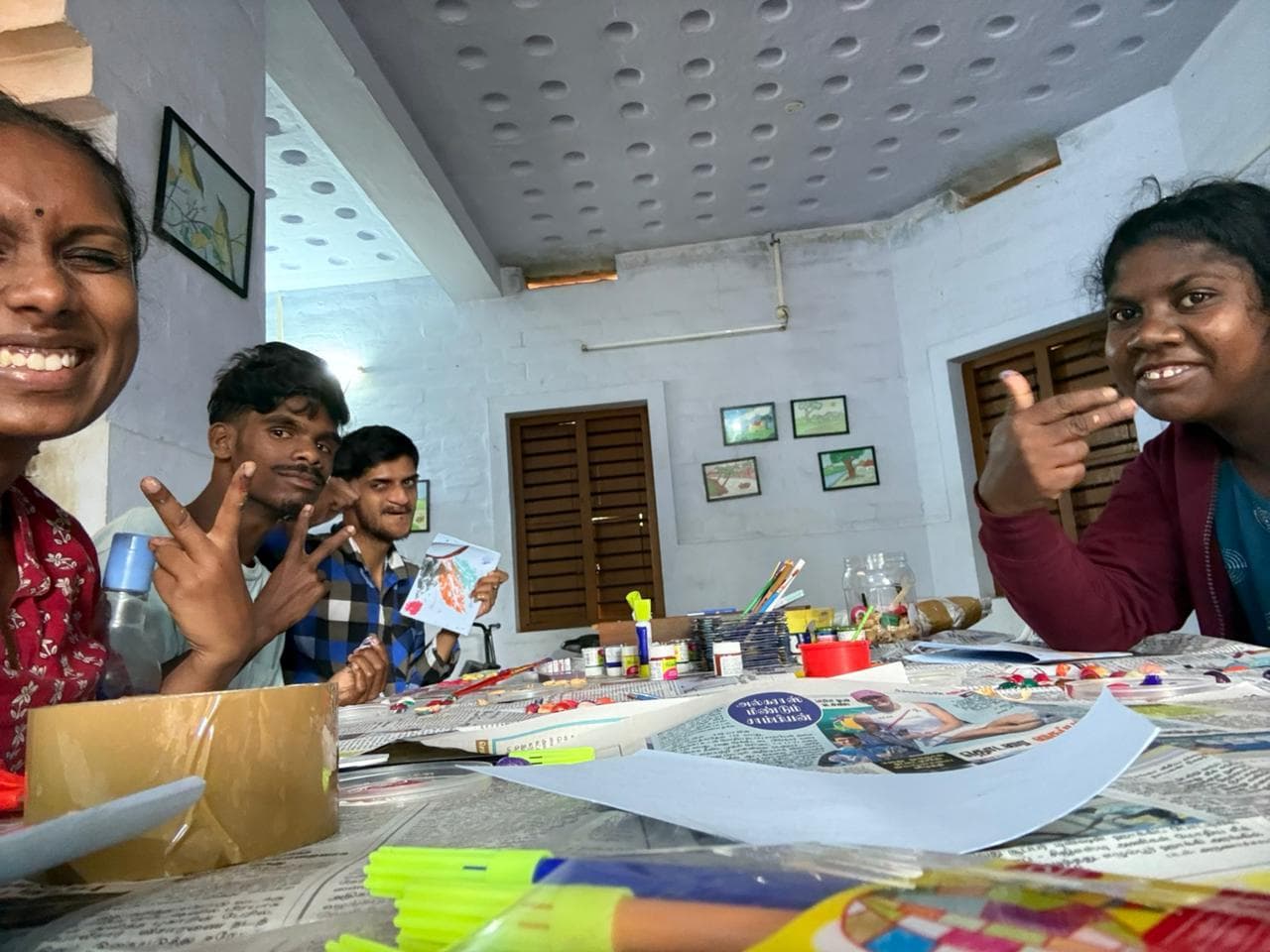
The afternoon art sessions with the team - exploring new mediums of art.
The road ahead
The organization’s members have been unwavering in their support, always encouraging Priya to learn new skills to better guide the people with disabilities. Dr. Dhanya, Dr. Anna, and other hospital staff frequently visited the center to check on progress, engage with the team, and spend meaningful time with them.
With this steadfast backing, the unit has the potential to inspire similar initiatives across rural India, fostering inclusion and empowerment on a larger scale.
The Gudalur Differently Abled Centre is more than just a space—it stands as a beacon of hope, creativity, and inclusion. Reflecting on my time there, I’m reminded of the transformative power of small changes. A simple notebook and pencil sparked confidence, while a brush and paint unleashed creativity.
This experience with art is just a glimpse of its potential—there are so many other forms, from music to theater to dance. Imagine rural centers for people with disabilities having the privilege to explore all these magical art forms.
I urge more people to invest their time, energy, and financial resources in supporting rural centers that focus on people with disabilities from marginalized communities, especially through the medium of art. It’s a transformative tool that fosters creativity, builds confidence, and improves both motor and cognitive skills. By investing in art-based initiatives, we can brighten their world, empower them to explore their potential and give them an equal chance to thrive in society. Art is where differences become beauty and challenges transform into triumphs.
Each small step at the center brought us closer to a world where no one, regardless of ability, is left behind!
Abilities shine brighter when given the canvas to create.