Beyond pills: Envisioning inclusive mental health for all
In India, mental healthcare is highly inaccessible to almost 70% of the population economically. That, combined with the focus of modern psychiatry on Western culture and pills leaves Indian people significantly underserved as their unique cultural contexts and existing systems of oppression go unaddressed. Here is how we can reimagine a model of mental health accessible to all.
Nandini is a 42-year-old woman who struggles daily to survive and care for her family. She spends all her time caring for her disabled son who is unable to attend school due to bullying and lack of funds. She also worries about her older daughter who is entangled in drug use and failing school. Nandini's husband, an alcoholic, beats her regularly. Despite working tirelessly from 7 AM to 10 PM as a domestic help for four households, Nandini barely earns enough to sustain her family. To make ends meet, she often begs from the nearby temple or, heartbreakingly, sells herself to provide food for her children.
Her life is a relentless cycle of pain and despair. She has tried to end her life multiple times and cries herself to sleep every night, her body aching from physical labour, beatings, and emotional trauma. She cannot eat or sleep properly and has lost interest in everything. One day, after some well-wishers at the temple advised her to get a medical check-up, she went to the government rural hospital. The doctor who examined her found that she had anaemia and started her on medications. However, he also noticed that Nandini appeared to be in mental distress. So he referred her to a psychiatrist.
The psychiatrist, after listening to her, prescribed antidepressants, labelling her condition as a result of a chemical imbalance in her brain. Nandini left the hospital feeling extremely disheartened, convinced that there was something wrong with herself.
This story of Nandini is a common plight in our country, where the critical issue of mental health is often underserved by modern psychiatry, which often places a strong emphasis on chemical imbalances and medications. One look at Nandini’s story reveals that much is wrong with her life. In the circumstances that Nandini is in, it is a normal response to feel despair, sadness, and anxiety. In such a case, this medicine-focused approach of modern psychiatry falls short of actually alleviating symptoms and improving the quality of life of a patient.
Biomedical focus of modern psychiatry
Modern psychiatry has its roots in the biomedical model, which views mental disorders primarily as biological diseases caused by genetic, neurological, or biochemical abnormalities and emphasises pharmacological treatment to target these abnormalities. This model emerged in the late 19th and early 20th centuries, influenced by advancements in medical science and the desire to apply scientific methods to understand and treat mental illness. Today, the field has evolved and psychiatrists have a wide range of therapies - both medical and non-medical, in their arsenal, the focus on the biomedical cause of mental illness persists.
Marcos Ramos, a psychiatrist, in his Boston Review article, discusses that the core assumption that mental illness is purely a matter of brain chemistry is overly reductive and ignores the important but complex interplay of systemic factors like social, environmental, and psychological factors that contribute to mental health issues.
Modern psychiatry is deeply influenced by colonial, white hegemonic, and capitalist ideologies. It pathologises human experiences by labelling them as diseases, disorders, or defects. It is also extremely costly.
According to a study in the Lancet Psychiatry, the average cost of mental health treatment in India can cost up to 30-40 per cent of an individual's monthly salary and pose a significant burden on the common middle-class individual. In India, a majority of the population cannot afford mental health care; estimates suggest that only about 10-12% of Indians can access and afford professional psychiatric services. The National Mental Health Survey indicates that around 70% of people with mental illnesses do not receive treatment due to high costs, lack of infrastructure, and stigma associated with seeking help.
This profit-driven system emphasises medication and promotes individualistic solutions, which fosters learned helplessness (a state where an individual believes they have no control over their circumstances and thus becomes overly reliant on mental health providers). Learned helplessness also ensures that the patient has to keep shelling out money to avail of mental healthcare instead of developing coping skills and becoming self-sufficient eventually.
Additionally, it often overlooks cultural and socio-economic factors. Many psychologists are trained in Western concepts of mental health but often overlook the unique realities of their clients from different class and caste backgrounds, failing to address their full humanity.
Systems of oppression cause poor mental health
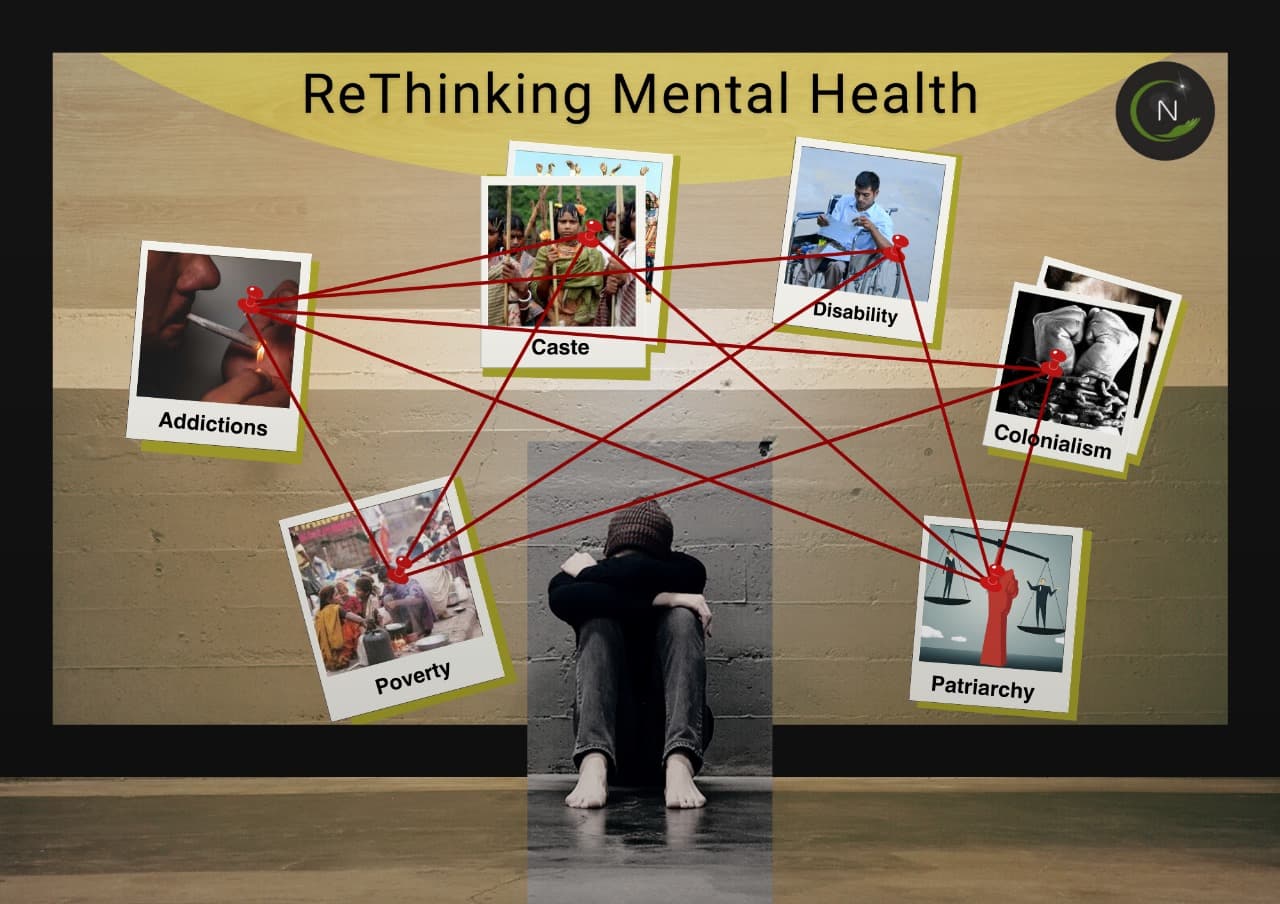
There are several studies that prove that being subject to systems of oppression leads to poor mental health in people.
For example: A study on the effects of the Partition of India on South Asian immigrant health revealed that the trauma from the 1947 violence and displacement has been transmitted across generations. This historical trauma has manifested in mental health issues like anxiety, depression, and PTSD among descendants. The study underscores how such oppressive events impact mental health over generations, particularly in Indigenous and tribal populations, perpetuating cycles of distress and suffering.
Studieshave shown that Dalits and other lower-caste groups face significant psychological stress due to systemic oppression. Religious minorities, women, and individuals from gender-diverse and LGBTQ communities often experience marginalisation and violence. All of this predisposes them to higher incidences of depression and anxiety.
We must also consider the importance of intersectionality, exploring how overlapping identities, such as being a low-caste Muslim or a Dalit queer woman, can compound mental health challenges. The systemic and structural barriers that marginalised communities face, such as lack of representation, financial constraints, and inadequate mental health policies directly translate into their poor mental health. Applying modern psychiatric practices, from diagnosis to treatment risks further marginalising them and their mental health needs.
The limitations of the DSM 5 diagnostic criteria
The DSM-5, the most commonly used diagnostic criteria, is too rigid and often does more harm than good. Its approach can increase stigma by attributing mental illness to innate biological differences like race, sex, and ethnicity. For example, the DSM-5 notes that women are more likely to be diagnosed with major depressive disorders, often attributing it to hormonal fluctuations and reproductive-related factors. This narrow biological focus can overshadow the significant cultural and socio-economic stressors that women are subjected to along with negating the largely patriarchal system they live in. Attributing mental health purely to biology makes people more fearful of those with mental health issues.
It also overlooks cultural and social variations in the expression and experience of mental health issues, leading to a one-size-fits-all approach that may not be effective for diverse populations. This lack of nuance can hinder accurate solutions and treatment, ultimately doing a disservice to patients.
The DSM-5, notably omits recognition of neurodivergence as a distinct category, inadvertently perpetuating stigma by pathologizing conditions that fall within the spectrum such as autism and ADHD. It reinforces the misconception that these traits are inherently abnormal or diseased and need a cure. Neurodivergence represents a natural variation in cognitive functioning and perception, enriching society with diverse perspectives and must be considered as such.
Community-Based Mental Health
Mental health should become less about the client-provider dynamic and more community-based and driven. This will foster collective responsibility and enable support systems that empower individuals within their communities. To address the complex nature of mental health issues, we need more holistic, systemic, and community-led solutions. This approach should focus on how oppression and systemic issues like imperialism, capitalism, patriarchy, and gender stereotypes impact mental health. In India, it is crucial to develop solutions that are indigenous and decentralised, moving away from Western, white-centric models.
Medicines can play a role in treatment, but not at the cost of ignoring the significant impact of systemic oppression on mental health. Nandini's story is a stark reminder of the limitations of the biomedical model in addressing mental health issues.
To effectively address Nandini's situation within a primary health care (PHC) facility in rural India, which is often the only centre someone in her place in life might visit, there is a need to devise strategies which build the capacity of a PHC to offer her quality mental health services. Such a strategy encompasses several key elements.
The first is implementing cultural competence training for healthcare providers to help them gain insights into local customs, caste dynamics, marginalised communities, and gender-based violence. Private-public partnerships with local NGOs experienced in community mental health and rehabilitation (one such example is Sangath in Goa) can be very helpful in establishing this measure.
Mental health integration into primary care is very important. This includes regular screening using tools like the PHQ-9, which can ensure early detection and intervention of mental health illnesses. Training healthcare personnel in basic mental health assessment and counselling techniques facilitates timely support. There must also be networks to assess and successfully refer patients who suffer from substance abuse from the primary health centre.
Next, vocational training programs within the community can empower women economically. These can be modelled after successful programs by organizations (like for example, My Choices Foundation) fostering skills that promote self-sufficiency. To enhance financial stability for individuals like Nandini, vocational training and skill development workshops can be offered within the PHC through collaborations with NGOs. These sessions can focus on locally demanded skills such as tailoring, handicrafts, and small-scale agriculture, complemented by partnerships with microfinance groups to provide seed funding for small businesses.
Furthermore, establishing community support networks through initiatives like women’s self-help groups provides essential socio-legal support for victims of domestic violence, supplementing PHC services with legal advice and protection.
Finally, raising community awareness about mental healththrough education sessions and collaboration with local leaders and politicians helps reduce stigma and encourages community involvement in supporting vulnerable individuals like Nandini. VISHRAM, a successful community-based mental health initiative in Vidarbha, Maharashtra, demonstrates an effective integration of community health workers, counsellors, physicians, and psychiatrists to address depression and alcohol abuse in rural settings. Its approach can serve as a valuable model for replication in other rural communities seeking to enhance mental health care accessibility.
By implementing these strategies, the health system not only addresses immediate mental health needs but also promotes long-term empowerment and resilience within the community. This would also reflect their commitment to social welfare. Only then can we hope to address the root causes of mental health issues and provide meaningful support to those who are in need.