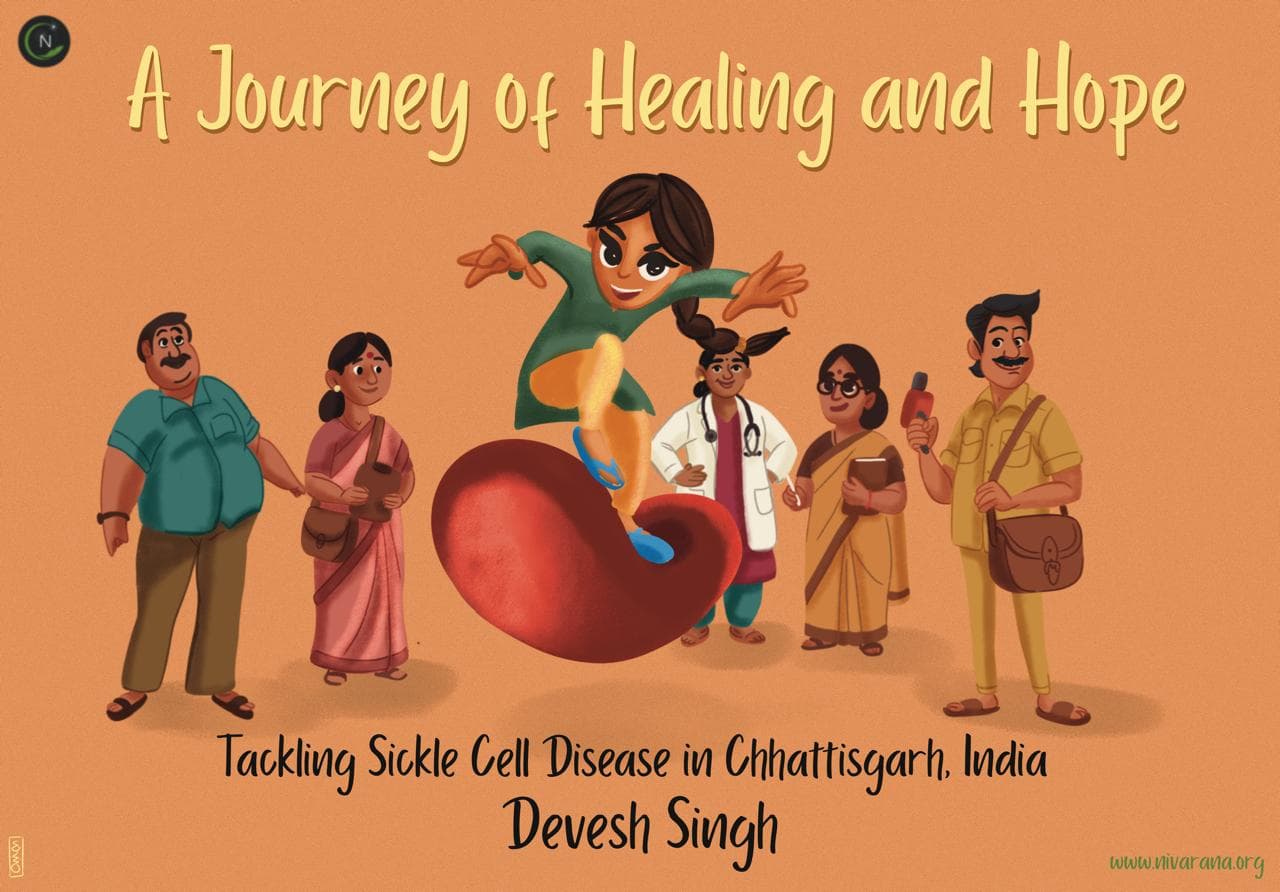
India carries a significant burden of Sickle Cell Disease (SCD), with Chhattisgarh among the states most affected. SCD is a hereditary blood disorder. This condition leads to the production of defective hemoglobin, resulting in abnormally shaped red blood cells. These cells break down prematurely—surviving only 10 to 20 days instead of the usual 120—causing severe anemia and other complications.
Sickle cell anemia is a disease that a person is born with, passed down from their parents. In this condition, red blood cells, which normally look round and soft, become hard and curved, shaped like a crescent moon or a banana. These sickle-shaped cells don’t move smoothly through the blood vessels and can block the flow, causing pain, swelling, and damage to organs. People with this condition often feel weak, get tired easily, and may fall sick more often. It mostly affects people from certain tribal or ethnic communities.
Individuals inheriting two faulty genes (SS) develop the disease, while those with a single gene (AS) are carriers and typically remain asymptomatic. To combat this growing public health challenge, Sangwari, a non-profit organization based in Chhattisgarh, has been working closely with the government to strengthen healthcare systems and improve support for people affected by sickle cell disease. I lead this initiative in Jashpur district.
Experiencing on-ground realities
Over the past year, as I immersed myself in the local healthcare landscape, my team and I have enrolled around 400 sickle cell patients. When I first began working here, I observed that a large number of patients with sickle cell disease (SCD) were being admitted after developing life-threatening anaemia or suffering from acute pain crises. Treatment of chronic illnesses can affect the patient's psychological, social, and economic well-being as well as biological status. Many patients have had suicidal thoughts, and some parents lost hope in life, seeing their child battle illness.
Among the many cases I encountered, one that deeply moved me was that of Tanu Bhagat (name changed), a 14-year-old girl from the Urao tribal community. She was hospitalized with one of her seasonal pain crises, more frequent in monsoon and winter. Although previously been given painkillers, her symptoms persisted. Due to her condition, she missed school repeatedly and couldn’t appear for exams. The chronic pain and hospital stays had robbed her of a normal childhood and put her education at risk.
Mental and Emotional Care: A Turning Point
Since the age of four, Tanu had been experiencing intense pain episodes that left her in agony. Her father, Vinod, often carried her across as she could not walk. The family toiled in search of relief. When she was diagnosed with sickle cell disease at the age of 5 in a hospital in Ranchi, the doctors prescribed only folic acid, and she had been consuming it on a daily basis.