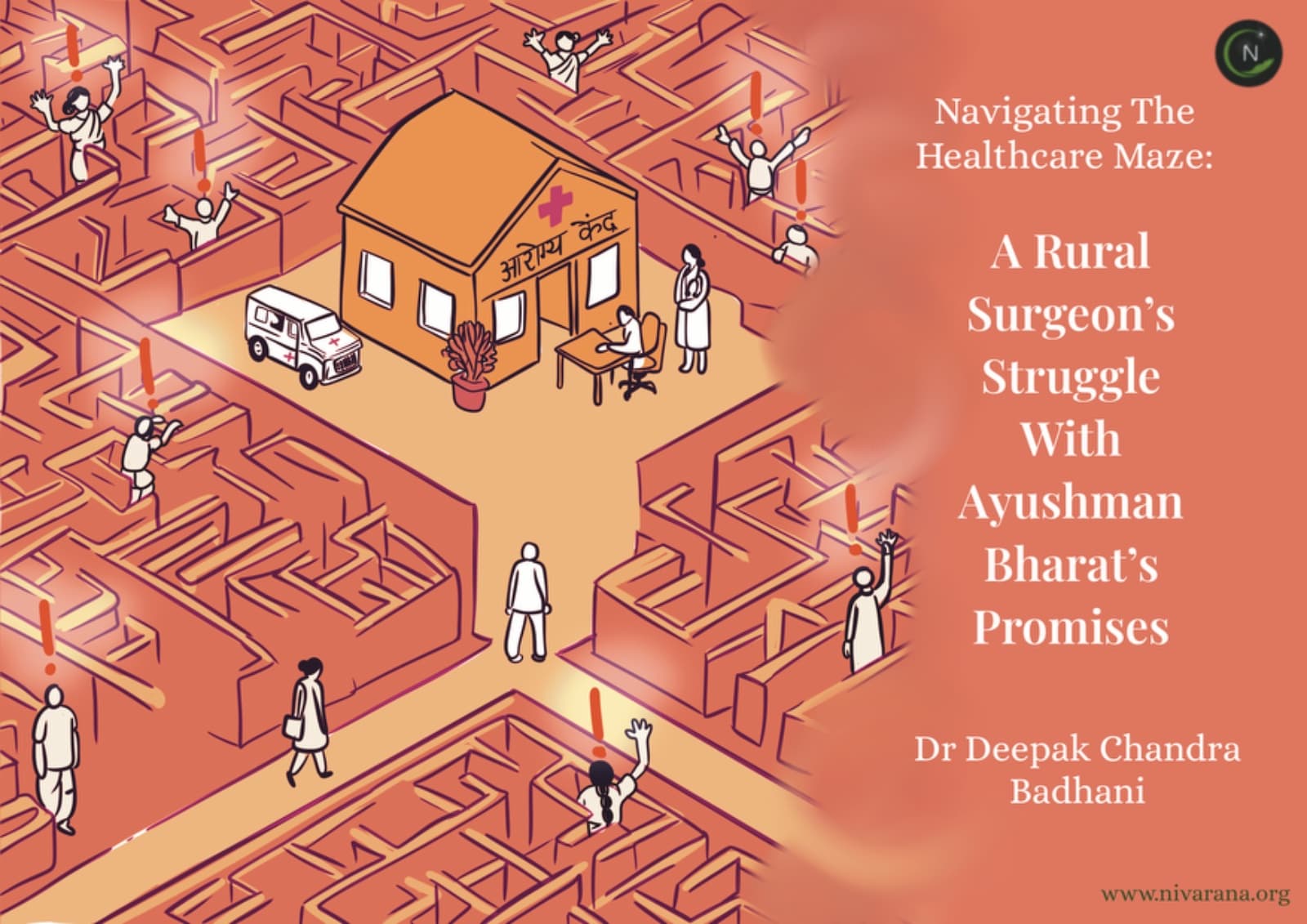
With most surgical infrastructure concentrated in urban areas, seeking surgical treatment for people in rural areas is a nightmare. Poorly equipped and overburdened public health centers make things worse by pushing people requiring urgent care to private health centers that are known to leave patients with huge financial burdens.
Ayushman Bharat PMJAY, the government’s flagship program, was offered as a bandaid for the fractured Indian health system. AB PMJAY is a health insurance scheme that offers needy families free treatment up to 5 lakh rupees per annum in impaneled hospitals. However, enrolling in this scheme is often more difficult than fighting the disease itself.
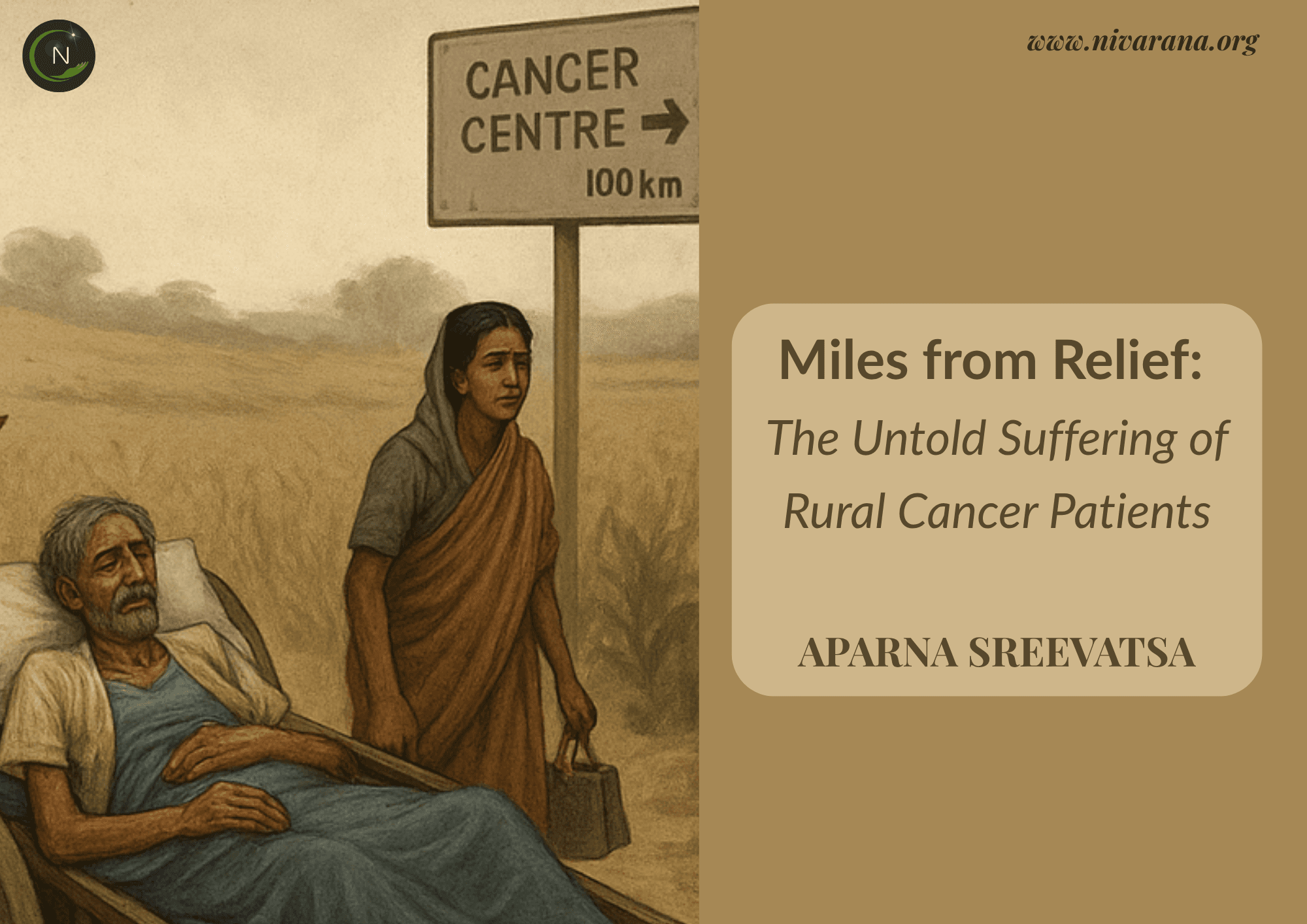
Seeking treatment for a painful neck swelling, Sohan Lal, a 68-year-old farmer from eastern Madhya Pradesh, arrived at Jan Swasthya Sahyog, a hospital in rural central India. The search for a diagnosis - multiple consultations with doctors, and the tests they ordered - had already drained Sohan’s savings.
Following a thorough clinical examination and some basic tests, the doctor diagnosed him with cancer of the parotid gland (a salivary gland located over the cheek). The cancer had spread to the lymph nodes in the neck. The treatment was however not the only struggle that he had to go through.
Besides low hemoglobin that prevented him from getting treatment, just like most people from rural India, Sohan was also low on finances. Even though the treatment costs at JSS are highly subsidised, poor people seeking care there often struggle to pay even the smallest of amounts. To continue further treatment, for the poor, enrolling into the Ayushman Bharat PMJAY scheme is the only option.
To enroll in the scheme and get an AB PMJAY card, a patient needs to prove that they fit the inclusion criteria of being socioeconomically backward by showing multiple documents like the Samagra ID Card, Ration Card, and Aadhar Card.
As Sohan was unaware of this scheme, he lacked the required documents. For most people in remote and rural areas returning home to get the documents is also not an option as they often travel hundreds of kilometres for treatment.
For some people like Mukesh, another farmer seeking treatment at JSS, even having all the correct documents prevented him from receiving the scheme's benefits. A mismatch in his name’s spelling in the Ration and Aadhar card meant that the digitized and empowered India could not identify that “Mukesh” and “Mukes” were the same person who was desperately seeking treatment for his suffering.
The doctors found donors for his treatment as they feared that the duration taken in correcting the spellings, a herculean task in itself, would outlast the time Mukesh was left with. Similarly, a mismatch in age also denies people an AB PMJAY card till the discrepancy is corrected.
Manju, a 70-year-old lady with tongue cancer, was facing a struggle not so unique in remote areas. Having worked in the field all her life, her hardened fingers had lost the fingerprints needed to prove her existence. She too was denied an AB PMJAY card. Was her suffering, not only from the disease but also from poverty and social isolation, not enough to qualify her for a PMJAY card? Just like Manju, many other people have also lost their right to health after losing their fingerprints due to chronic undernutrition, long hours of manual labor, or to disease process itself.