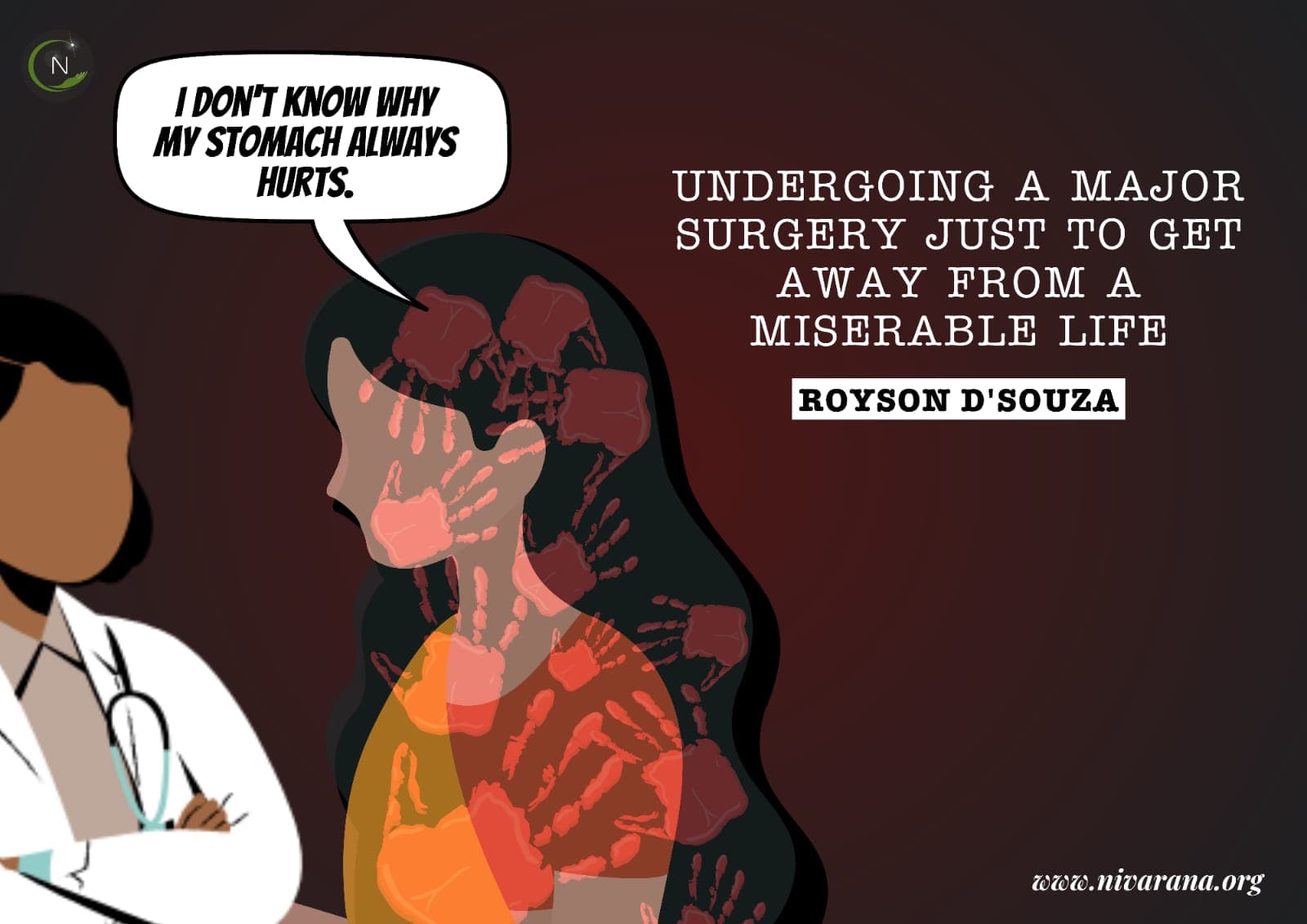
Laxmi (name changed), a 19-year-old mother of an 18-month-old child, lay in a surgical ward bed, recovering from a laparoscopic cholecystectomy, a minimally invasive gallbladder removal surgery. The operation was smooth, and she was due for discharge the next day. She had insisted on staying an extra day. But when the treating team arrived on the morning rounds the next day, she showed no interest in leaving.
“The pain is very severe. I’m unable to eat or drink anything. I vomit out everything. My whole body is hurting. I do not want to get discharged,” said Laxmi.
Her mother was by her side, looking anxious. Her husband, on the other side of the bed, looked rather annoyed.
The senior doctor of the treating team asked further questions to figure out the cause of her symptoms while two other doctors checked her pulse and blood pressure and examined her abdomen. Everything seemed completely normal.
The team reassured the patient and her mother that it was sometimes normal to have vomiting and mild pain after the operation, and she would recover soon. Laxmi, however, insisted on staying at the hospital for another day.
The husband followed the team as they walked out of the ward and asked if he could take her home that day. “She is not able to take any food right now and will require IV fluids. It is better to keep her for another day and observe,” said one of the doctors, and the husband obliged with some dissatisfaction.
The puzzle of an unnecessary surgery
Laxmi had initially presented to the hospital with the same complaints - severe pain, vomiting, and inability to eat and drink. Her scans showed a tiny stone in her gall bladder, for which she underwent the surgery she was now recovering from.
The treating team, however, was not fully convinced from the start that the gallstone was the cause of her symptoms. However, as no other abnormality was found and she continued to complain of severe pain, the team decided to remove the gallstone.
The symptoms of gallstones can often be vague, like abdominal discomfort, bloating, nausea, and intolerance to fatty food. At times, private hospitals make use of the vagueness of the symptoms of gallstones to perform ‘unnecessary’ surgeries for profit.
The definite indications for surgery include cholecystitis (infection of the gallbladder due to gallstones), biliary pancreatitis (inflammation of the pancreas due to obstruction of the pancreatic duct by gallstones), repeated attacks of biliary colic (cramping pain in the right upper abdomen lasting for a few hours) and in patients who have a high risk of developing complications (uncontrolled diabetics, immunocompromised and patients with malignancies).
However, this patient did not exhibit any of these indications.