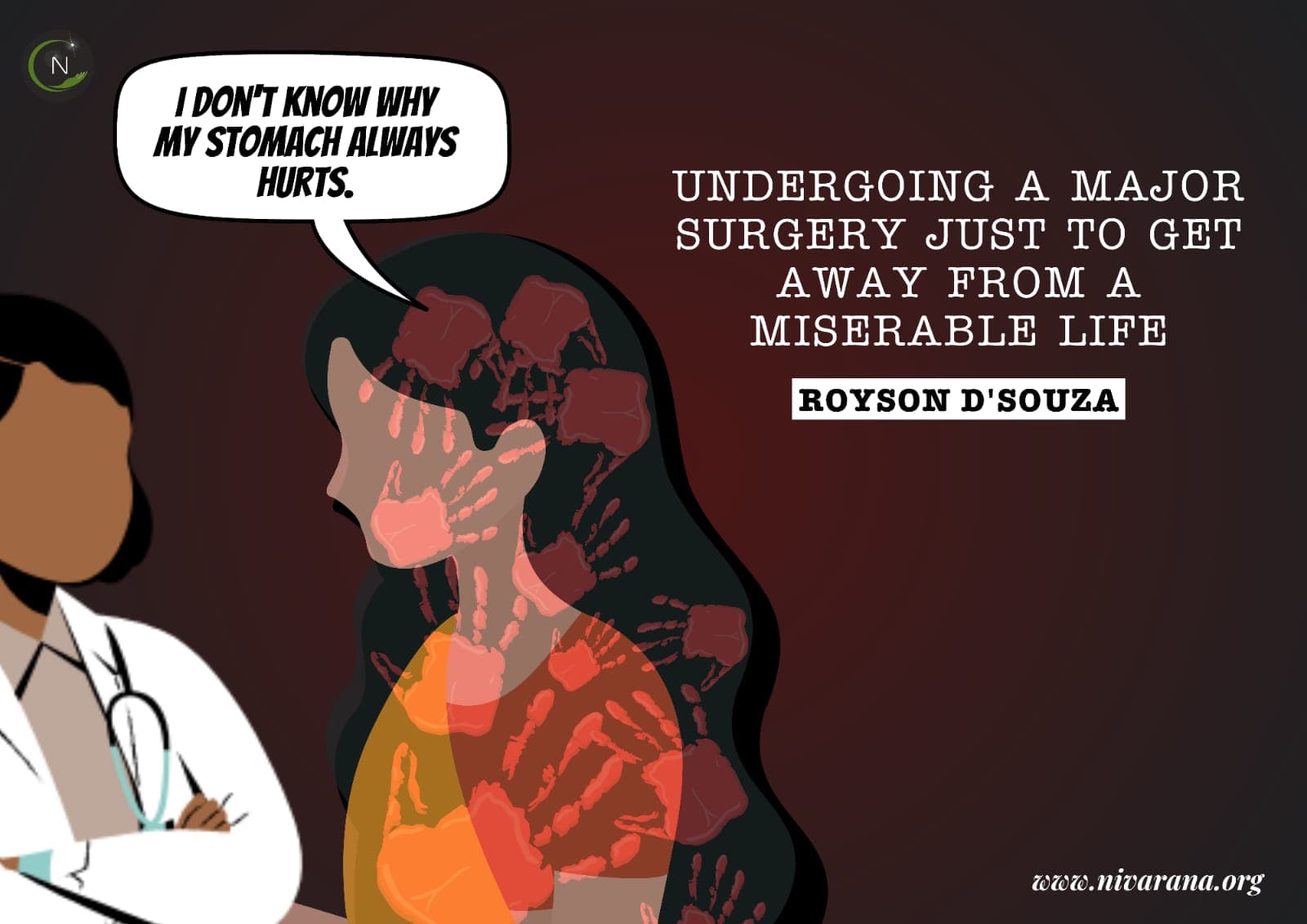

"I believed that I would have some pain in my leg immediately after having my hip replacement surgery and hence did not point it out to the doctor who came for rounds", said Mr Matthew (name changed). Mr Matthew was an active 70-year-old gentleman, whose goals after surgery included being able to independently do his daily activities. This required being completely pain-free, something Mr Matthew didn’t believe was possible.
"Eventually, people noticed that my heart rate was high all the time in the ward. They repeated some blood tests and wondered whether I had lost too much blood during surgery. They also said they were worried about infection. Only after some time, they asked me whether I had pain. When I said I did, they went up on the dosage of the painkillers. Just like that, as the pain disappeared, they noticed my heart rate normalised too. I wish I had known that the normal amount of pain after surgery was zero," he said.
Unawareness blocks access to pain relief
"Doctor, how much will this surgery hurt?" is probably one of the most common questions that any surgeon or anaesthetist will encounter in their office when counselling a patient for surgery. However, many patients and healthcare professionals alike carry many misconceptions about pain.
Dr Parul Raina, a consultant anaesthetist at Sharda Hospital, Noida, recalls an incident where a teenage girl was in tears because of the fear of her upcoming surgery. "Her mother was consoling her by saying that some pain would be there during surgery and afterwards. She was told that she had to adjust to it,” told Dr Parul. The fact that adjusting to the pain was considered to be the only option was shocking to Dr Parul.
“Over the years, I realised this is a widespread misconception among people - especially those of low socioeconomic status. Since then, I have made it a point to explain to patients that they do not need to adjust to pain and they must insist on adequate and complete pain relief." - Dr Parul Raina.
Pain after surgery which is often considered ‘normal’ can also suggest something sinister. However, the lack of awareness in the patient prevents them from seeking care. "After tooth extraction, if pain persists for more than a day, it might suggest that there is an infection or a dry socket (where the jawbone becomes exposed). Corrective measures can make the pain go away," said Dr Madhushree Rao, a practising dentist from Assam. “However, unaware of the problem, the patients often end up tolerating the pain.”
Similarly, pain after eye surgery could be due to an increase in the pressure within the eye. “This can be a potentially sight-threatening complication and hence, I take post-surgical pain very seriously", added Dr John Sangma, an eye surgeon serving the tribal Garo population in a Christian Mission Hospital in Babupara, West Bengal.
"Sometimes patients take pain relief into their own hands," said Dr John. One of the issues that he struggles with is the widespread use of herbal juices and steroid eye drops to relieve pain caused due to eye injuries. "Patients come to me after applying these home remedies which worsen their conditions and invariably lead to fungal ulcers." Dr Madhushree too, receives patients who self-treat their dental pain with tobacco and clove oil and has to extensively counsel them against the same.