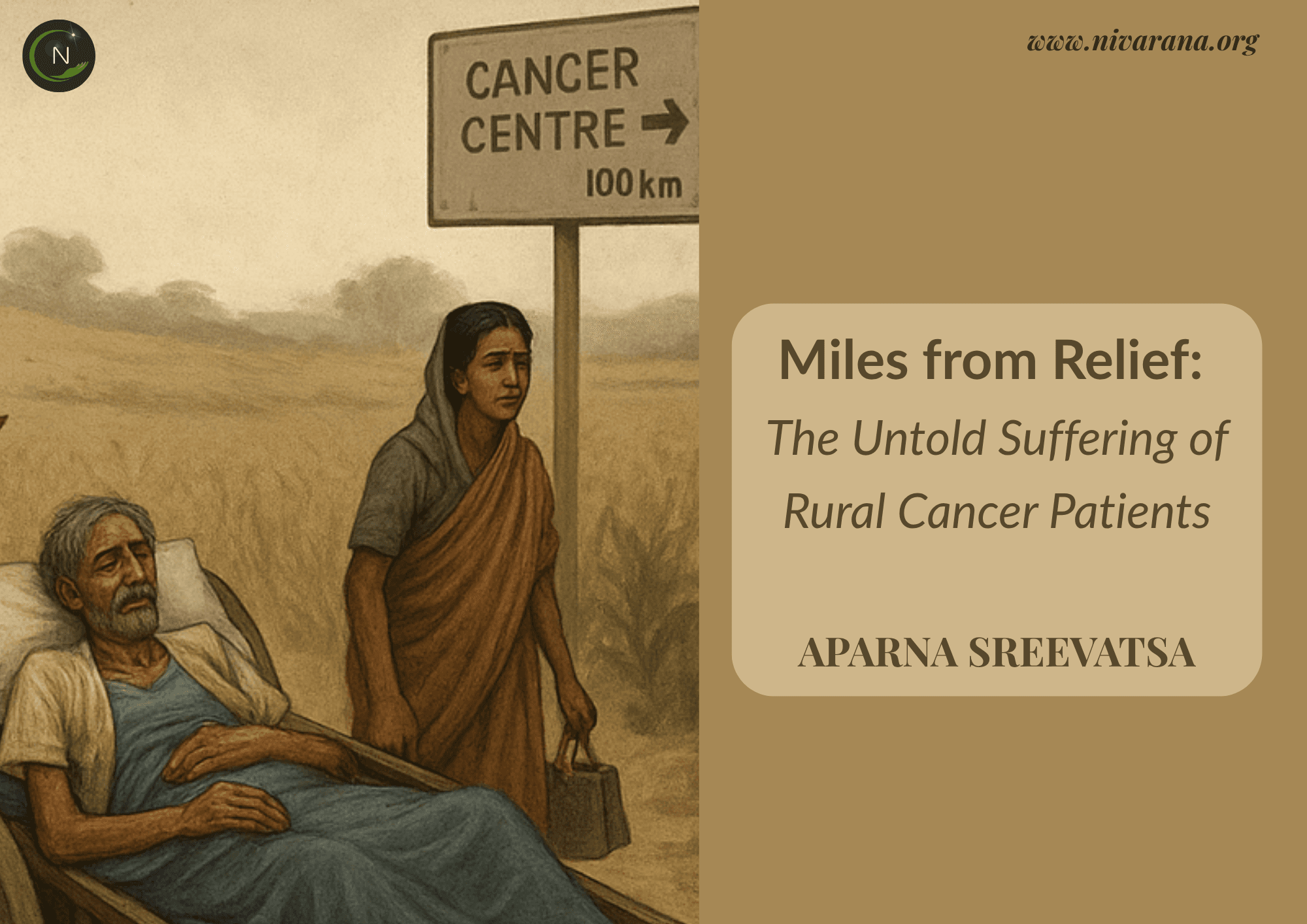
A 45-year-old farmer diagnosed with stage 4 stomach cancer was brought to my OPD on a stretcher. He could not even sit in a wheelchair. His abdomen was distended, his legs were swollen, and he was writhing in pain. His family members, visibly distressed, had traveled nearly 100 km to see me, desperate for relief.
I checked his medical records. He had undergone chemotherapy for some time, but it had been ineffective. For pain relief, he had been taking diclofenac injections daily—a temporary solution that barely scratched the surface of his suffering. After the initial assessment, I instructed my nurse to administer an injection. I moved on to my inpatient rounds.
An hour later, I returned to find him fast asleep. His family, misty-eyed and grateful, shared that he hadn’t slept in more than a week because of the pain. They asked me the name of this “magic injection.” I smiled and replied, “That’s Morphine.”
The next day, he was discharged with a prescription for morphine tablets. Two weeks later, I saw him through a video consultation. He was resting well, his pain controlled, and he continued on the same medication. Though he did not live long enough for his next consultation, his family later told me they were immensely grateful that his final days were pain-free.
The Reality of Cancer Pain in Rural India
Cancer pain is unlike any other. It is searing, relentless, and unforgiving, especially when cancer erodes into bones and nerves. Painkillers like paracetamol and diclofenac barely touch it. Yet, these are often the only medications rural patients receive.
More than 65% of India’s population lives in rural areas—places where access to cancer care is limited, and pain management is practically nonexistent. While government schemes have made chemotherapy, surgery, and radiotherapy more accessible, pain management remains a neglected domain.
Primary healthcare providers are often untrained in recognizing and managing severe cancer pain. Many patients are left to travel long distances to tertiary cancer centers, bearing the cost and the emotional burden of transporting a loved one in agony. This journey—often 100 km or more—is not just exhausting; it is dehumanizing.
Urban vs. Rural Divide in Cancer Care
Most tertiary cancer centers are clustered in Tier 1 cities, making them practically inaccessible for many rural families. By the time many rural patients reach these hospitals, the cancer is already at an advanced stage, and the journey back for repeated consultations becomes unbearable. As a result, many choose to stay at home, often enduring pain in silence.