As the nation gears for another protest, my mind lingers back to the events that decidedly infused this fervour. One account stayed with me about a young protester who spoke about how they received apathy and hate instead of comfort from their family. Knowing that their family would rather lose them than question a government they believed had the nation’s best interests at heart.
Neha Bora, president of the All India Students’ Association (AISA) and one of the central figures in the Jantar Mantar protests 4 months back, demanded and eventually led to the resignation of the education minister. Bora, who fasted for 23 days, spoke in several interviews about how her father called her a ‘traitor’ against national interest.
Sit with that for a moment.
The child here is heartbroken and in disbelief that their ambitions, their safety, and their cause is secondary to their parents’ political allegiance.
The parent here, paralyzed by fear, anger, and forced to reevaluate their well-established social ideas, faced with disobedience.
An exchange is being played out in several Indian homes right now. An overwhelming anger and anguish the parents are experiencing hurling at the young students for betraying their idea of nation and national leaders.
If a child in your family participated in the nationwide student protests, you may have spent the last few months terrified for their safety. You may have felt hurt, betrayed, even ashamed by how fiercely they fought you, disobeyed you, or blamed your politics for the world they now feel forced to inherit.
But as a millennial parent who feels emotionally closer to your generation, and as a mother of an Alpha generation child, this letter comes not to accuse you but to stand beside you as parents of young people, in understanding this new social dynamic.
As you read this, the NEET protests have already culminated with the resignation of the minister concerned, a primary demand. A new beast of FIRs have been unleashed on the protesters, and the forever trolling on social media (both sides of politicians and students) continues to gather snow.
Several satellite protests have spiraled across the country in small and mid-sized cities to signal that this agitation is not transient but will last longer. And a fresh one is happening, now asking for the resignation of another corrupt official.
We have visuals of 15-19 somethings with sling bags and phones in their hands, protesting, eating pizzas and burgers, posing with Korean hearts, while singing, sloganeering is etched in our minds now. Language that pierces straight into communicating the message directly with a sting, while profane for our standards.
Sights of young people teasing playfully with authority, we fully still do not comprehend but at the same time we juggled the horrible truth of seeing them being thrashed using force and violence. Children have passed out on streets, hugged and begged their attackers (uniformed and otherwise), some praised them for doing a wonderful job and invited them to return to use the same brute force the next day.
Not a Gap but a Chasm
This protest is not merely a political event; it is a generational rupture inside Indian families, that parents must respond not with fear or control, but with solidarity, humility, and trust.
Most of us who are 45 to 60 and have young children loosely identify with a moniker of Gen X generation. I would prefer to call you as youth parents. A generation who grew up as ‘na kam na zyada’; without evident depravity or scarcity that your parents forged through.
As the first generation who benefited from population control measures to give birth to children and see almost all of them surviving into adulthood. This caused you to prioritize security and stability. But it meant that you still inherited a scarcity mindset that continues to drive your life choices, fearing that comfort must be defended, is fragile and must not be risked.
Liberalization and technology have given you hope, inadvertently putting you under immense psychological pressure to adapt through social and family changes. Believing that merit and privilege as essential to survive, striving for upward social movement through education and employment that brought financial security. Producing an ‘achievement-based self-worth’ system, where credibility is earned and rewarded with safety and dignity.
As a product of caste-based and gendered hierarchies, and religious identities shaped by privilege, honour and belonging, many of you may have intellectually questioned these structures while still carrying their emotional weight. These identities can remain deeply tied to how we understand family, status and belonging, creating a quiet cognitive dissonance in our personal and social lives.
Perhaps this is why parents of young people today can be loving and punitive, progressive and fearful, proud and ashamed, all at once. Your shoulders still carry the weight of your jobs, your families, your ageing parents and society, sandwiched, if you may, between impossible ideals and hedonistic expectations.
For much of your adult life, providing for ‘needs’, was your politics. There were jobs to hold on to, EMIs to pay, children to educate, ageing parents to care for, and a fragile social respectability to protect. Political participation, in the fuller sense, was often postponed because survival appeared more urgent than dissent. To cope, many clung to whatever felt constant: social respectability, familiar identities, political loyalties, and moral certainties.
Survival was not only about money or safety; it was also about protecting the stories that told you who you were, what you believed, and where you belonged. Many of you have seen governments fail your hopes, watched societal violence harden into everyday life, and lived through disagreements that turned communities and friendships into ideological camps. But in a world changing faster than you could hold on, those anchors became harder to release.
And around 2014, politics seemed to move from the public square into private homes. It became part of family conversations, WhatsApp forwards, moral positions, friendships, and your everyday identity. Politics became intimate and immediate, giving language to old fears, old aspirations, and old disappointments. It offered many of you a sense of participation juxtaposed with decent financial security you built for yourself and leisure (time) to commit to this purpose, you postponed for decades. In shaping the political discourse of the country as a mission, you were also trying to reclaim a voice, that survival had long kept muted.
And so, when your children now enter the streets with a different imagination of the nation invoking ideas of India that you fiercely wanted to abandon, it does not feel like disagreement alone. It feels like they are challenging something you finally allowed yourself to claim, a mission you were invested in. Nor are your children aware that they could be ruining their lives amidst police brutality, religious division, state surveillance, jeopardizing themselves and their future with one defiance.
They don’t have an iota of understanding about how you carefully carved your way into this safety for them. This reaction of anger towards this divide is too personal, stemming from parental fear. This fear is about losing one’s child, not only physically, but also socially, emotionally, and ideologically. You are grieving this impending loss and disassociation and by bargaining and negotiating their power from them.
Political Angst Vs Generational Divide
What your children have achieved is unprecedented and will remain etched in the nation's history to come. They have brought together people across political ideologies of far right & far left together through these protests. They have, in an ever-divided society, collected people under one cause, a cathartic process toward healing.
Growing up in a world that often feels disconnected from them, young people have inherited political and social norms that do not always reflect their understanding of the future. They have grown up in a diverse yet deeply divided world, watching families, friends and communities fracture along ideological lines.
At the protest sites, many have found something they were missing: people who understand their anger and are willing to stand beside them. They have also developed their own language for making sense of an often absurd world. Memes, sarcasm and humour become ways of communicating beliefs, building solidarity and making something frightening feel a little more comprehensible.
What the youth have achieved by swarming the streets in large numbers, protesting for the first time in their lives, creatively expressing their angst in a peaceful, democratic manner is unprecedented. Moving from a spectrum of choices to unity for an unflinching demand.
This is a generation for whom information and access are no longer the privileges they once were. They can encounter ideas, people and possibilities beyond the worlds they were born into, and that has changed what they are willing to accept. They have centred their cause where different ideologies converge across party agendas and priorities, creating a national agenda that perhaps many of us have also been emotionally invested in.
They have challenged those who called them insects, useless, lazy and worthless. They have attempted to include people beyond the familiar boundaries of religion, caste, class, gender, age and ability. They have reached for the dream of democracy that the creators of this nation envisioned. They have woven the two foundational yarns of peace as your warp and Jai Bhim in your weft, revealing a new fabric of resistance.
Didn’t you as parents want to see this purpose and cause in their lives, that once all thought were a lost cause? Didn’t you want them to find their dreams and live for their own, for which you have been unwaveringly supportive? You wanted them to have this choice that you did not (take and not have).
This rift you see as a parent is the beginning of a rupture between those who were raised to obey social and political authority without question and a generation who cannot obey without a reason. As youth parents, you were raised in a culture where stoicism, accountability and obedience were often treated as virtues. Your children have inherited a different vocabulary: questioning, negotiating, demanding explanations and asking to participate in decisions that shape their lives. Perhaps this is the deepest generational difference—not that they care less, but that they have a harder time accepting that authority alone is reason enough.
Hence this letter, to urge you to empathize with your children.
It isn’t your or even our fight to hold weapons, neither can we simply stand and watch without having to pick our side. It is their future at stake which they must drive and as parents you and I must be the wall the youth can lean on.
Parents, aunts, uncles and elders (even if most of us refuse to call ourselves that) must bridge this divide in our homes responsibly by nudging our elders to withdraw with dignity. Help them find a personal purpose rather than a national one. Help them understand that the consequences for the decisions they want to drive will be paid for by someone else (your children and ours).
You have responsibly shielded your childhood wounds and made a segway for this generation to talk about mental health and making repairs. It’s time they see us living these as lived choices, especially as the electoral democracy in the country gasps to breathe and free itself from the very institutions that were built to safeguard it.
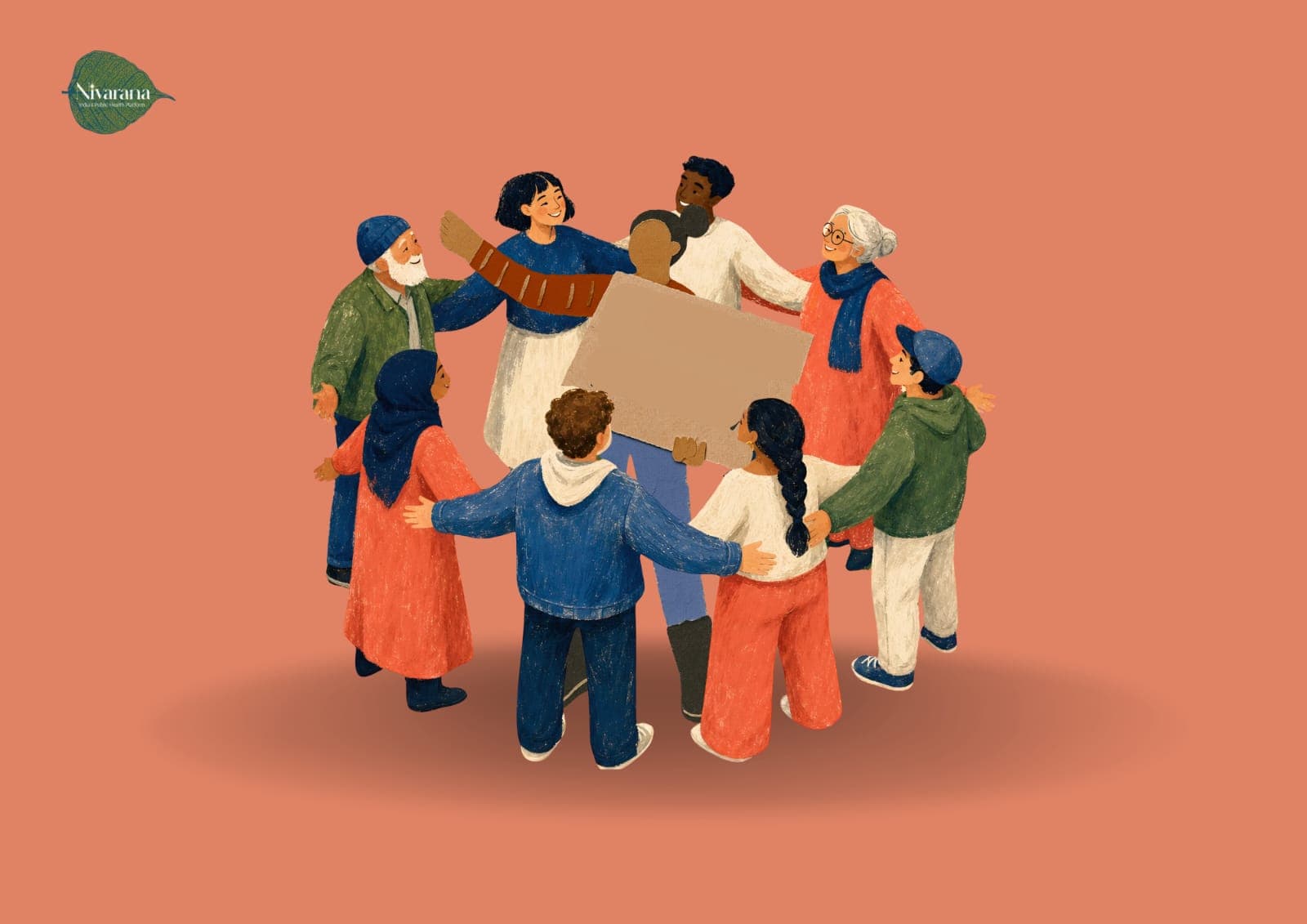
Today if your child is returning from protests, hug them, tell them you are proud of them. Reassure them that the path ahead is going to be rockier but you will stand with them, in the same way you sent them anonymous food parcels at Jantar Mantar and made sure you joined every local protest around the corner glued to your phone screens for every new byte that came from Delhi.
Let’s understand what they want to say to the world, without judging or capturing their narratives. Let’s keep our political ideologies away for once, and peek into their worlds shaped by values like transparency, accountability, equality, opportunity and freedom. Although difficult, you must shed your cloak of inherited obedience, breathe free like your children and meet them where they are. They want to be seen and heard, and the protests have created a hunger for offline social connections in them. They want to belong like never before and this is your opportunity to fill this with warmth, support and care.
Pass on the political baton and the freedom to shape their social narratives, something that you didn’t have ‘luxury’ to do so. Serve as the anchor to which a tired rebel will return for rest, rejuvenation, learn resilience and fight bigger battles. Lay the road to creating a new political narrative passing through uniting a pained and divided society. Let them heal you!
This youth protest is not a rebellion against parents or families, but a democratic inheritance that we ourselves helped make possible!! We must as parents, guardians and elders, defend it, cherish it, and celebrate it.
Edited by Christianez Ratna Kiruba
Image by Janvi Bokoliya