Shattering the Glass Lab Bench: Reflections on Gender, Power, and Equity in STEM
This deeply personal essay unpacks the gendered power dynamics in STEM through lived experience, revealing how systemic bias, societal expectations, and erasure of women’s contributions continue to shape who gets to lead—and who gets left behind.
I was in my teens—an age of dreams, dilemmas, and restless ambition. I was drawn to science, inspired by accomplished voices in STEM (Science, Technology, Engineering, Mathematics), especially those I met through family or school.
One day, an elderly relative I deeply admired came home. Brimming with pride, I told him, “I want to become a doctor, one who treats patients and does research. I’ll find a way to do both.” I expected encouragement, even praise. After all, I had heard him urge my older male cousin to chase big scientific goals and reach for the stars.
Instead, he looked at me, frowning with concern. “That’s too much,” he said. “You should choose something easier—something that lets you come home early and look after your family. Women need jobs with less work so they can be good wives and mothers.”
That moment hit me like cold water. I realized then the rules were not the same for me and my cousin. Subtle expectations had always been there—praise for doing house chores “well” and warnings about what “my husband’s family” might think about my cooking or cleaning. Yet no one ever said, “If medicine makes you come alive, chase it with everything you have—build a life around what you love.” My worth, it seemed, was measured in clean dishes and folded laundry, not academic merit.
Years later, after countless years of study, clinical duty, and a great deal of blood, sweat, and tears, I became both a doctor and a researcher. But those words still echo in my mind. And when people now ask, “But when will you settle down and get married?”—as if that’s my ultimate goal—I feel that old ache again. Is that all I was made for?
Success Through a Male Lens
As I reflect on my journey in STEM, I am now struck by the weight of the advice I received from male role models during my formative years. Their guidance, cloaked in well-meaning ambition, painted a picture of success that, in hindsight, was deeply flawed.
It was a narrative shaped by inherent biases—one that preached the virtues of relentless hard work, ambition, and sacrifice. However, as I navigated my career as an Assigned Female at Birth (AFAB) individual, I realized that the world they prepared me for was starkly different from the reality I faced.
STEM is often described as a male-dominated field, but my time in the field revealed that the dominance runs deeper than numbers. It lies in the power structures and cultural norms that perpetuate the status quo, which assigns women the role of workers but men the role of leaders.
Growing up, I was urged by my family to prioritize academics and study hard. Yet, as I advanced in my career, the expectations shifted. The same voices that celebrated my ambition began to remind me of my "biological clock," the importance of marriage, and the sacrifices expected of me to balance family life. The contrast was jarring. What was easy for them—a life centered around work—was underpinned by women's invisible labour managing their homes, raising their children, and enabling their success. This privilege was rarely acknowledged but deeply ingrained in the system they upheld.
For women or AFAB individuals, particularly those from marginalized communities—whether based on race, religion, sexuality, or socioeconomic background—the journey in STEM is fraught with obstacles. Success is met with scepticism and harassment, while societal pressures compound the challenges.
From childhood, girls are often held to an impossibly high standard under the guise of praise: "Girls mature faster than boys," they would say. This statement was meant to validate achievements, but instead, it set a bar far higher for girls than their male peers.
One example that stands out from my college days is how our achievements were often downplayed. When women performed well in exams, our teachers would dismiss it with, "That's expected—girls always do better," minimizing our hard work. In contrast, men who excelled in exams received overwhelming praise and recognition. Similarly, our assignments were graded with far more scrutiny and harsh criticism. In contrast, our male peers were often excused, even if they did not complete their assignments or failed to meet expectations.
In adulthood, intrusive questions about marriage and family planning undermined my professional dedication—questions my male peers seldom faced. In the past, while applying for jobs at various rural hospitals, I was often rejected simply because the management preferred male candidates. When I pointed out that competency levels were the same, they would respond with, "But you'll eventually leave to get married or something like that, right?"
The misogyny women face in the workplace is multifaceted, spanning from condescending attitudes about their professional abilities to being made unsung heroes in their achievements. Women often face systemic barriers that make their pathways to education, employment, and leadership positions more difficult compared to their male counterparts.
From biases in hiring processes to being overlooked for promotions or high-power positions to workplace harassment and gender-based violence, the obstacles are deeply ingrained.
In India, women constitute approximately 70% of the health workforce but hold only 25% of senior roles, highlighting a significant leadership gap. A study analyzing 46 professional medical associations in India found that only 19.5% are currently led by women, underscoring the underrepresentation of women in leadership positions within the medical field.
Furthermore, despite having the same qualifications and performing the same roles as men, women often experience unequal pay and lack access to paid maternity leave, exacerbating gender disparities in the workplace. These systemic issues not only hinder women's career progression but also perpetuate a cycle of inequality that affects organizational diversity and effectiveness.
Beyond these professional hurdles, women are also expected to juggle family life, with societal pressures to maintain their role as primary caregivers. The burden of domestic work often falls disproportionately on women, even when they are working full-time jobs.
A 2019 analysis of India’s Time Use Survey data found that women spend significantly more time on unpaid household and caregiving work than men, largely due to entrenched gender norms rather than socioeconomic or demographic factors. These compounded responsibilities create an unfair environment where women are often left to choose between career success and family commitments.
This chronic imbalance not only hinders professional growth but also impacts women’s physical and mental health. Research highlights how the stress of managing dual roles, combined with inadequate support systems, leads to higher rates of anxiety, burnout, and long-term health complications.
Women also experience unique physical and emotional challenges during and after pregnancy—realities that men will never have to contend with in their professional journeys. According to a 2016 Times of India report, although women comprised 51% of medical college entrants in 2014–15 and consistently outperformed academically, they make up only 17% of all allopathic doctors in India, with just 6% practicing in rural areas.
Despite these challenges, women in STEM continue to make significant contributions to their fields, yet they receive far less recognition, power, and financial compensation than their male counterparts. These persistent inequalities highlight the urgent need for change to level the playing field for women in STEM.
I recall a male researcher who would proudly claim he had allowed his wife to pursue higher education after their marriage. However, after their second child was born, he abruptly stopped her from working. Despite being more qualified and talented than he was, she was confined to domestic duties for years. When asked why he would not let her work and contribute financially, he replied, “Then who would do the cooking, laundry, and take care of our children? These tasks would take time away from my work and negatively impact my research.”
The flippant recommendations I received from male role models often reflected their lived experiences, which were insulated by privilege. It was easy for them to become career-driven and pursue their ambitions because they had women silently bearing the brunt of domestic responsibilities.
This dynamic is not unique to individuals; it is systemic. In India and the global South, STEM remains disproportionately dominated by upper-caste affluent men who benefited from privileged education and access to resources. These same men often resist initiatives like affirmative action for women and people from marginalized sections, which aim to level the playing field for women and minorities in STEM.
Erasure of Female Role Models in STEM
The power imbalance in STEM is perhaps most evident in the erasure of women’s contributions. While society celebrates male achievers, the accomplishments of women are often relegated to footnotes or overlooked entirely.
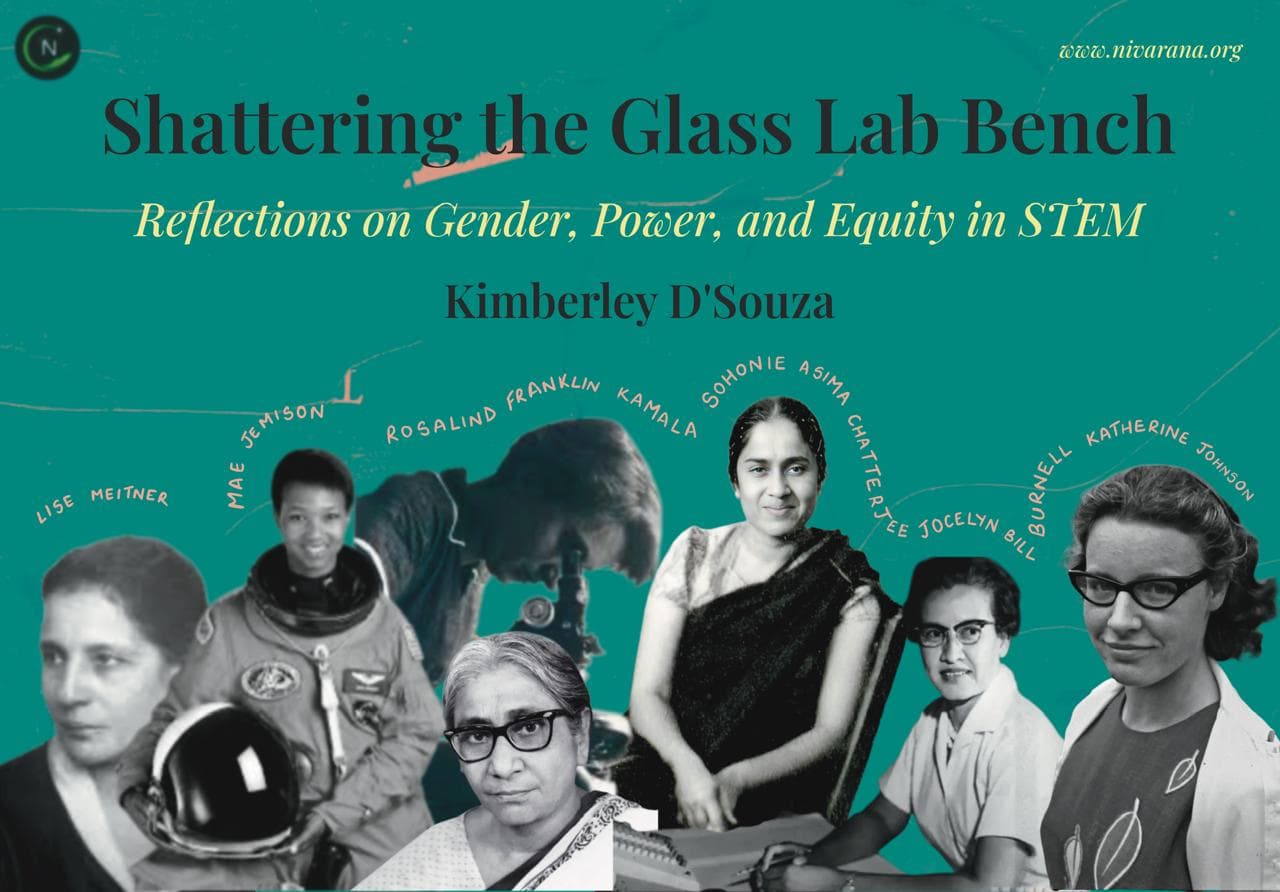
A stark example is the recent viral internet praise for Dr. Jonathan Yong Kim, an Asian-American astronaut, doctor, and Navy SEAL, hailed as a paragon of achievement. Yet, how many remember Dr. Mae Jemison, the first African-American female astronaut in space? She was not only a physician and engineer but also an activist who worked with the Peace Corps, breaking barriers decades ago. As Jemison poignantly noted, "We need to look at the genius of women throughout history. Imagine if we worshipped a female Einstein."
This erasure extends to countless women in STEM: Rosalind Franklin, who played a pivotal role in discovering DNA's structure, her discovery stolen from her later with no due credit; Lise Meitner, a co-discoverer of nuclear fission; Jocelyn Bell Burnell, who identified pulsars but was overlooked for the Nobel Prize; and Katherine Johnson, whose calculations were critical to NASA's space missions.
In India, luminaries like Kamala Sohonie, the first Indian woman to earn a PhD in science, made pioneering contributions to biochemistry, while Asima Chatterjee advanced research in organic chemistry and developed anti-epileptic and anti-malarial drugs—yet their remarkable stories remain relatively unknown.
These women not only faced systemic sexism and misogyny while navigating their everyday lives but also endured the injustice of having their glorious achievements overshadowed by men.
Perpetuating the Patriarchy
The guidance women receive from their male counterparts or seniors is generally never designed to empower them; it is crafted to uphold a patriarchal system. It seeks to mold them into a functional part of a machine that thrives on the sacrifices of women while crediting men for success. I now understand that the advice I received prioritized maintaining the status quo over my personal growth.
In my experience, I was told to work hard and study well—advice that initially sounded supportive. But it was always paired with reminders about marriage, having children, and raising a family. The contradiction was jarring. How was I expected to relentlessly pursue academic and professional excellence, and simultaneously shoulder responsibilities like child-rearing, burdens that my male peers were never asked to consider?
More importantly, no one ever asked me if I even wanted marriage or children. The question was not a choice—it was a given, an expectation that loomed over every stage of my life and career, while my male peers remained blissfully untouched or not burdened by such scrutiny. Men are typically encouraged to focus on their goals and ambitions first, with marriage presented merely as an afterthought—something to consider only after they’ve “settled down” in life.
People often met me with hesitation or subtle discouragement when I sought leadership positions or took up administrative responsibilities. Remarks like “How will you manage this on your own?” or “It’s hard for a woman to be in charge in rural areas—you’ll need a man to help you” were all too common.
Even when I was in positions of power, I faced resistance from male seniors and colleagues, who made the environment unwelcoming. Ironically, when these very individuals assumed similar roles after me, they received ample support and cooperation.
I also overheard comments like, “It’s good to have women on your team—they’ll do all the work while men can relax,” but when it came to leadership, “It’s better to have a man in charge—he’ll be more dominant and assertive.” Such statements starkly revealed how women are expected to labour silently, remain in the background, and later disappear into unpaid domestic duties, never allowed to enjoy the fruits of their success.
I felt profoundly alone during these moments, especially when I realized I had no female mentors to turn to. There was no one available to warn me, reassure me, or help me navigate these injustices.
It is only recently that I have found women mentors who believe in me, encourage me to take up space unapologetically, and affirm that I deserve to revel in my achievements. From them, I’ve learned that being a woman in STEM doesn't mean staying quiet or modest about your success—it means being proud, fighting for your rights, and stepping confidently into leadership.
It ends here. I refuse to perpetuate this cycle.
Breaking The Cycle
Today, I actively advocate for equality in every space I occupy—whether it's promoting equal power and responsibility regardless of gender, calling out misogyny, or ensuring that women’s voices are heard and respected in the workplace. I encourage my peers to confront silent injustices—biases in hiring, harassment, the unequal selection of leaders—and motivate my juniors, especially women and gender minorities, to pursue opportunities in STEM without feeling constrained by societal expectations.
I speak openly about the importance of shared domestic responsibilities and encourage my married colleagues to ensure their spouses participate equally in childcare and household tasks. As someone who has held various positions of power at my workplace, I advocate for safer work environments and insist that women’s concerns are addressed with the seriousness they deserve.
For future generations of women and marginalized individuals in STEM, we must all strive to be catalysts for change by encouraging more women to claim the recognition they rightfully deserve and fostering an environment of empowerment over conformity.
Together, we must work to dismantle the entrenched patriarchy and capitalistic exploitation that continue to dominate this field.
A Call for Change
The progress we have made is undeniable, but it is far from sufficient. Women, especially those from marginalized communities, continue to face systemic barriers in STEM fields. Breaking the "glass lab bench" requires a multifaceted approach that addresses these inequities at their roots and fosters a more inclusive environment.
One crucial step is the implementation of policies that prioritize diversity and equity in hiring processes. Organizations must establish clear benchmarks for recruiting and retaining women in STEM, particularly those from underrepresented backgrounds. Additionally, scholarships and funding opportunities for women in all STEM disciplines should be expanded, providing financial support that can enable them to pursue their ambitions without additional burdens.
Addressing the dual responsibilities of work and domestic labour is equally critical. Workplaces must invest in crèches, flexible work hours, lactation rooms, and parental leave policies that reflect the reality of modern families. Paid paternity leave promotes shared caregiving, reduces women's unpaid household burden, and allows them to continue working. In Sweden and Iceland, where fathers receive equal and non-transferable paid leave (exclusively reserved for one parent), over 80% of males take it, resulting in a 7% increase in maternal wages and greater household labor equality.
OECD (Organisation for Economic Co-operation and Development) studies demonstrate that such policies increase women's long-term employment by 6–10% and that fathers who take leave remain more involved in caregiving years later. These models show that inclusive leave policies promote gender equality at home and work. Equal parenting must be actively encouraged to redistribute the responsibilities of childcare and household duties, challenging the societal expectation that these tasks fall solely on women.
At the community level, it is imperative to dismantle rigid gender roles that dictate career choices. Young girls should be encouraged to pursue their passions, regardless of whether they align with traditional expectations. Promoting financial literacy among women from a young age is another vital step. Financial independence empowers women to make life choices that are not dictated by societal pressures or economic dependency.
Additionally, society must acknowledge and value domestic labour by promoting paid labour for household tasks. Recognizing this work as economically and socially valuable would help shift the perception of domestic responsibilities and alleviate the invisible burden borne predominantly by women.
Breaking the glass ceiling in STEM—and beyond—requires systemic and cultural shifts. By fostering an environment that supports women’s education, financial independence, and equitable opportunities, we can dismantle the barriers that have long held them back. It is only through collective action that we can create a future where women, particularly those from marginalized communities, can thrive on their terms.