The Cockroach Janata Party (CJP) protest resulted in something historic. A Cabinet Minister in the Modi government resigned for the first time since 2014. Does this translate into accountability? Maybe. However, the protest has undoubtedly yielded some tangible outcomes.
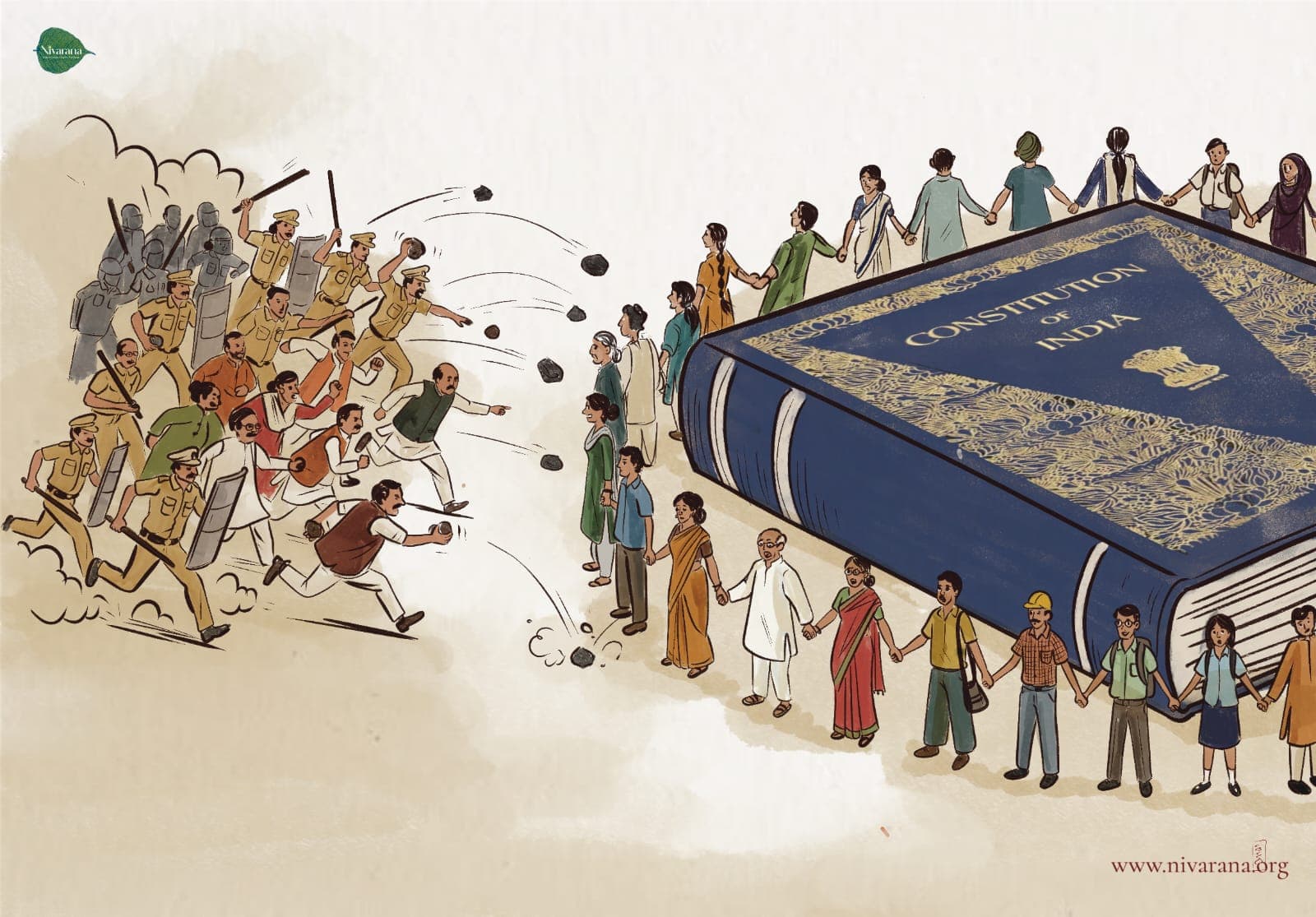
It united people against injustice. The protest transcended many of the social barriers that divide India and challenged years of efforts to polarise our society. People of different religions stood together. Able-bodied individuals helped persons with disabilities feel included. People cheered as members of the transgender community joined the protest. Young and old stood united. Even some of the most committed andh-bhakts (blind devotees) seemed to question the narrative they had accepted for the past 12 years.
But the crucial question remains: What next?
Normalisation: why Indians stopped reacting to injustice and how CJP reversed it
A key reason many Indians appear to have stopped responding to injustice is not that they have become inherently cruel. Rather, injustice has become normalised through repeated exposure. When people witness one violation after another, whether discrimination, institutional failures, corruption, hate, or preventable deaths, without meaningful accountability, each incident gradually raises the threshold of what society considers unacceptable. What once provoked widespread outrage becomes routine.
This process mirrors what Václav Havel described as "living within a lie." People do not necessarily have to believe that everything is right; they simply adapt to living with it. Over time, conformity becomes a survival strategy. Speaking out feels risky, ineffective, or someone else's responsibility, while remaining silent appears easier and more practical. As a result, obedience and inaction become habitual rather than consciously chosen.
Propaganda and ideological narratives reinforce this adaptation by offering convenient explanations, distracting attention, or portraying dissent as unnecessary or dangerous. At the same time, an endless cycle of crises creates a sense of fatigue and helplessness. Constant exposure to injustice dulls moral sensitivity, making extraordinary acts of injustice seem ordinary.
The recent protest managed to undo years of this normalisation by allowing people not just to feel angry but to belong to a space where that anger could be expressed. A society that had lost its capacity for collective outrage found its voice again. Strength was found in numbers, turning powerless people into fearless citizens and helping them realise their role in democracy, which is not just improving their own lives but also the lives of those around them.
This collective courage ultimately led to the resignation of the Union Minister for Education. But does that guarantee change?
Years of rot still need to be addressed
While this protest managed to open the eyes of even some of the most kattar andhbhakts, several mechanisms that enable oppression remain firmly in place.
Over the years, the BJP government has effectively influenced institutions that are meant to function as the pillars of democracy. This became even more evident during the Delhi protest. The judiciary appeared indifferent to the plight and safety of the protesters, with the matter reportedly being described as a "waste of time." The police used excessive force against peaceful protesters, while much of the mainstream media continued to run propaganda against the movement.
While these crumbling pillars of democracy were actively called out, the country still retains a formidable architecture of laws and institutions that can be used to suppress dissent. The Information Technology Rules have expanded executive control over online speech and digital platforms. A video surfaced online has highlighted how the draconian Narcotic Drugs and Psychotropic Substances (NDPS) Act can be used to falsely convict people of crimes by planting narcotic substances on them, as illegal possession of narcotics is a non-bailable criminal offense. The National Security Act (NSA) and the Unlawful Activities (Prevention) Act (UAPA) are also used to suppress dissent by incarcerating people.
These laws were enacted with legitimate objectives of protecting national security, preventing terrorism, combating drug trafficking, and regulating the digital sphere, but are increasingly being used as instruments of controlling and suppressing critics.
At the same time, the quality of education has been eroded, undermining its ability to cultivate critical thought. People are either denied an education that encourages them to question and reason independently or, if they do dare to think critically, face harassment through laws and institutions that punish dissent. Together, these forces have created a climate where silence has become a means of survival rather than a choice.
So, while Dharmendra Pradhan has resigned, does this mean India will automatically become a better place to live?
The answer is both yes and no.
It depends entirely on what happens next, now that the protest has been called off.
What India can learn from the Velvet Revolution
The Velvet Revolution, which unfolded in Czechoslovakia between November and December 1989, was a peaceful, non-violent mass movement that ended four decades of Communist rule. While separated by nearly four decades and vastly different political contexts, the Velvet Revolution and the Cockroach Janata Party (CJP) protests share a common thread: both emerged from widespread public frustration with the erosion of democratic values and demonstrated the extraordinary power of ordinary citizens to challenge authority.
Yet where the Velvet Revolution culminated in a democratic transition and a sustained rebuilding of institutions, the CJP protests have so far marked only the beginning of a much longer struggle to reclaim and strengthen India's democratic institutions.
The Velvet Revolution in Czechoslovakia did not succeed simply because hundreds of thousands of people came out onto the streets. It succeeded because the protests marked the beginning, not the end, of sustained democratic engagement.
The Czechoslovak experience suggests that democratic transitions are not completed by political change alone. The habits, fears, and everyday patterns of behaviour developed under authoritarian rule often survive much longer than the regime itself. Rebuilding trust in institutions, therefore, requires patience, civic engagement, and a willingness to accept that democracy is a continuous process rather than a single historical event. The role of good education here is crucial. As Paulo Freire said in his book Pedagogy of the Oppressed, “There's no such thing as neutral education. Education either functions as an instrument to bring about conformity or freedom.”
The CJP protest has brought India to a similar crossroads. The resignation of a Union Minister is an important milestone, but it should not be mistaken for the destination. If public pressure disappears as soon as the protest ends, the momentum that made this movement successful will gradually fade.
The Velvet Revolution also demonstrated the power of unity. Students, workers, artists, intellectuals, religious groups, and ordinary citizens came together despite their differences because they recognised that defending democracy required a common purpose. The CJP protest showed that such solidarity is possible in India too. The challenge now is to preserve it beyond the streets and prevent old social and political divisions from re-emerging.
Finally, the Velvet Revolution showed that democracy depends on citizens who continue to question those in power, defend institutions, support independent media, challenge misinformation, and speak out whenever injustice occurs. The greatest victory of the Velvet Revolution was not merely the fall of an authoritarian regime but the restoration of people's belief that ordinary citizens have the power to shape their country's future.
If India is to realise the constitutional promise of a democratic republic where every voice matters, reform cannot stop at changing governments or replacing individual leaders. It requires strengthening institutional checks and balances, narrowing the scope of extraordinary laws, ensuring judicial oversight and accountability, and reaffirming that criticism of the government is not a threat to the nation but an indispensable feature of democracy itself.
One of the most important lessons of the Czechoslovak experience is that the future of democracy depends not only on political leaders or activists but also on the so-called silent majority. Democratic change became possible when ordinary citizens gradually stopped adapting to a system they no longer considered legitimate.
The success of the CJP protest, therefore, will ultimately be measured not by one minister's resignation but by whether it inspires a generation of citizens who refuse to accept injustice as normal and remain engaged long after the protest has ended.
Edited by Christianez Ratna Kiruba
Image by Gayatri