There were times in my family's financial struggles when I, as a teenager, used to wonder if a random wealthy individual would just swoop in and give us a certain amount of money. That would help us clear our debt and solve our problems so we could start afresh. For the ultra-wealthy individual, it wouldn't mean much, but for us, it would be a lifesaver. There was nothing structurally wrong with our situation, just a poorly planned debt that was slowly but surely draining us of all our assets.
That thought has stayed with me. While I may not be in a position to unflinchingly clear debts of the size my family was afflicted with, I could still part with money (that I consider a small amount) and give it to others for whom it could be significant. After all, it is relative.
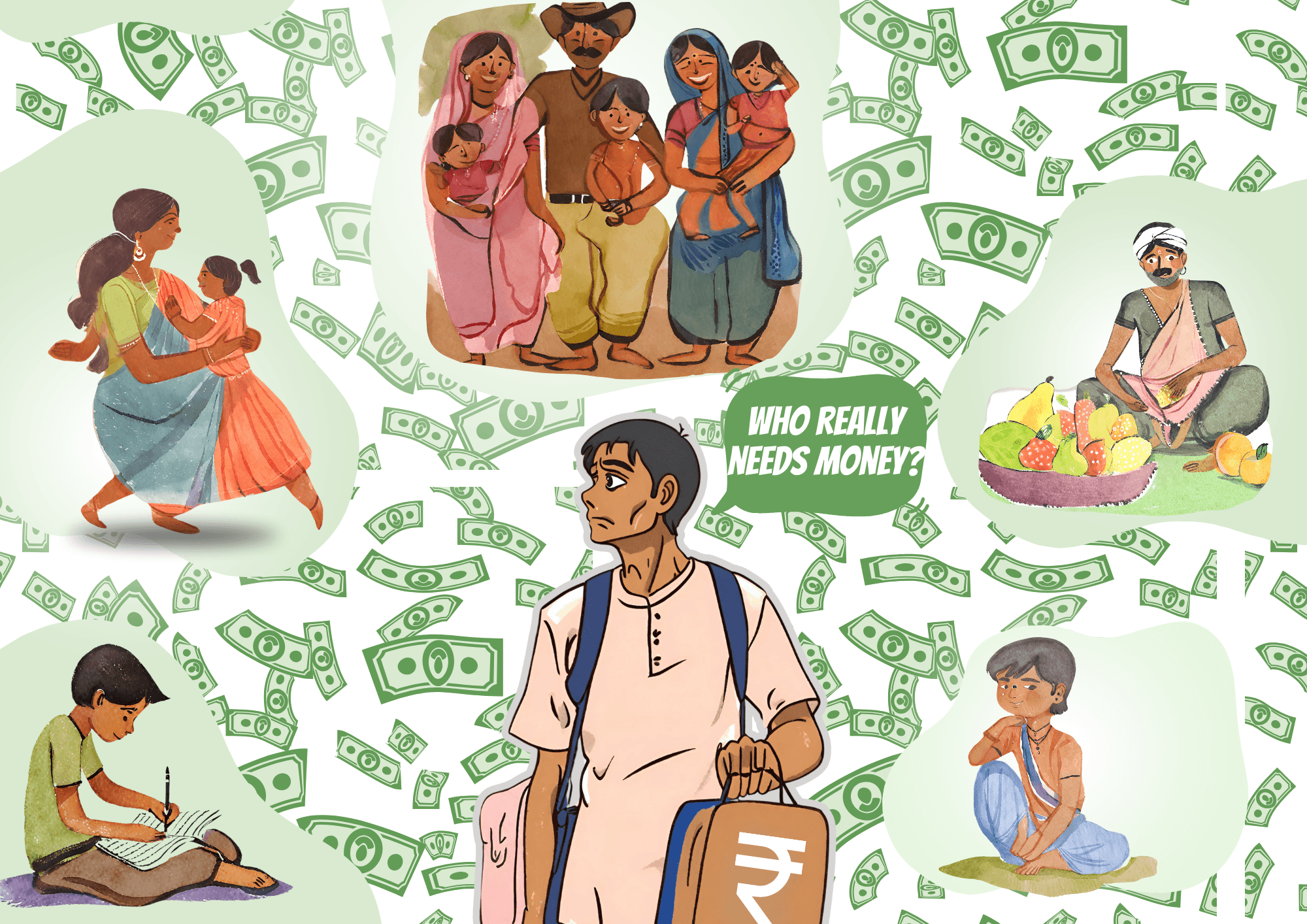
I started my own personal cash-transfer journey a few years ago. I decided I would give away a certain amount of money in cash each month. But who should I give it to? I found the practice of evaluating whether a person is needy enough to be an uncomfortable proposition—who am I to judge a competition of misery?
I wanted a certain randomness in the selection process. So, I decided on two things. First, as long as certain criteria were met, I wanted to give the money away randomly without asking (to women, the elderly, small businesses etc). Second, I didn't want to give it to non-profits, as I assumed that they were taken care of by others.
A sucker for scale, I thought if only there was a database of all Indians, one could randomly pick a person out of a billion, and then send them money. But this could make people uncomfortable too. People want to make sure their money has the most impact and reaches the one who needs it the most. If I pick an Indian randomly from the census data, they will be less privileged than I am, but are they the most in need?
Aside, for some reason, the accountability we expect from our philanthropic donations doesn't apply when it comes to tax money, public expenditure, and voting, but that's a different topic.
Anyway, so how do I ensure our cash transfer reaches those most in need? In our day-to-day urban life, our face-to-face interactions with people less privileged than us are limited and self-selecting. There needs to be a way to leap beyond the immediate.
Hypothetically, I would want to click anywhere on the map of rural India and be able to select a household and send a cash transfer to them.
Let's say this random point I zoomed into in Jharkhand.

Source: https://maps.app.goo.gl/CtMkZ4FNP4x2UwGd6
Someone residing in the remote hamlet of Ganarbhara in Bishnugarh, Hazaribagh, Jharkhand, could undoubtedly make better use of the money I might otherwise spend on a fancy dinner in South Delhi. There's also a good chance that India's burdened civil society isn't reaching this area, especially given the absence of a paved road. I would, without much hesitation, proceed with a cash transfer, but how?