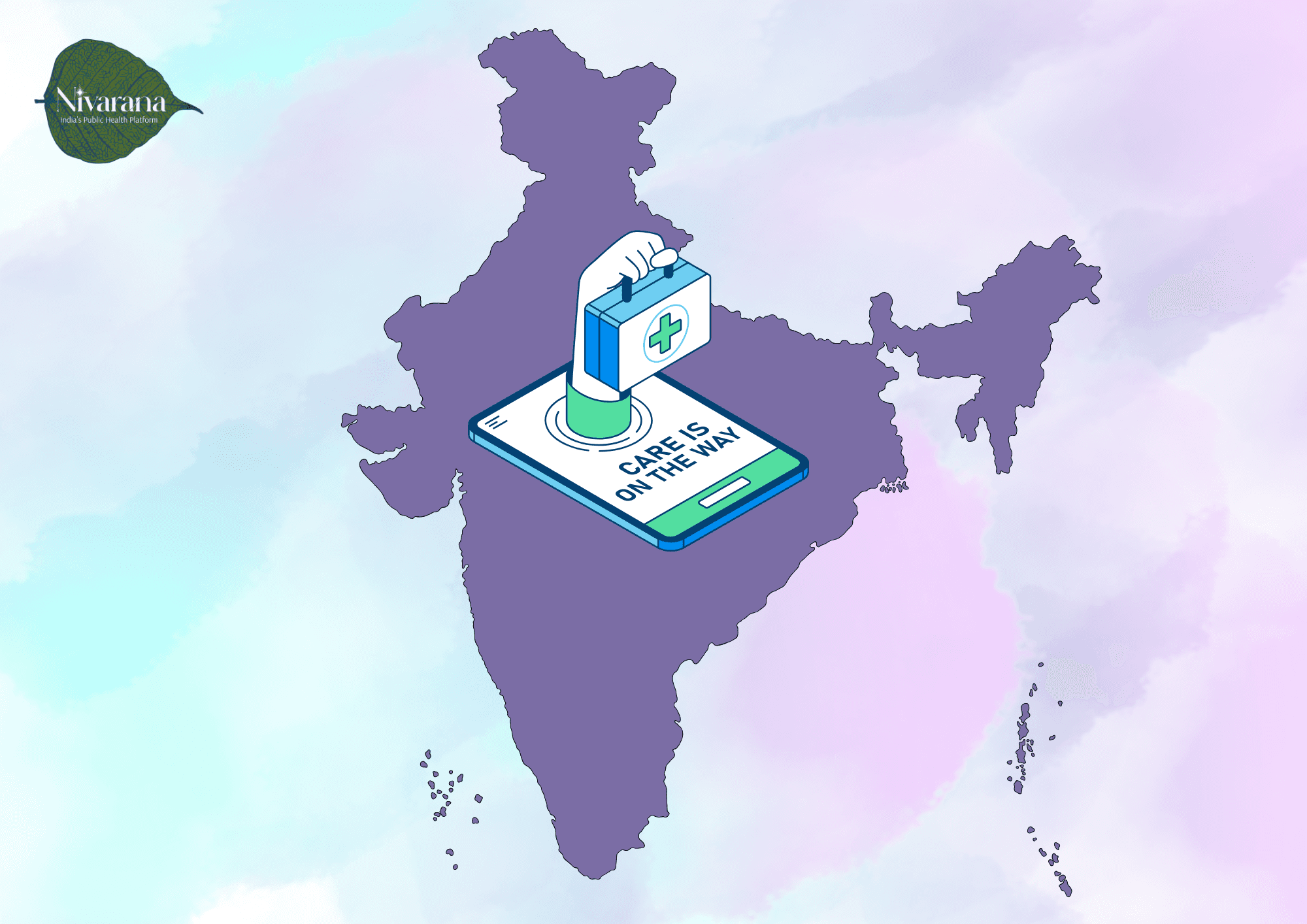
Health care has always been a challenge in India. The country is home to more than a billion people, two-thirds of whom live in hard-to-reach rural areas. Just meeting everyday health needs is a challenge—not to mention treating rare or complex diseases. So, the Indian government’s goal of making access to care universal by 2030 will require extraordinary creativity.
Universal health care means that everyone can access the health services they need without financial hardship, something most countries struggle to deliver. Digital health tools—carefully implemented—are indispensable to ensuring that this goal becomes a reality.
These include a range of technologies, such as mobile phone apps and wearable devices for collecting data and remotely monitoring patients, as well as remotely operated medical devices, teleconsultations, electronic health records, and artificial intelligence-based analytics for monitoring and diagnosis. As researchers with the Lancet Citizens’ Commission for Reimagining India’s Health System, who study how to use technology to improve public health, we believe that telemedicine is particularly promising.
Although the COVID-19 pandemic was devastating in India, it also acted as a catalyst for telemedicine and other digital health initiatives—from remotely monitoring hospital patients, to providing telehealth consultations for people with chronic conditions.
In one case, emergency room doctors in Himachal Pradesh, a mountainous and remote northern Indian state, were able to consult with medical specialists in Chennai, 1,800 miles to the south. In another state, Andhra Pradesh, the government launched a telemedicine service during the pandemic that enabled people with non-pandemic-related medical conditions to schedule consultations. A study of Andhra Pradesh’s telemedicine service found that patients were more likely to continue with treatment of their chronic condition if they set up telehealth consultations, providing a promising first look at the potential of telemedicine.
Before the pandemic, telemedicine was extremely uncommon in India. Now, we see that it could help address India’s need for more skilled health workers, including doctors, nurses, and mental health professionals. The country still needs 1.8 million healthcare workers to reach the WHO’s recommended standard of 45 workers for every 10,000 people, a huge gap.
Justifiably, both telemedicine and the government’s plan to make health care universal have been met with skepticism. Critics point out that the country’s public health care system is underfunded, understaffed, and much of the existing health workforce lacks adequate training. Limited digital literacy and access to internet connections and smartphones are all significant barriers to adopting telemedicine, especially in rural areas. Only half of the Indian population currently has to a smartphone, and more than 25,000 villages to the internet.