Recently, while having conversations with the Siddi ASHAs working in Haliyal Taluk of Uttara Kannada district, I asked them, in kannada “ನಮ್ಮ ದೇಶದ ಸಾರ್ವಜನಿಕ ಆರೋಗ್ಯದ ಕುರಿತು ನಿಮ್ಮ ಕನಸುಗಳೇನು? ( What are your public health dreams for India?)”.
They seemed a little perplexed by this question. Their work and dreams were largely limited to the villages they serve, or at most to their taluk and the district they are part of. So, while the question initially threw them off guard, it allowed them to share their big dreams for India’s public health.
The Siddi Community
The Siddis are a community of African ancestry, with a population of around 40,000 in Karnataka, largely concentrated in Uttara Kannada district and a limited number in Belgaum and Dharwad districts. They were officially recognised as a Scheduled Tribe (ST) only in 2003. Since then, greater recognition of their constitutional status has enabled this community to become more visible and to increasingly assert its rights and entitlements.
Yet, despite these gains, Siddis continue to face social discrimination, partly because of their distinct physical features, especially their darker skin color. Many families live in poor housing conditions, literacy levels remain below 50 per cent, and a significant number continue to live in forest and forest-fringe areas without secure land titles. These longstanding social and economic vulnerabilities continue to limit their access to education, livelihoods, healthcare and other development opportunities.
Vivek Pragati is a project centre of the Siddi Development Project, supported by St Joseph’s University (SJU), Bengaluru and is envisaged to be an outreach centre of SJU. It focuses on indigenous research and development, and is engaged in working for the integral development of the Siddis, focusing on health promotion, education, skill training programs, empowering their groups and organizations, and also promoting their art and culture.
It was during one such project meeting that this conversation took place.
Siddi ASHAs, their Work and their Struggles
Presently, there are four Siddi ASHAs working in Haliyal Taluk. Though all four had agreed to come for the meeting, one couldn’t make it due to a health emergency in one of her working villages. All of them expressed that it’s not an easy job to work as an ASHA, as they have to walk long distances to cover their working villages. Though on some occasions, a few kind-hearted souls do take them as pillion.
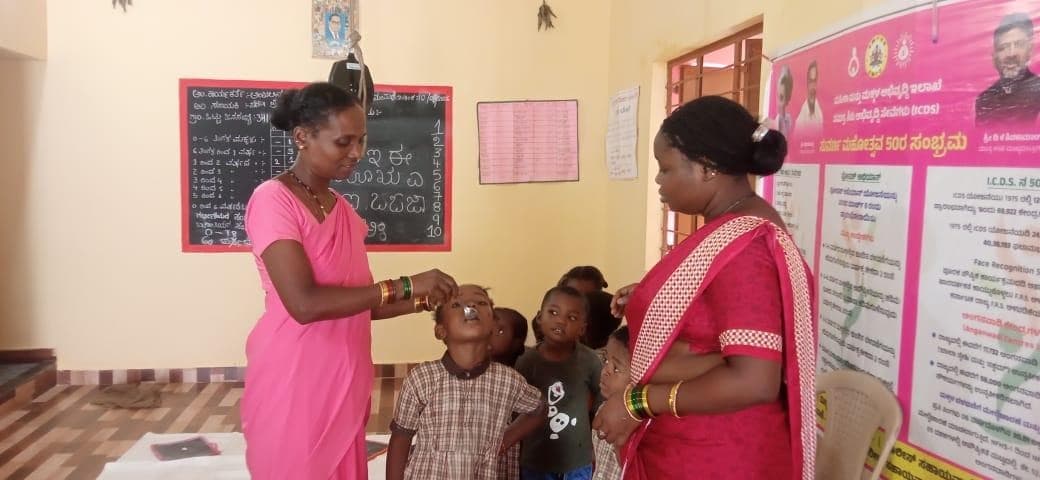
(Mrs Santhani Prakash Siddi resides in Gardolli village and has been working as an ASHA since 2019. She covers Gardolli and Wada villages, catering to a little more than a thousand people. )
“It is not easy to work as an ASHA in a Siddi village. Though the other community members listen to what we say, it’s tough to get the Siddis to listen to us,” was the response of all three Siddi ASHAs, indicating the tough life of ‘working within their own community’. That was their pain as well.
“Many times, I have to scold them, and then they listen,” said Manjula Prakash Siddi. She continued, “Many times there will be fights when I visit the villages. When I say something, like something related to vaccination and its importance, they don’t listen and they react and it ends up in verbal fights, but ultimately they listen to what I say, despite their initial reactions and outbursts.”
How to articulate and communicate the importance of health and healthy practices is the genuine struggle for all of them. The ASHA's have undergone training to help them with their work, but people are used to different practices, which sometimes are not healthy and hygienic. That's where the ASHAs feel helpless sometimes. Since they come from the same community, the community members tend to think that they do not know better and choose not to listen to them.
Lack of good roads, poor public transport connectivity, and not getting their salaries on time – sometimes for 3-4 months – are the other struggles that they expressed.
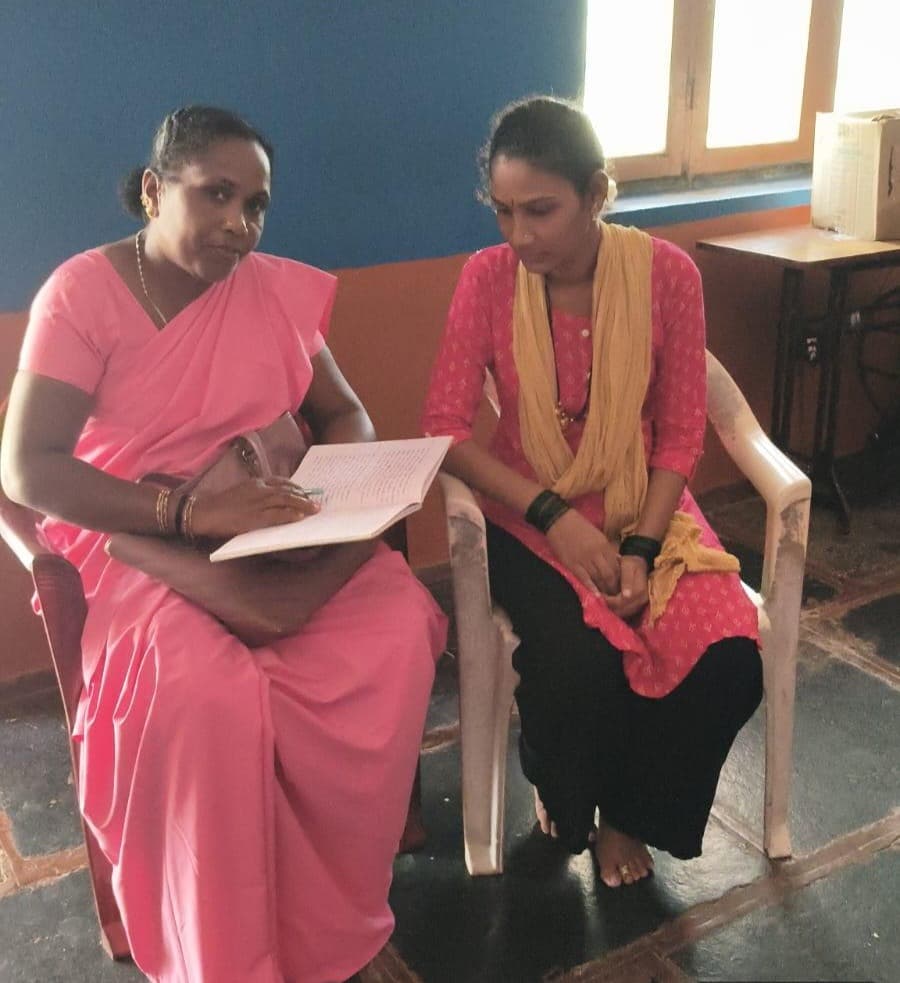
(Mrs Kulasambi Nisar Ahmad Jamadar Siddi is from Sambrani village and covers the villages of Sambrani and Bukkinkoppa, which have a population of over one thousand. She has been serving as an ASHA since 2019.)
These ASHAs are entrusted with the huge responsibility of making that first contact, and lasting as well, between the rural household and the public health system, but the hardships that they go through, like walking long distances, travelling alone through tough forest areas, balancing their family responsibilities and community work, are invisible most of the time.
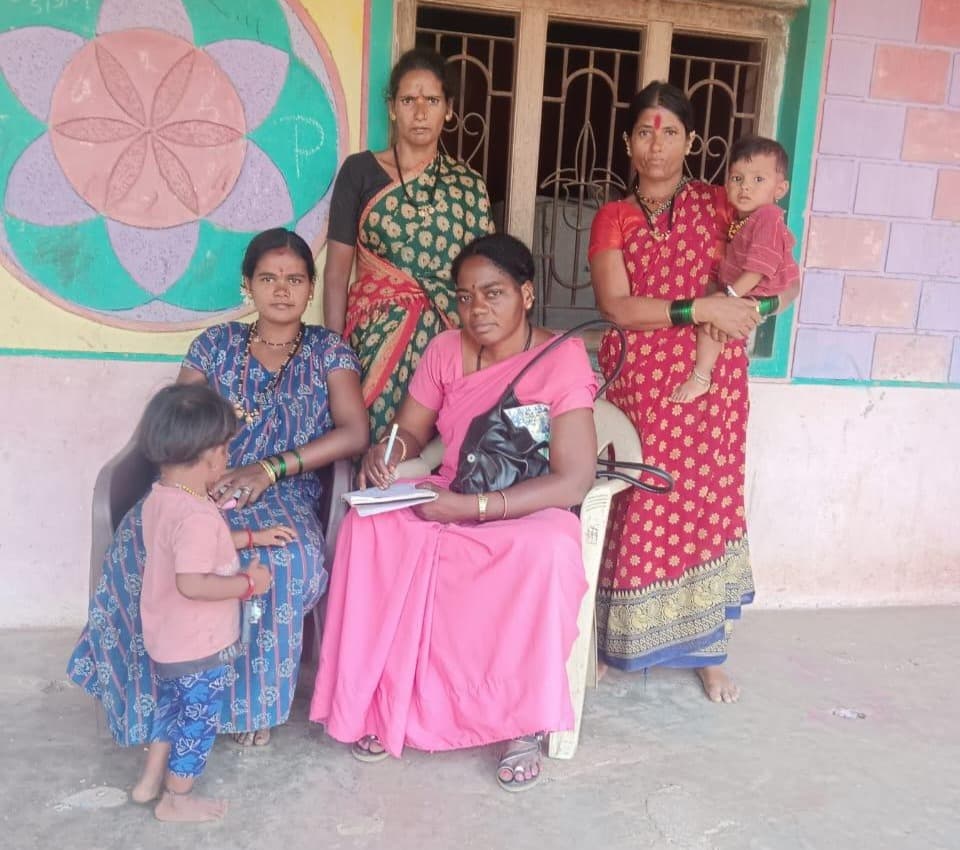
(Mrs Manjula Prakash Siddi hails from Gadgera village and works in Gadgera, Raypatna and Kyathangera villages. She too has been serving as an ASHA since 2019, catering to a total of nearly a thousand people in these three villages.)
Their Public Health Dreams for India
“I want this country free from all kinds of addictions, especially alcohol and drugs,” said Kulasambi Nisar Ahmad Siddi, who has witnessed the havoc this addiction has caused to her community. Many youth have become addicted to alcohol and drugs like ganja, and the parents have lost control over their children. “When the police, ASHAs and the villagers work together, this is possible to achieve”, she added.
“I want a health facility close to our village so that the people don’t have to travel 10-12 kms to the city in case of any health emergency,” said Santhani, who is working in Gardolli and Wada villages where there’s a sizeable Siddi population. “People shouldn’t have to travel too far for their health needs; that’s my public health dream for India”, she added.
“There’s no proper network in the villages where I go for my work. If there’s better mobile connectivity and internet connectivity, it is easier to reach in the case of health emergencies,” said Manjula, who shared an experience where a family in need wasn’t able to reach out to her.
Our public health system would look a lot better if our public health facilities were functioning with adequate staff, without any vacancies. Once that happens, it is possible to see the public placing their trust in the public health facilities again. This was echoed by the other Siddi leaders as well.
“This is another public health dream for India: that all the children are born healthy and grow healthy,” they collectively concluded, highlighting that there were still cases of malnutrition in some of the villages they worked in.
It is evident how their public health dreams are interconnected with their daily struggles. They believe good roads, better mobility, improved connectivity, good nutrition, and families living in peace and harmony without the usual addictions are important. This is their vision for every village in India.
What these women experience in remote villages is not merely a challenge faced by one community or one part of India. Their experiences reveal some of the fundamental gaps in our public health system: healthcare that is too far away, poor connectivity, inadequate infrastructure, understaffed facilities, malnutrition, and the social harms of addiction.
Their dreams are not extravagant. They are dreams of villages where people can reach a health facility when they need one, children can grow up healthy, and health workers have the support they need to serve their communities. Perhaps that is the most important lesson from their vision for India: the path to a healthier India does not begin with any fancy innovation, but with addressing the basic needs of every village.
(With inputs from Juliana Fernandes Siddi, Anna Kambrekar Siddi and Mary Garibache Siddi. Photos are shared with consent from the ASHAs.)
Edited by Parth Sharma
Images within the article by Alwyn D’Souza
Article thumbnail by Janvi Bokoliya


